
Язык
 |
Руководство пользователя |
| Заголовок | Описание | Дата выпуска (Bерсия) |
файла (Размер) |
|---|---|---|---|
|
Руководство пользователя |
30.06.2005 (01) |
Загрузка (1.36MB) |

Загрузите и просмотрите документ в формате PDF. Для просмотра документов в формате PDF требуется программное обеспечение Adobe® Acrobat Reader DC®. Если у вас нет данного программного обеспечения, вы можете загрузить его, щёлкнув по ссылке «Adobe® Acrobat Reader DC®».
Страницы и текст этой инструкции
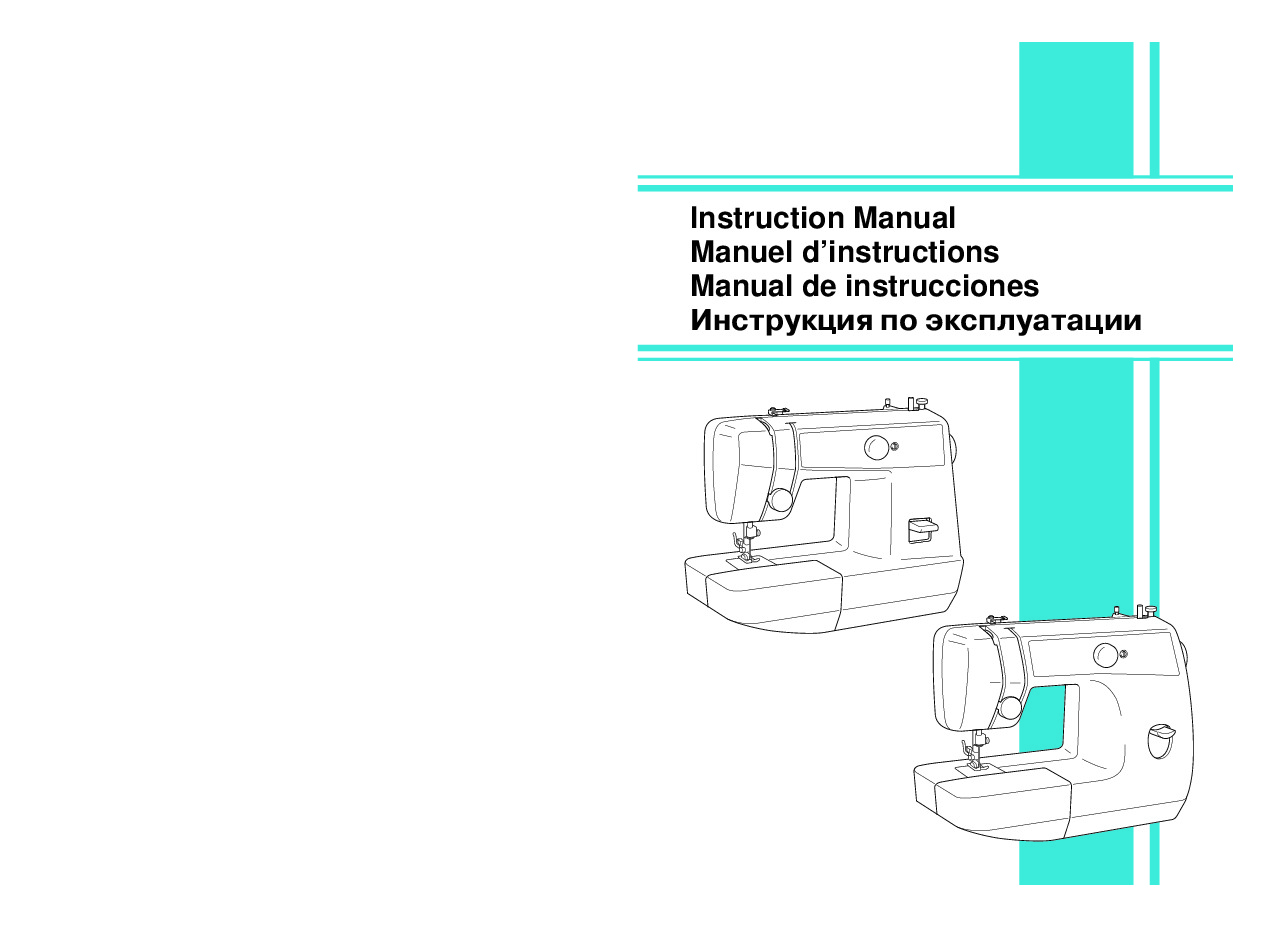 Инструкция швейной машинки Brother LS-1520_LS-2125_LS-2150
 Информация отображена на картинке
 Информация отображена на картинке
 Информация отображена на картинке
 Информация отображена на картинке
Как использовать наш сайт инструкций OnlineManuals.ru
Наша цель состоит в том, чтобы предоставить вам быстрый доступ к содержанию инструкции для швейной машинки Brother LS-1520_LS-2125_LS-2150.
С помощью онлайн просмотра, Вы можете быстро просмотреть содержимое инструкции и найти решение проблемы с швейной машинки Brother LS-1520_LS-2125_LS-2150.
Для Вашего удобства
Если листать руководство пользователя швейной машинки Brother LS-1520_LS-2125_LS-2150 прямо на сайте, не очень удобно для Вас, есть два возможных решения:
• Просмотр в полноэкранном режиме — легко просмотреть руководство пользователя (без загрузки его на свой компьютер), Вы можете использовать режим полноэкранного просмотра.
Для просмотра инструкции пользователя швейной машинки Brother LS-1520_LS-2125_LS-2150 на полном экране, используйте кнопку «Открыть в Pdf-viewer».
• Загрузка на компьютер — Вы можете также скачать Инструкция швейной машинки Brother LS-1520_LS-2125_LS-2150 на свой компьютер и сохранить его в файлах.
Многие люди предпочитают читать документы не на экране, а в печатной версии.
Возможность печати руководства пользователя также была предусмотрена на нашем сайте,
и вы можете использовать ее, нажав на иконку «печать» в Pdf-viewer.
Нет необходимости печатать все руководство швейной машинки Brother LS-1520_LS-2125_LS-2150, можно выбрать только нужные страницы инструкции.
-
Руководства по ремонту
2
-
Инструкции по эксплуатации
1

Brother LS-2125 инструкция по эксплуатации
(67 страниц)
- Языки:Русский
-
Тип:
PDF -
Размер:
1.36 MB -
Описание:
Швейная машина
Просмотр
На NoDevice можно скачать инструкцию по эксплуатации для Brother LS-2125. Руководство пользователя необходимо для ознакомления с правилами установки и эксплуатации Brother LS-2125. Инструкции по использованию помогут правильно настроить Brother LS-2125, исправить ошибки и выявить неполадки.
PMS8363 Black Instruction Manual Manuel d’instructions Manual de instrucciones Инструкция по эксплуатации
«IMPORTANT SAFETY INSTRUCTIONS» When using the sewing machine, basic safety precautions should always be followed, including the following: «Read all instructions before using.» DANGER – To reduce the risk of electric shock: 1. The sewing machine should never be left unattended when plugged in.
“IMPORTANTES CONSIGNES DE SECURITE” Lors de l’utilisation de la machine à coudre, il convient de toujours suivre les consignes de sécurité essentielles et de prendre notamment les précautions suivantes: “Lire toutes les instructions avant d’utiliser la machine.” DANGER — Pour réduire le risque de
“IMPORTANTES INSTRUCCIONES DE SEGURIDAD” Cuando se usa una máquina de coser, debe seguirse unas precauciones básicas y que se detallan a continuación. “Leer todas las instrucciones antes de usarla” PELIGRO — Para reducir el riesgo de una descarga eléctrica. 1. 2. La máquina no debe dejarse nunca
ИНСТРУКЦИИ ПО ТЕХНИКЕ БЕЗОПАСНОСТИ При эксплуатации швейной машины следует всегда соблюдать перечисленные ниже основные меры безопасности. Прочтите все инструкции перед использованием ВНИМАНИЕ! Для предотвращения возможности поражения электрическим током: 1. Никогда не оставляйте швейную машину без
Подключение соединителей и выключатель питания/ лампочки подсветки 1 2 1. 2. — Вставьте трехконтактный разъем сетевого шнура в гнездо на машине. Вставьте вилку сетевого шнура в настенную розетку. Перед тем как оставить машину без присмотра, выключите ее сетевым выключателем или выньте вилку
CONTENTS TABLE DES MATIÉRES Page PRINCIPAL PARTS………………………………………………………….. 1 PRINCIPAL PARTS………………………………………………………….. 2 ACCESSORIES ……………………………………………………………….. 3
INDICE СОДЕРЖАНИЕ Página ELEMENTOS PRINCIPALES ………………………………………………… 1 ELEMENTOS PRINCIPALES ………………………………………………… 2 ACCESORIOS………………………………………………………………………… 3
PRINCIPAL PARTS PIECES PRINCIPALES ELEMENTOS PRINCIPALES ОСНОВНЫЕ ЧАСТИ 1 3 2 1 3 5 2 5 6 4 6 4 8 9 0 D F E C A B N G I H O J L 7 M K P * The illustrations of the sewing machine on the following pages may differ slightly from your machine. * Les illustrations représentées aux pages suivantes
PRINCIPAL PARTS a b c d e f g h i j k l m n o p q r s t u v w x y z Pattern selection dial Buttonhole fine-adjusting screw Thread take-up lever Extension table with accessory storage Upper tension control dial Reverse sewing lever Thread cutter Presser foot holder assembly Presser foot screw
ACCESSORIES a b c d e f g h i ACCESSOIRES a b c d e f g h i Buttonhole foot (1 pc.) Zipper foot (1 pc.) Button sewing Foot (1 pc.) Needle set (regular single needle No. 14) (3 pcs.) Twin needle (1 pc.) Bobbins (3 pcs.) Darning plate (1 pc.) Screwdriver (1 pc.) Extra spool pin (1 pc.) Pied pour
OPERATING YOUR SEWING MACHINE FONCTIONNEMENT DE LA MACHINE A COUDRE Connecting Plugs Raccordement 1. Insert the foot controller plug, located between the foot controller and the power supply plug on the cord, into the jack on the machine. 2. Insert the power supply plug into an electrical outlet.
Main Power and Sewing Light Switches Interrupteur principal et de la lampe This switch turns the main power and sewing light on or off. (See fig. A.) Cet interrupteur permet d’allumer et d’éteindre la machine ainsi que la lampe de couture. (Voir fig. A.) a Turn on (toward the “I” mark) b Turn off
Inserting the Needle Pour mettre l’aiguille en place Turn power switch to “O”. 1. Remove the power supply plug from the electrical outlet. 2. Raise the needle bar to its highest position. 3. Lower the presser foot. 4. If a needle is already installed, remove the needle by loosening the needle clamp
Changing the Presser Foot Changement de pied-de-biche It may be necessary to change the presser foot according to your sewing needs. En fonction des besoins, il peut s’avérer nécessaire de changer le pied-de-biche. SNAP-ON TYPE Turn power switch to “O”. 1. Raise the needle to its highest position
Converting to Free-Arm Style Modèle bras libre Free-Arm sewing is convenient for sewing tubular and hard-toreach areas on garments. To change your machine to the free-arm style, lift up on the extension table and pull it out. a Lift the bottom of the extension table up toward you. b Pull the
VARIOUS CONTROLS DESCRIPTIF DES DIFFERENTES COMMANDES Pattern Selection Dial Sélecteur de modèle de point To select a stitch, simply turn the pattern selection dial in either direction. Stitch widths and lengths are shown on the following page. Pour sélectionner un modèle de point, tourner le
PATTERNS AND STITCH NAMES PATTERN STITCH NAME PAGE IN INSTRUCTIONS 1(a-b-c-d) 4-STEP AUTOMATIC BUTTONHOLE 30 2 ZIGZAG STITCH 26 3 ZIGZAG STITCH 26 4 ZIGZAG STITCH 26 5 ZIGZAG (SATIN) STITCH 26 6-10 STRAIGHT STITCH 24 11 STRAIGHT STITCH (Left needle position) 24 12 STRETCH BLIND STITCH 27 13 SHELL
DIBUJO Y NOMBRE DE LOS PUNTOS PUNTADA NOMBRE PÁGINA DEL manual 1(a-b-c-d) OJAL AUTOMÁTICO DE 4 PASOS 30 2 PUNTADA ZIGZAG 26 3 PUNTADA ZIGZAG 26 4 PUNTADA ZIGZAG 26 5 PUNTADA ZIGZAG (DE REALCE) 26 6-10 PUNTADA RECTA 24 11 PUNTADA RECTA (aguja a la izquierda) 24 12 PUNTADA INVISIBLE ELÁSTICA 27 13
Reverse Sewing Lever Levier de couture en marche arrière To sew in reverse, press down the reverse sewing lever as far as possible and hold it in that position while lightly stepping on the foot controller. To sew forward, release the reverse sewing lever. Reverse sewing is used for locking and
ENHEBRADO DE LA MÁQUINA ЗАПРАВКА НИТИ В МАШИНУ Bobinado de la canilla Намотка шпульки 1. Coloque un carrete de hilo en el porta carretes y pase el hilo por el disco de tensión de bobinado de la canilla 1. Установите катушку с нитью на предназначенный для нее стержень и проведите нить вокруг
Lower (bobbin) Threading Mise en place du fil inférieur (canette) Turn power switch to “O”. 1. Raise the needle to its highest position by turning the balance wheel toward you (counterclockwise) and raise the presser foot lifter. 2. Open the shuttle cover behind the extension table on the front of
A B-1 2 1 B-3 B-2 C 3 4 Upper (Needle) Threading Mise en place du fil supérieur (fil de l’aiguille) Enhebrado superior (de la aguja) Заправка верхней нити (в иглу) 2 3 4 15 2 1
1. Raise the presser foot using the presser foot lifter and turn the balance wheel toward you (counterclockwise) to raise the thread take-up lever to its highest position. 2. Pull up the spool pin and place a spool of thread on this pin. 3. Pass the thread through both thread guides: the rear one
A 1 2 B C 6 5 4 3 D 7 E 8 7 Drawing Up Lower (bobbin) Thread Remontée du fil inférieur (canette) 1. Raise the presser foot and the needle to their highest positions. 2. With your left hand, hold the end of the upper thread. With your right hand, turn the balance wheel toward you (counterclockwise)
Twin-Needle Sewing Couture avec l’aiguille jumelée Your sewing machine is designed for twin-needle sewing which allows you to sew using two upper threads. You can use the same color or two different colors of thread for decorative stitches. Twin-needle sewing works well with these stitches: the
Costura con aguja doble Шитье двойной иглой Su máquina de coser ha sido concebida para poder utilizar una aguja doble y permitir la costura con dos hilos superiores. Puede usar el mismo color de hilo o dos hilos de colores distintos para puntadas decorativas. Las costuras con aguja doble dan muy
Thread Tension Tension des fils Thread tension will affect the quality of your stitches. It may need to be adjusted when you change fabric or thread type. La tension des fils va affecter directement la qualité des points et il se peut qu’elle doive être réglée lors du changement de tissu ou de fil.
NOTE: The bobbin thread tension has already been adjusted at the factory for general use. For most sewing applications, no adjustment is needed. When sewing with thin thread on thin fabrics, the thread tension may not be adjusted adequately with the upper tension control dial. Therefore, the thread
RELATIVE CHART OF SEWING FABRICS, NEEDLES AND THREADS COMBINATIONS SEWING FABRICS VERY THIN Fine tricot, Fine lace, Thin linen, Silk, Organza, Chiffon NEEDLE SIZES THREAD SIZES #65/9 Cotton: 80 Synthetic/ Polyester Long Fiber Fine Mercerized Cotton #75/11 Cotton: 60-80 Silk: “A” Synthetic/
TABLA DE RELACIÓN ENTRE TEJIDOS, HILOS Y AGUJAS TEJIDOS MUY FINO Punto fino, Encaje fino, Lino fino, Seda, Tul, Gasa LIGERO Velo, Tafetán, Sintéticos, Seda, Batista MEDIO Algodón, Vichy, Popelin, Percal, Piqué, Satén, Terciopelo, Lana ligera, Pana fina, Forros, Lino, Muselina PESADO Tejano,
Straight Stitching Point droit Pattern Modèle 6-10 (Center needle position) 6-10 (Aiguille au centre) 11 (Left needle position) 11 (Aiguille à gauche) The Straight Stitch (6-10 or 11) is used for top stitching and sewing lightweight fabrics. Le point droit (modèle 6-10 ou 11) sert pour la “haute
Para empezar a coser (fig. A) 1. Colocar el selector de puntadas en la puntada derecha adecuada (6-10 ó 11), con el largo deseado. 2. Levante la aguja a su posición más alta y suba la palanca del prensatelas. 3. Saque el hilo inferior girando la ruedecilla hacia usted (en el sentido contrario al de
Zigzag Stitching Points zigzag Pattern Modèle 2 (Zigzag Stitch) 2 (Point zigzag) 3 (Zigzag Stitch) 3 (Point zigzag) 4 (Zigzag Stitch) 4 (Point zigzag) ZIGZAG STITCH Set the pattern selection dial to the appropriate Zigzag Stitch (2, 3 or 4) with the desired width. It is recommended to sew using the
Blind Hem Stitching Point élastique invisible Pattern 12 Modèle (Stretch Blind Stitch) 12 (Point élastique invisible) The Stretch Blind Stitch is used to finish the edge of projects made with stretch fabrics without the stitch showing. 1. Set the pattern selection dial to 12. 2. Both the threads
Elastic Stitching Point élastique Pattern 14 Modèle (Elastic Stitch) 14 The Elastic Stitch can be used in 3 ways: mending, sewing elastic or joining fabric. Each is explained below. Set the pattern selection dial to 14. MENDING 1. Place the reinforcement fabric under the tear to be mended. 2.
Shell Tuck Stitching Point picot Pattern 13 (Shell Tuck Stitch) Modèle 13 (Point picot) The Shell Tuck Stitch can be used to sew a picot (lace-like) edge on a lightweight fabric. 1. Set the pattern selection dial to 13. 2. Use a tighter thread tension than normal. 3. At a slow speed, sew the fabric
Making a Buttonhole Création d’une boutonnière Pattern Foot Modèle Pied-de-biche 1(b ac d) Buttonhole foot 1(b ac d) Pied pour boutonnières NOTE: 1. It is recommended to practice making a buttonhole on a scrap piece of fabric before attempting it on the actual garment. 2. When making buttonholes on
MAKING A BUTTONHOLE Step Sewn Portion Pattern ac Step a (Front end of buttonhole) a a b c ac c a d Step d (Right side) 1. Set the pattern selection dial to a. 2. Lower the presser foot and sew 5 to 6 stitches. 3. Stop the machine when the needle is at the left side of the stitches and raise the
COSIDO DE UN OJAL Pasos Zona de cosido Paso a (remate de la parte delantera del ojal) a Diseño Como coser ac 1. Ponga el selector de diseño en a. 2. Baje el prensatelas y cosa 5 ó 6 puntadas. 3. Pare la máquina cuando la aguja se encuentre a la izquierda de las puntadas y levante la aguja del
SECURING THE STITCHING AND CUTTING THE BUTTONHOLE 1. To secure the stitching, turn the material 90 degrees counterclockwise, set the pattern selection dial to the Straight Stitch (6-10) with the desired length and sew to the edge of the front bar tack. 2. Remove the fabric from the machine. It is
Buttonhole Fine Adjustment Equilibrage des boutonnières If the stitching on the two sides of the buttonhole do not appear uniform, the following adjustments can be made. 1. After sewing the left side of the buttonhole, stitch the right side and observe the feeding. 2. If the right side is too
Button Sewing Pour coudre un bouton Pattern Foot Other Modèle Pied-de-biche Autre 2, 3 or 4 Button Sewing Foot Darning Plate 2, 3 ou 4 Pied pour boutons Plaque à repriser 1. Measure the distance between the buttonholes and set the pattern selection dial to the Zigzag Stitch (2, 3 or 4) with the
Zipper Insertion Insertion de fermeture à glissière Pattern 6-10 (Straight Stitch) The zipper foot is used to sew on various types of zippers and can easily be positioned to the right or left side of the needle. When sewing the right side of the zipper, attach the shank to the left pin of the
B A 1 2 4 4 3 Gathering Pour froncer un tissu Pattern 6-10 (Straight Stitch) Modèle 6-10 (Point droit) 1. Set the pattern selection dial to the Straight Stitch (6-10) with the desired length. 2. Loosen the tension of the upper thread (to about 2) so that the lower thread lies on the underside of
Darning Reprisage Pattern Foot Other Modèle Pied-de-biche Autre 6-10 (Straight Stitch) None Darning Plate 6-10 (Point droit) Sans pied Plaque à repriser 1. Place the darning plate on the needle plate as shown in fig. A. 2. Set the pattern selection dial to the Straight Stitch (6-10) with the
Appliques Appliques Pattern 2, 3, 4, 5 (Zigzag Stitch) Modèle 2, 3, 4, 5 (Point zigzag) An applique is created by cutting a contrasting piece of fabric into a shape to be used as a decoration on a garment or project. 1. Baste the cut design to the fabric in the desired location where desired. 2.
Monogramming and Embroidering Monogrammes et broderies Pattern Foot Other Modèle Pied-de-biche Autre 2, 3, 4, 5 (Zigzag Stitch) None Darning Plate 2, 3, 4, 5 (Point zigzag) Sans pied Plaque à repriser PREPARING FOR MONOGRAMMING AND EMBROIDERING 1. Place the darning plate on the needle plate. 2. Set
MONOGRAMMING (fig. A) 1. Sew moving the hoop slowly along the lettering at a constant speed. 2. To secure the stitching, set the pattern selection dial to the Straight Stitch (6-10) with the desired length and sew a few stitches at the end of the last letter. MONOGRAMMES (fig. A) 1. Coudre à une
Changing the Bulb Remplacement de l’ampoule 1. Remove the power supply plug from the electrical outlet. 2. Loosen the face plate screw as shown in fig. A. 3. Remove the face plate from the machine as illustrated in fig. B. 4. Replace the sewing light bulb. See fig. C. 1. Retirer la fiche
Oiling Graissage 1. Remove the power supply plug from the outlet. 2. Put 2 to 3 drops of oil at each of the points indicated in fig. A. 3. After oiling, run the machine at a fast speed without thread installed for a short time. 4. Be sure to wipe any excess oil off the machine. 1. Retirer la fiche
NOTE: When the needle is lowered, the shuttle hook cannot be removed. REMARQUE: Il est impossible de retirer le crochet de la navette l’aiguille est abaissée. Cleaning the Shuttle Race 1. Remove any accumulated lint and thread with a brush from the retaining ring, hook, driver and race body. 2. A
Cleaning the Feed Dogs 1. Remove the presser foot holder and the needle. 2. Remove the needle plate using a coin or screwdriver to take out the screws. 3. Clean the lint from the upper part of the feed dogs and shuttle race body with a brush. Nettoyage des griffes d’entraînement 1. Retirer le
PERFORMANCE CHECK LIST UPPER THREAD BREAKS LOWER (BOBBIN) THREAD BREAKS SKIPPED STITCHES LOOP IN SEAM FABRIC PUCKERS Upper thread is not correctly installed. Lower (bobbin) thread is tangled. Needle is incorrectly inserted. Thread tension is incorrect. Thread tension is too tight. Page 16 No Upper
PERFORMANCE CHECK LIST FABRIC DOES NOT FEED PROPERLY NEEDLE BREAKS MACHINE IS NOISY OR SLOW MACHINE DOES NOT START The combination of needle size/ thread size/fabric is incorrect. Needle is not correctly inserted. Lint is clinging to the bottom of the needle plate. Power supply plug is removed from
LISTE DE VERIFICATION EN CAS DE DEFAILLANCES RUPTURE DU FIL SUPERIEUR RUPTURE DU FIL INFERIEURÅ (canette) DES POINTS SAUTENT LA COUTURE FAIT DES BOUCLES LE TISSU FRONCE Le fil supérieur n’est pas bien enfilé. Le fil inférieur (canette) est emmêlé. L’aiguille est mal installée. Mauvaise tension des
LISTE DE VERIFICATION EN CAS DE DEFAILLANCES L’ENTRAINEMENT DU TISSU N’EST PAS CORRECT L’AIGUILLE CASSE LA MACHINE EST BRUYANTE OU LENTE LA MACHINE NE DEMARRE PAS La combinaison aiguille/fil/tissu est incorrecte. L’aiguille est mal installée. Des peluches sont accrochées sous la plaque à aiguille.
LISTADO DE POSIBLES INCIDENCIAS ROTURA DEL HILO SUPERIOR ROTURA DEL HILO INFERIOR (de la canilla) SALTO DE PUNTADAS BAGAS EN LAS PUNTADAS ARRUGAS EN EL TEJIDO ROTURA DEL HILO SUPERIOR El hilo inferior (de la canilla) está enredado La aguja está mal colocada La tensión de los hilos no es correcta La
LISTADO DE POSIBLES INCIDENCIAS EL TEJIDO NO ARRASTRA BIEN LAAGUJA SE ROMPE LA MAQUINA ES RUIDOSA O FUNCIONA MUY DESPACIO LA MAQUINA NO ARRANCA La combinaison aiguille/fil/tissu est incorrecte. La aguja está mal colocada Hay polvo en la placa de agujas El enchufe de alimentación está desconectado
ТАБЛИЦА КОНТРОЛЬНЫХ ПРОВЕРОК ТЕХНИЧЕСКИХ ХАРАКТЕРИСТИК 52
ТАБЛИЦА КОНТРОЛЬНЫХ ПРОВЕРОК ТЕХНИЧЕСКИХ ХАРАКТЕРИСТИК 53
Repacking the Machine Keep the carton and packing become necessary to reship packing or improper packing during shipping. Instructions illustrated below. materials for future use. It may the sewing machine. Improper material could result in damage for repacking the machine are Emballage de la
INDEX Page Page A S Accessories ……………………………………………………………………. 3 Applique ……………………………………………………………………….. 9 B Satin
INDEX Page Page A N Accessoires ……………………………………………………………………. 3 Aiguille Remplacement/Inspection ……………………………………….. 6 Nettoyage…………………………………………………………………43-45 Nettoyage de
INDICE Página Página A M Accesorios ……………………………………………………………………………… 3 Aguja Cambio/Verificación ……………………………………………………….. 6 Modalidad brazo
УКАЗАТЕЛЬ Стр. Стр. А С Аппликация …………………………………………………………………… 9 Сетевой выключатель……………………………………………………… 5 Смазка…………………………………………………………………………. 43 В