
Фармакологическое действие
Противоэпилептическое средство. Необратимый селективный ингибитор GABA-аминотрансферазы. Повышает концентрацию GABA в синапсах, увеличивая, тем самым, тормозные эффекты. Подавляет повышенную возбудимость нейронов, лежащую в основе возникновения и распространения эпилептических судорог.
Показания активного вещества
ВИГАБАТРИН
Парциальные судороги, синдром Веста.
Режим дозирования
Внутрь взрослым по 500 мг 2 раза/сут, при необходимости дозу увеличивают до 1.5 г/сут.
Для детей рекомендуется начальная доза 40 мг/кг/сут, при необходимости доза может быть увеличена до 80-100 мг/кг/сут.
Побочное действие
Со стороны ЦНС и периферической нервной системы: беспокойство, раздражительность, агрессивность, психотические нарушения; редко — головные боли, нистагм, тремор, парестезии, нарушение способности к концентрации внимания, повышенная утомляемость, нарушения поля зрения; в единичных случаях – повышение частоты развития эпилептических припадков, включая эпилептический статус.
Прочие: редко — незначительно выраженные диспептические симптомы, увеличение массы тела; в единичных случаях – отеки.
Противопоказания к применению
Беременность, лактация (грудное вскармливание), повышенная чувствительность к вигабатрину.
Применение при беременности и кормлении грудью
Противопоказан к применению при беременности и в период лактации (грудного вскармливания).
Применение при нарушениях функции почек
У пациентов пожилого возраста особенно при нарушениях функции почек (КК менее 60 мл/мин) требуется коррекция режима дозирования.
Применение у детей
Применение возможно согласно режиму дозирования.
Применение у пожилых пациентов
У пациентов пожилого возраста и особенно при нарушениях функции почек (КК менее 60 мл/мин) требуется коррекция режима дозирования.
Особые указания
С осторожностью применять у пациентов с психическими заболеваниям, указаниями в анамнезе на психозы и нарушения поведения.
В период лечения требуется тщательное медицинское наблюдение для выявления возможных побочных реакций со стороны нервной системы.
При необходимости прекращения лечения рекомендуется постепенно снижать дозу в течение 2-4 недель. Внезапная отмена лечения может привести к возобновлению судорог.
Перед началом и в процессе лечения требуются периодические консультации офтальмолога. При выявлении дефектов полей зрения вопрос о дальнейшем применении вигабатрина решается в зависимости от соотношения риска и пользы проводимой терапии. В случаях, когда выявление дефектов полей зрения не может быть выполнено соответствующим образом (например, у маленьких детей), решение о терапии вигабатрином должно базироваться на анализе клинических показателей, которые позволяют оценить соотношение риска и пользы лечения.
У пациентов пожилого возраста и особенно при нарушениях функции почек (КК менее 60 мл/мин) требуется коррекция режима дозирования.
В экспериментальных исследованиях показано, что вигабатрин вызывает обратимый отек миелиновых оболочек. В настоящее время отсутствуют подтверждения такого же феномена у человека.
Влияние на способность к управлению транспортными средствами и механизмами
С осторожностью применять у пациентов, деятельность которых связана с необходимостью высокой концентрации внимания и быстрых психомоторных реакций.
Лекарственное взаимодействие
При одновременном применении возможно уменьшение концентраций в плазме крови фенитоина, фенобарбитала, примидона.
Содержание
-
Структурная формула
-
Русское название
-
Английское название
-
Латинское название
-
Химическое название
-
Брутто формула
-
Фармакологическая группа вещества Вигабатрин
-
Нозологическая классификация
-
Код CAS
-
Фармакологическое действие
-
Фармакология
-
Противопоказания
-
Применение при беременности и кормлении грудью
-
Побочные действия вещества Вигабатрин
-
Взаимодействие
-
Передозировка
-
Способ применения и дозы
-
Меры предосторожности
-
Торговые названия с действующим веществом Вигабатрин
Структурная формула

Русское название
Вигабатрин
Английское название
Vigabatrin
Латинское название
Vigabatrinum (род. Vigabatrini)
Химическое название
4-Амино-5-гексеновая кислота
Брутто формула
C6H11NO2
Фармакологическая группа вещества Вигабатрин
Нозологическая классификация
Код CAS
60643-86-9
Фармакологическое действие
—
противоэпилептическое.
Фармакология
Необратимо ингибирует трансаминазу ГАМК, и увеличивает ее содержание в головном мозге.
Быстро всасывается после приема внутрь. Время достижения Cmax — около 2 ч. Не связывается с белками плазмы, легко проникает в различные ткани, практически не подвергается биотрансформации. Т1/2 у молодых пациентов — 5–8 ч, и увеличивается с возрастом до 12–13 ч. Основной путь выведения — через почки (за 24 ч экскретируется около 70%). При нарушении функции почек скорость выделения зависит от уровня Cl креатинина.
Продолжительность эффекта определяется интенсивностью ресинтеза ГАМК-трансаминазы. Уменьшает частоту парциальных эпилептических приступов на 50% и более, в т.ч. при рефрактерности к обычной противоэпилептической терапии, купирует некурабельные инфантильные спазмы.
Противопоказания
Гиперчувствительность, психотические реакции, в т.ч. в анамнезе, миоклонические судороги, нарушения функции почек, беременность, кормление грудью, пожилой возраст.
Применение при беременности и кормлении грудью
Категория действия на плод по FDA — C.
Побочные действия вещества Вигабатрин
Сонливость, повышенная утомляемость, астения, снижение тонуса, головная боль, головокружение, нервозность, депрессия, нарушения памяти, диплопия и др. расстройства зрения, агрессия, атаксия, дезориентация, бессонница, снижение концентрации внимания, ажитация, тревога, эмоциональная лабильность, раздражительность, тремор, нистагм, нарушения походки, речи, учащение эпилептических припадков, психоз, боли в животе, запор, тошнота, рвота, гиперсаливация, снижение уровня гемоглобина (при длительном лечении), увеличение массы тела.
Взаимодействие
Уменьшает концентрацию фенитоина в плазме (на 20%).
Передозировка
Симптомы: головокружение, тремор.
Лечение: поддержание жизненно важных функций.
Способ применения и дозы
Внутрь, 1–2 раза в день. Взрослым — начальная доза 1 г в сутки, при тяжелых приступах — 2 г в сутки. В зависимости от клинического ответа и переносимости доза может ежедневно увеличиваться или уменьшаться на 0,5 г. Оптимальная суточная доза — 2–4 г.
Детям — 40 мг/кг в сутки, с дальнейшим увеличением до 80–100 мг/кг, возможно изменение дозы на 0,5 г в течение недели.
Меры предосторожности
Лечение проводится непрерывно и длительно, под постоянным контролем невропатолога, в т.ч. и в период медикаментозной ремиссии. Не рекомендуется использование в качестве монотерапии. Повышение суточной дозы выше 4 г не увеличивает эффективность, но повышает риск развития побочных реакций. У пациентов с анамнестическими указаниями на психозы следует предусмотреть возможность нарушения поведенческих реакций в начале лечения (агрессия, психотические эпизоды), в связи с чем терапию рекомендуется начинать с осторожностью, используя низкие дозы и при условии тщательного регулярного наблюдения. Следует учитывать, что у детей возможно развитие т.н. синдрома гиперактивности (гиперкинезия, ажитация, возбуждение, беспокойство). При нарушении функции почек (снижение Cl креатинина менее 60 мл/мин) доза должна быть уменьшена. Для предотвращения развития синдрома отмены необходимо постепенное снижение дозы в течение 2–4 нед. Рекомендуется отказаться, по крайней мере, в начале лечения от видов деятельности, требующих повышенного внимания и высокой координации движений. В процессе лечения необходимо периодическое обследование для исключения неврологических нарушений, особенно расстройств зрительной функции (описаны единичные случаи неврита и атрофии зрительного нерва).
Торговые названия с действующим веществом Вигабатрин
Overview
Authorisation details
| Product details | |
|---|---|
| Name |
Kigabeq |
| Agency product number |
EMEA/H/C/004534 |
| Active substance |
vigabatrin |
| International non-proprietary name (INN) or common name |
vigabatrin |
| Therapeutic area (MeSH) |
|
| Anatomical therapeutic chemical (ATC) code |
N03AG04 |
| Publication details | |
|---|---|
| Marketing-authorisation holder |
ORPHELIA Pharma SAS |
| Revision |
5 |
| Date of issue of marketing authorisation valid throughout the European Union |
20/09/2018 |
| Contact address |
85 Boulevard Saint-Michel |
Product information
09/11/2021 Kigabeq — EMEA/H/C/004534 — IB/0009
Pharmacotherapeutic group
Pharmacotherapeutic group
Kigabeq is indicated in infants and children from 1 month to less than 7 years of age for:
- Treatment in monotherapy of infantile spasms (West’s syndrome).
- Treatment in combination with other antiepileptic medicinal products for patients with resistant partial epilepsy (focal onset seizures) with or without secondary generalisation, that is where all other appropriate medicinal product combinations have proved inadequate or have not been tolerated.
Assessment history
News
How useful was this page?
Add your rating
★
★
★
★
★
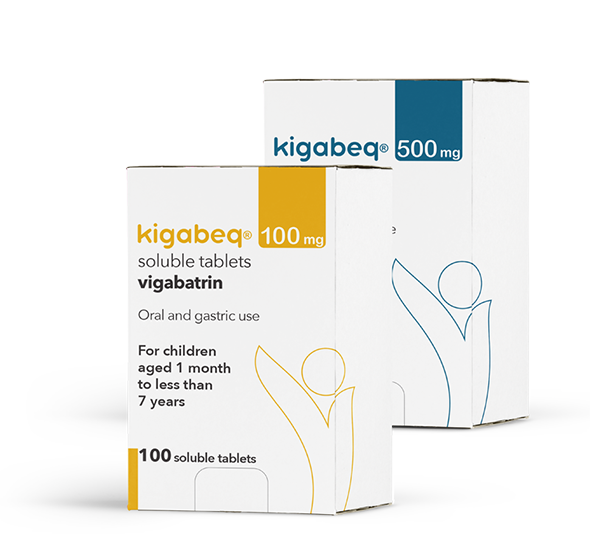
Kigabeq®
Vigabatrin scored soluble tablets, 100 mg & 500 mg
West Syndrome (infantile spasms)
Kigabeq® is a pediatric form of vigabatrin (soluble tablets) for the first-line treatment of West syndrome, and in combination with other drugs, for resistant partial epilepsy (focal onset seizures).
West syndrome is a rare disorder characterized by the association of clusters of axial spasms, psychomotor retardation and an hypsarrhythmic interictal EEG pattern. It is the most frequent type of epileptic encephalopathy. It may occur in healthy infants and in those with abnormal cognitive development.(1)
Pharmaceutical form
Kigabeq® is a pediatric form of vigabatrin developed as breakable soluble tablets with two strengths (500mg and 100mg).(2,3)
Kigabeq®
is approved in infants and children from 1 month to less than 7 years of age, for:
- Treatment in monotherapy of infantile spasms (West’s syndrome).
- Treatment in combination with other antiepileptic medicinal products for patients with resistant partial epilepsy (focal onset seizures) with or without secondary generalization, that is where all other appropriate medicinal product combinations have proved inadequate or have not been tolerated (2).
Unmet medical need in pediatric patients
In the “Revised priority list for studies into off-patent pediatric medicinal products” published in 2014, the EMA underlined the need of an “age-appropriate formulation” of vigabatrin. With its 2 strengths and the scored soluble tablets, Kigabeq® fully responds to this need(4).
Kigabeq® was granted a paediatric-use marketing authorization (PUMA) in the European Union.
Distribution
France and United Kingdom:
Laboratoire Biocodex, Gentilly, France
Baltic countries:
UAB ENTAFARMA, Širvintai dist. munic., Lituania
Bibliography
- Oussini M J Clin Pharmacol. 2019, Proposition of a Minimal Effective Dose of Vigabatrin for the Treatment of Infantile Spasms Using Pediatric and Adult Pharmacokinetic Data
- Rodrigues Epilepsy Res. 2019, Pharmacokinetic evaluation of vigabatrin dose for the treatment of refractory focal seizures in children using adult and pediatric data.
- SoluWest, un essai d’acceptabilité d’une nouvelle formulation pédiatrique de vigabatrine, Poster SFNP Soluwest V1 20180117-Vfinale
References
- Infantile spasms syndrome (Orphanet, April 2022)
- Summary of Product Characteristics (SmPC) KIGABEQ
- Human medicine European public assessment report (EPAR)
- Inventory of paediatric therapeutic needs: Neurology (EMA/562919/2013)

тонкая брошюра
болгарский 07-07-2023
Характеристики продукта
болгарский 07-07-2023
Сообщить общественная оценка
болгарский 01-01-1970
тонкая брошюра
испанский 07-07-2023
Характеристики продукта
испанский 07-07-2023
Сообщить общественная оценка
испанский 01-01-1970
тонкая брошюра
чешский 07-07-2023
Характеристики продукта
чешский 07-07-2023
Сообщить общественная оценка
чешский 01-01-1970
тонкая брошюра
датский 07-07-2023
Характеристики продукта
датский 07-07-2023
Сообщить общественная оценка
датский 01-01-1970
тонкая брошюра
эстонский 07-07-2023
Характеристики продукта
эстонский 07-07-2023
Сообщить общественная оценка
эстонский 01-01-1970
тонкая брошюра
греческий 07-07-2023
Характеристики продукта
греческий 07-07-2023
Сообщить общественная оценка
греческий 01-01-1970
тонкая брошюра
английский 07-07-2023
Характеристики продукта
английский 07-07-2023
Сообщить общественная оценка
английский 01-01-1970
тонкая брошюра
французский 07-07-2023
Характеристики продукта
французский 07-07-2023
Сообщить общественная оценка
французский 01-01-1970
тонкая брошюра
итальянский 07-07-2023
Характеристики продукта
итальянский 07-07-2023
Сообщить общественная оценка
итальянский 01-01-1970
тонкая брошюра
латышский 07-07-2023
Характеристики продукта
латышский 07-07-2023
Сообщить общественная оценка
латышский 01-01-1970
тонкая брошюра
литовский 07-07-2023
Характеристики продукта
литовский 07-07-2023
Сообщить общественная оценка
литовский 01-01-1970
тонкая брошюра
венгерский 07-07-2023
Характеристики продукта
венгерский 07-07-2023
Сообщить общественная оценка
венгерский 01-01-1970
тонкая брошюра
мальтийский 07-07-2023
Характеристики продукта
мальтийский 07-07-2023
Сообщить общественная оценка
мальтийский 01-01-1970
тонкая брошюра
голландский 07-07-2023
Характеристики продукта
голландский 07-07-2023
Сообщить общественная оценка
голландский 01-01-1970
тонкая брошюра
польский 07-07-2023
Характеристики продукта
польский 07-07-2023
Сообщить общественная оценка
польский 01-01-1970
тонкая брошюра
португальский 07-07-2023
Характеристики продукта
португальский 07-07-2023
Сообщить общественная оценка
португальский 01-01-1970
тонкая брошюра
румынский 07-07-2023
Характеристики продукта
румынский 07-07-2023
Сообщить общественная оценка
румынский 01-01-1970
тонкая брошюра
словацкий 07-07-2023
Характеристики продукта
словацкий 07-07-2023
Сообщить общественная оценка
словацкий 01-01-1970
тонкая брошюра
словенский 07-07-2023
Характеристики продукта
словенский 07-07-2023
Сообщить общественная оценка
словенский 01-01-1970
тонкая брошюра
финский 07-07-2023
Характеристики продукта
финский 07-07-2023
Сообщить общественная оценка
финский 01-01-1970
тонкая брошюра
шведский 07-07-2023
Характеристики продукта
шведский 07-07-2023
Сообщить общественная оценка
шведский 01-01-1970
тонкая брошюра
норвежский 07-07-2023
Характеристики продукта
норвежский 07-07-2023
тонкая брошюра
исландский 07-07-2023
Характеристики продукта
исландский 07-07-2023
тонкая брошюра
хорватский 07-07-2023
Характеристики продукта
хорватский 07-07-2023
Сообщить общественная оценка
хорватский 01-01-1970

Back to top
About Medicine

Prescription only medicine
My Account Area


1. Name of the medicinal product
Kigabeq 500 mg soluble tablets
2. Qualitative and quantitative composition
Kigabeq 500 mg soluble tablets
Each soluble tablet contains 500 mg vigabatrin.
For the full list of excipients, see section 6.1
3. Pharmaceutical form
Soluble tablet
White oval tablets. The tablets are scored on one side and can be divided into equal doses.
— 500 mg tablet size: 16.0 mm x 9.0 mm
4. Clinical particulars
4.1 Therapeutic indications
Kigabeq is indicated in infants and children from 1 month to less than 7 years of age for:
— Treatment in monotherapy of infantile spasms (West’s syndrome).
— Treatment in combination with other antiepileptic medicinal products for patients with resistant partial epilepsy (focal onset seizures) with or without secondary generalisation, that is where all other appropriate medicinal product combinations have proved inadequate or have not been tolerated.
4.2 Posology and method of administration
Vigabatrin treatment may only be initiated by a specialist in epileptology, neurology or paediatric neurology. Follow-up should be arranged under supervision of a specialist in epileptology, neurology or paediatric neurology.
Posology
Monotherapy for infantile spasms (West’s Syndrome)
The recommended starting dose is 50 mg/kg/day. Subsequent dosing can be titrated by 25 mg/kg/day increments every 3 days up to the maximum recommended dose of 150 mg/kg/day.
Table 1: Number of soluble tablets according to body weight, starting dose and dose increment in infantile spasms
|
Body weight (kg) |
Starting dose of 50 mg/kg/day |
Proposed doses for first titration step (75 mg/kg/day) (Day 3) |
Proposed doses for second titration step (100 mg/kg/day) (Day 6) |
|
3 |
0.5 x 100 mg tablet morning 1 x 100 mg tablet evening |
1 x 100 mg tablet morning 1.5 x 100 mg tablet evening |
1.5 x 100 mg tablet morning 1.5 x 100 mg tablet evening |
|
4 |
1 x 100 mg tablet morning 1 x 100 mg tablet evening |
1.5 x 100 mg tablet morning 1.5 x 100 mg tablet evening |
2 x 100 mg tablet morning 2 x 100 mg tablet evening |
|
5 |
1 x 100 mg tablet morning 1.5 x 100 mg tablet evening |
1.5 x 100 mg tablet morning 2 x 100 mg tablet evening |
2.5 x 100 mg tablet morning 2.5 x 100 mg tablet evening |
|
6 |
1.5 x 100 mg tablet morning 1.5 x 100 mg tablet evening |
2 x 100 mg tablet morning 2.5 x 100 mg tablet evening |
3 x 100 mg tablet morning 3 x 100 mg tablet evening |
|
7 |
1.5 x 100 mg tablet morning 2 x100 mg tablet evening |
2.5 x 100 mg tablet morning 2.5 x 100 mg tablet evening |
3.5 x 100 mg tablet morning 3.5 x 100 mg tablet evening |
|
8 |
2 x 100 mg tablet morning 2 x 100 mg tablet evening |
3 x 100 mg tablet morning 3 x 100 mg tablet evening |
4 x 100 mg tablet morning 4 x 100 mg tablet evening |
|
9 |
2 x 100 mg tablet morning 2.5 x 100 mg tablet evening |
3.5 x 100 mg tablet morning 3.5 x 100 mg tablet evening |
4.5 x 100 mg tablet morning 4.5 x 100 mg tablet evening |
|
10 |
0.5 x 500 mg tablet morning 0.5 x 500 mg tablet evening |
0.5 x 500 mg tablet morning 1 x 500 mg tablet evening |
1 x 500 mg tablet morning 1 x 500 mg tablet evening |
|
11 |
2.5 x 100 mg tablet morning 3 x 100 mg tablet evening |
4 x 100 mg tablet morning 4 x 100 mg tablet evening |
1 x 500 mg tablet morning 1 x 500 mg and 1 x 100 mg tablet evening |
|
12 |
3 x 100 mg tablet morning 3 x 100 mg tablet evening |
4.5 x 100 mg tablet morning 4.5 x 100 mg tablet evening |
1 x 500 mg and 1 x 100 mg tablet morning 1 x 500 mg and 1 x 100 mg tablet evening |
|
13 |
3 x 100 mg tablet morning 3.5 x 100 mg tablet evening |
4.5 x 100 mg tablet morning 1 x 500 mg tablet evening |
1 x 500 mg and 1 x 100 mg tablet morning 1 x 500 mg and 2 x 100 mg tablet evening |
|
14 |
3.5 x 100 mg tablet morning 3.5 x 100 mg tablet evening |
1 x 500 mg tablet morning 1 x 500 mg tablet evening |
1 x 500 mg and 2 x 100 mg tablet morning 1 x 500 mg and 2 x 100 mg tablet evening |
|
15 |
0.5 x 500 mg tablet morning 1 x 500 mg tablet evening |
1 x 500 mg tablet morning 1 x 500 mg and 1 x 100 mg tablet evening |
1.5 x 500 mg tablet morning 1.5 x 500 mg tablet evening |
|
16 |
4 x 100 mg tablet morning 4 x 100 mg tablet evening |
1 x 500 mg and 1 x 100 mg tablet morning 1 x 500 mg and 1 x 100 mg tablet evening |
1 x 500 mg and 3 x 100 mg tablet morning 1 x 500 mg and 3 x 100 mg tablet evening |
Resistant partial epilepsy (focal onset seizures)
The recommended starting dose is 40 mg/kg/day.
Maintenance recommendations in relation to bodyweight are:
|
Bodyweight: |
10 to 15 kg: |
0.5 to 1 g/day |
|
15 to 30 kg: |
1 to 1.5 g/day |
Table 2: Number of soluble tablets according to body weight and starting dose in resistant partial epilepsy
|
Body weight (kg) |
Starting dose of 40 mg/kg/day |
|
3 |
0.5 x 100 mg tablet morning 0.5 x 100 mg tablet evening |
|
4 |
0.5 x 100 mg tablet morning 1 x 100 mg tablet evening |
|
5 |
1 x 100 mg tablet morning 1 x 100 mg tablet evening |
|
6 |
1 x 100 mg tablet morning 1.5 x 100 mg tablet evening |
|
7 |
1.5 x 100 mg tablet morning 1.5 x 100 mg tablet evening |
|
8 |
1.5 x 100 mg tablet morning 2 x 100 mg tablet evening |
|
10 |
2 x 100 mg tablet morning 2 x 100 mg tablet evening |
|
13 |
2.5 x 100 mg tablet morning 2.5 x 100 mg tablet evening |
|
15 |
3 x 100 mg tablet morning 3 x 100 mg tablet evening |
|
17 |
3.5 x 100 mg tablet morning 3.5 x 100 mg tablet evening |
|
19 |
3.5 x 100 mg tablet morning 4 x 100 mg tablet evening |
|
22 |
4.5 x 100 mg tablet morning 4.5 x 100 mg tablet evening |
|
25 |
1 x 500 mg tablet morning 1 x 500 mg tablet evening |
|
28 |
1 x 500 mg tablet morning 1 x 500 mg and 1 x 100 mg tablet evening |
|
30 |
1 x 500 mg and 1 x 100 mg tablet morning 1 x 500 mg and 1 x 100 mg tablet evening |
Kigabeq is for oral or gastric administration twice daily and may be taken before or after meals.
The maximum recommended dose should not be exceeded.
If control of epilepsy is not clinically significantly improved after an adequate treatment course, vigabatrin treatment should be discontinued. Vigabatrin should be gradually withdrawn under close medical supervision.
Renal impairment
Since vigabatrin is eliminated via the kidneys, caution should be exercised when administering the medicinal product to patients with creatinine clearance less than 60 ml/min. Adjustment of dose should be considered. Such patients may respond to a lower maintenance dose. Patients should be monitored for adverse reactions such as sedation or confusion (see sections 4.4 and 4.8).
Hepatic impairment
Vigabatrin is not metabolised by hepatic enzymes, hence there is no need of adjustment of dose or frequency of administration.
Paediatric population
There is no relevant use of Kigabeq in neonates (below 27 days of age) in the indication “infantile spasms” and in children and adolescents above 7 years of age in the indication “resistant partial epilepsy” (focal onset seizures).
Method of administration
Kigabeq is for oral or gastric use and may be taken before or after meals. Gastric administration should be used for children who cannot swallow, but can be fed by enteral route.
The method of administration will be determined by a physician specialised in epileptology, neurology or paediatric neurology.
For instructions on dissolution and handling of the medicinal product before administration, see section 6.6.
Oral administration
Since no stability studies have been performed with other solvents than water, for preparing oral solution only water should be used. When the tablets are fully disintegrated, the whole content of solution should be administered straight away to the child directly from the drinking glass. If there is a risk of regurgitation or if the child is not old enough to drink from a glass, the whole content of solution should be withdrawn with a syringe for oral use, the end of the syringe should be put in the mouth of the child and gently pushed on the plunger.
Once the child has entirely drunk the medicine solution, the drinking glass should be rinsed with one or two teaspoons of water (approximately 5 or 10 ml) and dispensed to the child by the same way.
Gastric administration
For patients who cannot swallow, administration of Kigabeq using a gastric tube is possible.
Tablets are disintegrated in approximately 5 or 10 ml of water and the resulting solution is introduced into the tube using an adapted syringe. The gastric tube should be rinsed with 10 ml of water.
4.3 Contraindications
Hypersensitivity to the active substance or to any of the excipients listed in section 6.1.
4.4 Special warnings and precautions for use
Visual field defects (VFD) have been reported in patients receiving vigabatrin with a high prevalence (about 1/3 of patients). Frequencies found in an open clinical study are presented in section 4.8. The onset is usually after months to years of vigabatrin therapy. The degree of visual field constriction may be severe and this may have practical consequences for the patient. Vigabatrin can cause permanent vision loss.
Most of the patients with perimetry-confirmed defects have been asymptomatic. Hence, this undesirable effect can only be reliably detected by systematic perimetry which is usually possible only in patients with a developmental age of more than 9 years. For younger patients electroretinography should be used (see Visual Field Defects).
Available data suggests that visual field defects are irreversible even after discontinuation of vigabatrin. A deterioration of VFD after the treatment is discontinued cannot be excluded.
Therefore, vigabatrin should only be used after careful benefit/ risk assessment compared with alternatives.
Vigabatrin is not recommended for use in patients with any pre-existing clinically significant visual field defect.
Patients should undergo systematic screening examination when starting vigabatrin and at regular intervals for detection of visual field defects. Visual field testing should continue at 6 month intervals for the whole duration of treatment. The assessment must be continued 6 to 12 months after the discontinuation of therapy (see Visual Field Defects).
Visual Field Defects (VFD)
Based on available data, the usual pattern is a concentric constriction of the visual field of both eyes, which is generally more marked nasally than temporally. In the central visual field (within 30 degree of eccentricity), frequently an annular nasal defect is seen. However, the VFDs reported in patients receiving vigabatrin have ranged from mild to severe. Severe cases are potentially disabling and may be characterized by tunnel vision. Blindness was also reported in severe cases.
Most patients with perimetry-confirmed defects had not previously spontaneously noticed any symptoms, even in cases where a severe defect was observed in perimetry. Available evidence suggests that the VFD is irreversible even after discontinuation of vigabatrin. A deterioration of VFD after the treatment is discontinued cannot be excluded.
Pooled data from prevalence surveys suggest that as many as 1/3 of patients receiving vigabatrin therapy have VFDs. Males may be at greater risk than females. Frequencies found in an open clinical study are presented in section 4.8. A possible association between the risk of visual field defects and the extent of vigabatrin exposure, both in terms of daily dose (from 1 gram to more than 3 grams) and in terms of duration of treatment (maximum during the first three years) has been shown in this study.
All patients should have ophthalmological consultation before or shortly after the initiation of vigabatrin treatment.
Perimetry is seldom possible in children less than 9 years of developmental age. The risks of treatment must be very carefully weighed against possible benefit in children. Currently, there is no established method to diagnose or exclude visual field defects in children in whom a standardised perimetry cannot be performed. Frequency and severity have only been indirectly characterised in this population on the presence of electroretinogram or visual evoked potential anomalies.
Electroretinography is recommended in infants and children who are unable to cooperate with perimetry. Based on the available data the first oscillatory potential and 30 Hz flicker responses of the electroretinogram appear to be correlated with a vigabatrin associated VFD. These responses are delayed and reduced beyond the normal limits. Such changes have not been seen in vigabatrin treated patients without a VFD.
The parents and/or caregivers must be given a thorough description of the frequency and implications of the development of VFD during vigabatrin treatment.
VFD may not be detected until it is severe and undetected moderate defects may affect child integrity. Therefore, vision assessment is required at baseline (no later than 4 weeks after starting treatment) and at least every 6 months while on therapy. The assessment must be continued 6 to 12 months after the discontinuation of therapy.
Available data suggests that visual field defects are irreversible.
If a visual field constriction is observed during follow-up, consideration should be given to gradual discontinuation of vigabatrin. If the decision to continue treatment is made, consideration should be given to more frequent follow-up (perimetry) in order to detect progression or sight threatening defects.
Vigabatrin should not be used concomitantly with other retinotoxic medicinal products.
Neurologic and psychiatric conditions
In view of the results of the animal safety studies (see section 5.3) it is recommended that patients treated with vigabatrin are closely observed for adverse reactions on neurological function.
Rare reports of encephalopathic symptoms such as marked sedation, stupor and confusion in association with non-specific slow wave activity on electroencephalogram have been described soon after the initiation of vigabatrin treatment. Risk factors for the development of these reactions include higher than recommended starting dose, faster dose escalation at higher steps than recommended and renal failure. These events have been reversible following dose reduction or discontinuation of vigabatrin (see section 4.8).
Abnormal Magnetic Resonance Imaging signals
Abnormal Magnetic Resonance Imaging (MRI) signal changes characterised by increased T2 signal and restricted diffusion in a symmetric pattern involving the thalamus, basal ganglia, brain stem, and cerebellum have been observed in some infants treated with vigabatrin for infantile spasms. In a retrospective epidemiologic study in infants with infantile spasms (N=205), the prevalence of these changes was 22% in vigabatrin treated patients versus 4% in patients treated with other therapies.
In the study above, in post-marketing experience, and in published literature reports, these changes generally resolved with discontinuation of treatment. In a few patients, the lesion resolved despite continued use.
Additionally, cases of intramyelinic oedema (IME) have been reported, particularly in infants treated for infantile spasms (see section 4.8 and 5.3). IME has been reported to be reversible following drug discontinuation, and it is therefore recommended to progressively discontinue vigabatrin when IME is observed.
Movement disorders including dystonia, dyskinesia and hypertonia, have been reported in patients treated with vigabatrin for infantile spasms. The benefit/risk ratio of vigabatrin should be evaluated on an individual patient basis. If new movement disorders occur during treatment with vigabatrin, consideration should be given to dose reduction or a gradual discontinuation of treatment.
Some patients may experience an increase in seizure frequency or the onset of new types of seizures with vigabatrin (see section 4.8). Patients with myoclonic seizures may be particularly susceptible to this effect. New onset myoclonus and exacerbation of existing myoclonus may occur in rare cases. These phenomena may also be the consequence of an overdose, a decrease in plasma concentrations of concomitant antiepileptic treatment, or a paradoxical effect.
Abrupt withdrawal may lead to rebound seizures. If a patient is to be withdrawn from vigabatrin treatment, it is recommended that this is done by gradual dose reduction over a 2- to 4-week period.
Vigabatrin should be used with caution in patients with a history of psychosis, depression or behavioural problems. Psychiatric events (e.g., agitation, depression, abnormal thinking, paranoid reactions) have been reported during vigabatrin treatment. These events occurred in patients with and without a psychiatric history and were usually reversible when vigabatrin doses were reduced or gradually discontinued.
Suicidal ideation and behaviour
Suicidal ideation and behaviour have been reported in patients treated with antiepileptic medicinal products in several indications. A meta-analysis of randomised placebo-controlled trials of antiepileptic medicinal products has also shown a small increased risk of suicidal ideation and behaviour. The mechanism of this effect is not known and the available data do not exclude the possibility of an increased risk for vigabatrin.
Therefore, patients should be monitored for signs of suicidal ideation and behaviour, and appropriate treatment should be considered. Patients (and caregivers of patients) should be advised to seek medical advice immediately should signs of suicidal ideation or behaviour emerge.
Renal impairment
Since vigabatrin is eliminated via the kidneys, caution should be exercised in patients with a creatinine clearance of less than 60 ml/min. These patients should be monitored closely for undesirable effects such as sedation and confusion (see section 4.2).
Interference with serological testing
Vigabatrin may lead to a decrease in measured plasma activity of alanine aminotransferase (ALT) and to a lesser extent, aspartate aminotransferase (AST). The magnitude of suppression for ALT has been reported to vary between 30% and 100%. Therefore, these liver tests may be quantitatively unreliable in patients taking vigabatrin (see section 4.8).
Vigabatrin may increase the amount of amino acids in the urine possibly leading to a false positive test for certain rare genetic metabolic disorders (e.g., alpha aminoadipic aciduria).
Risk of medication error
Because both tablet strengths (100 mg and 500 mg) can be used concomitantly there may be confusion between the tablets or tablet halves administered with a risk of incorrect dosing. Special attention should be paid to the tablet size to correctly identify the strength.
4.5 Interaction with other medicinal products and other forms of interaction
Interaction studies have only been performed in adults.
As vigabatrin is neither metabolised, nor protein bound and is not an inducer of hepatic cytochrome P450 metabolising-enzymes, interactions with other medicinal products are unlikely. However, during controlled clinical studies, a gradual reduction of 16-33% in the plasma concentration of phenytoin has been observed. The exact nature of this interaction is presently not understood, however, in the majority of cases it is unlikely to be of therapeutic significance.
The plasma concentrations of carbamazepine, phenobarbital, and sodium valproate have also been monitored during controlled clinical trials and no clinically significant interactions have been detected.
4.6 Fertility, pregnancy and lactation
Pregnancy
This medicinal product is not intended for use in women of child-bearing potential.
Breastfeeding
This medicinal product is not intended for use in women who are breastfeeding.
Fertility
Fertility studies in rats have shown no effect on male and female fertility (see section 5.3).
4.7 Effects on ability to drive and use machines
Kigabeq has major influence on the ability to perform hazardous activities.
In view of the fact that drowsiness has been observed in clinical trials with vigabatrin, patients should be warned of this possibility at the start of treatment.
Visual field defects which can significantly affect the ability to perform hazardous activities have been frequently reported in association with vigabatrin. Patients should be evaluated for the presence of visual field defects (see also section 4.4). Special care should be taken with young patients cycling, climbing or performing any other hazardous activity.
4.8 Undesirable effects
Summary of the safety profile
The most commonly reported adverse reaction related to vigabatrin are visual field defects (ranging from mild to severe and occurring usually after months to years of vigabatrin therapy), psychiatric disorders such as agitation, excitation, aggression, nervousness, depression, paranoid reaction, nervous system disorders such as marked sedation, stupor and confusion. Rarely seen events include suicide attempts, encephalopathy and retinal disorders.
Some patients may experience an increase in seizure frequency, including status epilepticus with vigabatrin. Patients with myoclonic seizures may be particularly susceptible to this effect. New onset myoclonus and exacerbation of existing myoclonus may occur in rare cases.
Tabulated list of adverse reactions
The adverse reactions listed below have been reported during pre- or post-approval use of vigabatrin worldwide. They are not specific to the paediatric population.
Undesirable effects ranked under headings of frequency are listed below, using the following convention:
Very common (≥1/10); common (≥1/100 to <1/10); uncommon (≥1/1,000 to <1/100); rare (≥1/10,000 to <1/1,000); very rare (<1/10,000); not known (cannot be estimated from the available data).
|
System organ class |
Very common |
Common |
Uncommon |
Rare |
Very rare |
Not known |
|
Blood and lymphatic system disorders |
anaemia |
|||||
|
Psychiatric disorders |
agitation, aggression, nervousness, depression, paranoid reaction, insomnia |
hypomania, mania, psychotic disorder |
suicide attempt |
hallucination |
||
|
Nervous system disorders |
somnolence |
speech disorder, headache, dizziness, paraesthesia, disturbance in attention and memory impairment, mental impairment (thought disturbance), tremor |
coordination abnormal (ataxia) |
encephal opathy |
optic neuritis |
brain MRI abnormalities, intramyelinic oedema (particularly in infants) (see sections 4.4 and 5.3), movement disorders, including dystonia, dyskinesia and hypertonia, either alone or in association with abnormalities in MRI |
|
Eye disorders |
visual field defect |
vision blurred, diplopia, nystagmus |
retinal disorder (such as peripher al retinal atrophy) |
optic atrophy |
reduced visual acuity |
|
|
Gastrointes tinal disorders |
nausea, vomiting, abdominal pain |
|||||
|
Hepatobiliary disorders |
hepatitis |
|||||
|
Skin and subcutaneo us tissue disorders |
alopecia |
rash |
angioedema, urticaria |
|||
|
Musculoske letal and connective tissue disorders |
arthralgia |
|||||
|
General disorders and administrati on site conditions |
fatigue |
oedema, irritability |
||||
|
Investigations |
weight increased |
Visual field defects
Epidemiology of VFD in patients with refractory partial epilepsy was observed in an observational, open-label, multicentre, comparative, parallel group, Phase IV study, including 734 patients, at least 8 years old, with refractory partial epilepsy for at least one year.
Patients were split in three treatment groups: patients currently treated with vigabatrin (group I), patients previously exposed to vigabatrin (group II) and patients never exposed to vigabatrin (group III).
The following table presents the main findings at inclusion and the first and last conclusive evaluations in the evaluable population (n=524):
|
Children (from 8 to 12 years old) |
Adolescents and adults (>12 years old) |
|||||
|
Group I 1 |
Group II 2 |
Group III |
Group I 3 |
Group II 4 |
Group III |
|
|
N=38 |
N=47 |
N=41 |
N=150 |
N=151 |
N=97 |
|
|
Visual field defect with non- identified aetiology: |
||||||
|
— Observed at inclusion |
1 (4.4%) |
3 (8.8%) |
2 (7.1%) |
31 (34.1%) |
20 (19.2%) |
1 (1.4%) |
|
— Observed at first conclusive evaluation |
4 (10.5%) |
6 (12.8%) |
2 (4.9%) |
59 (39.3%) |
39 (25.8%) |
4 (4.1%) |
|
— Observed at last conclusive evaluation |
10 (26.3%) |
7 (14.9%) |
3 (7.3%) |
70 (46.7%) |
47 (31.1%) |
5 (5.2%) |
1 Median treatment duration: 44.4 months, mean daily dose 1.48 g
2 Median treatment duration: 20.6 months, mean daily dose 1.39 g
3 Median treatment duration: 48.8 months, mean daily dose 2.10 g
4 Median treatment duration: 23.0 months, mean daily dose 2.18 g
Description of selected adverse reactions
Psychiatric reactions have been reported during vigabatrin therapy. These reactions occurred in patients with and without a psychiatric history and were usually reversible when vigabatrin doses were reduced or gradually discontinued (see section 4.4).
Depression was a common psychiatric reaction in clinical trials but seldom required discontinuation of vigabatrin.
Rare reports of encephalopathic symptoms such as marked sedation, stupor and confusion in association with non-specific slow wave activity on electroencephalogram have been described soon after the initiation of vigabatrin treatment. Such reactions have been fully reversible following dose reduction or discontinuation of vigabatrin (see section 4.4).
Laboratory data indicate that vigabatrin treatment does not lead to renal toxicity. Decreases in ALT and AST, which are considered to be a result of inhibition of these aminotransferases by vigabatrin, have been observed. Chronic treatment with vigabatrin may be associated with a slight decrease in haemoglobin which rarely attains significance.
Asymptomatic and transient Magnetic Resonance Imaging (MRI) abnormalities in the brain have been observed in some infants treated with vigabatrin for infantile spasms. The clinical significance of these MRI abnormalities is unknown. As routine MRI surveillance of this paediatric population is not recommended, the frequency of MRI abnormalities cannot be reliably estimated from the available data. Movement disorders either alone or in association with abnormalities in MRI have been reported in patients treated with vigabatrin for infantile spasms but their frequency is not known.
Paediatric population
Psychiatric disorders
Very common: excitation, agitation
Reporting of suspected adverse reactions
Reporting suspected adverse reactions after authorisation of the medicinal product is important. It allows continued monitoring of the benefit/risk balance of the medicinal product. Healthcare professionals are asked to report any suspected adverse reactions via Yellow Card Scheme Website: www.mhra.gov.uk/yellowcard or search for MHRA Yellow Card in the Google Play or Apple App Store.
4.9 Overdose
Symptoms
Vigabatrin overdose has been reported. When provided, doses were most commonly between 7.5 to 30 g; however, ingestions up to 90 g have been reported. Nearly half of the cases involved multiple drug ingestions. When reported, the most common symptoms included drowsiness or coma. Other less frequently reported symptoms included vertigo, headache, psychosis, respiratory depression or apnoea, bradycardia, hypotension, agitation, irritability, confusion, abnormal behaviour, and speech disorder.
Management
There is no specific antidote. The usual supportive measures should be employed. Measures to remove unabsorbed medicinal product should be considered. Activated charcoal has been shown to not significantly adsorb vigabatrin in an in vitro study. The effectiveness of haemodialysis in the treatment of vigabatrin overdose is unknown. In isolated case reports in renal failure patients receiving therapeutic doses of vigabatrin, haemodialysis reduced vigabatrin plasma concentrations by 40% to 60%.
5. Pharmacological properties
5.1 Pharmacodynamic properties
Pharmacotherapeutic group: Antiepileptics, fatty acid derivatives, ATC code: N03AG04
Mechanism of action
Vigabatrin is a selective irreversible inhibitor of GABA transaminase, the enzyme responsible for the breakdown of GABA (gamma aminobutyric acid). Vigabatrin increases the concentration of GABA, the major inhibitory neurotransmitter in the brain.
Clinical efficacy and safety
Controlled and long-term clinical trials have shown that vigabatrin is an effective anticonvulsant agent when given as first line treatment in patients with infantile spasms and as add-on therapy in patients with epilepsy not controlled satisfactorily by conventional therapy. This efficacy is particularly marked in patients with seizures of partial origin.
5.2 Pharmacokinetic properties
Adults
Absorption
Vigabatrin is a water soluble compound and it is rapidly and completely absorbed from the gastrointestinal tract. Food administration does not alter the extent of vigabatrin absorption. Time to reach maximum plasma concentrations (tmax) is approximately 1 hour.
Distribution
Vigabatrin is widely distributed with an apparent volume of distribution slightly greater than total body water. Binding to plasma proteins is negligible. Plasma and cerebrospinal fluid concentrations are linearly related to dose over the recommended dose range.
Biotransformation
Vigabatrin is not significantly metabolised. No metabolites have been identified in plasma.
Elimination
Vigabatrin is eliminated via renal excretion with a terminal half-life of 5-8 hours. Oral clearance (Cl/F) of vigabatrin is approximately 7 l/h (i.e. 0.10 l/h/kg). Approximately 70% of a single oral dose was recovered as unchanged drug in the urine in the first 24 hours post-dose.
Pharmacokinetic/pharmacodynamic relationship(s)
There is no direct correlation between plasma concentration and efficacy. The duration of the effect of the medicinal product is dependent on the GABA transaminase re-synthesis rate.
Paediatric population
Pharmacokinetic properties of vigabatrin have been investigated in groups of six neonates (age 15-26 days), six infants (age 5-22 months) and six children (age 4.6-14.2 years) with refractory epilepsy.
After administration of a single 37-50 mg/kg dose of an oral solution vigabatrin tmax was approximately 2.5 hours in neonates and infants, and 1 hour in children. Mean terminal half-life of vigabatrin was about 7.5 hours in neonates, 5.7 hours in infants and 5.5 hours in children. The mean Cl/F of active S-enantiomer of vigabatrin in infants and children was 0.591 l/h/kg and 0.446 l/h/kg respectively.
5.3 Preclinical safety data
Animal safety studies carried out in the rat, mouse, dog and monkey have indicated that vigabatrin has no significant adverse reactions on the liver, kidney, lung, heart or gastrointestinal tract.
In the brain, microvacuolation due to intramyelinic oedema has been observed in white matter tracts of rat, mouse and dog at doses of 30-50 mg/kg/day. In the monkey these lesions are minimal or equivocal. In both rat and dog they were reversible on stopping vigabatrin treatment and even regressed with continued treatment.
Vigabatrin-associated retinotoxicity has been observed in 80-100% of albino rats at the dose of 300 mg/kg/day orally, but not in pigmented rats, dogs or monkeys. The retinal changes in albino rats were characterised as focal or multifocal disorganisation of the outer nuclear layer while the other layers of retina were not affected.
Animal experiments have shown that vigabatrin has no negative influence on fertility or pup development. No teratogenicity was seen in rats in doses up to 150 mg/kg (3 times the human dose) or in rabbits in doses up to 100 mg/kg. However, in rabbits, a slight increase in the incidence of cleft palate at doses of 150-200 mg/kg was seen.
Studies with vigabatrin revealed no evidence of mutagenic or carcinogenic effects.
6. Pharmaceutical particulars
6.1 List of excipients
Crospovidone type B
Mannitol
Sodium stearyl fumarate
6.2 Incompatibilities
Not applicable.
6.3 Shelf life
4 years
Use immediately following preparation of the oral solution.
After first opening: 100 days
6.4 Special precautions for storage
This medicinal product does not require any special storage conditions.
6.5 Nature and contents of container
Kigabeq 100 mg soluble tablets
HDPE bottle closed with a child resistant tamper evident PP screw cap.
Pack size: 100 soluble tablets.
6.6 Special precautions for disposal and other handling
Dissolution of soluble tablet
Fill a drinking glass with one or two teaspoons of water (approximately 5 or 10 ml), according to the age of the child. Add the prescribed number of Kigabeq tablets or tablet halves to the water. Wait until the tablet(s) fully disintegrate; tablets generally disintegrate in less than one minute but disintegration can be fastened by gently hand stirring the oral solution.
The resulting solution is whitish and cloudy. This is normal and due to presence of water-insoluble excipients.
7. Marketing authorisation holder
ORPHELIA Pharma SAS
85 boulevard Saint-Michel
75005 PARIS
France
8. Marketing authorisation number(s)
PLGB 50695/0002
9. Date of first authorisation/renewal of the authorisation
01/01/2021
10. Date of revision of the text
11/04/2022