
Download or browse on-line these Operating Manual for Ryf Axio Lab.A1 Microscope.
Summary of Contents:
 |
[Page 1] Ryf Axio Lab.A1 Operating Manual Axio Lab.A1 Ryf AG Bettlachstrasse 2 2540 Grenchen tel 032 654 21 00 fax 032 654 21 09 www.ryfag.ch |
 |
[Page 2] Ryf Axio Lab.A1 Carl Zeiss Copyright / Trade Marks Axio Lab.A1 2 430037-7144-001 04/2013 Knowledge of this manual is essential for the operation of the instrument. Please familiarize yourself with the contents of this manual and pay special attenti… |
 |
[Page 3] Ryf Axio Lab.A1 Axio Lab.A1 Contents / List of Illustrations Carl Zeiss 04/2013 430037-7144-001 3 CONTENTS Page 1 INTRODUCTION ……………………………………………………………………………………… 7 1.1 Notes on instr… |
 |
[Page 4] Ryf Axio Lab.A1 Carl Zeiss Contents / List of Illustrations Axio Lab.A1 4 430037-7144-001 04/2013 3.2 Mounting optional components …………………………………………………………………….. 62 3.2.1 Mounting the light intens… |
 |
[Page 5] Ryf Axio Lab.A1 Axio Lab.A1 Contents / List of Illustrations Carl Zeiss 04/2013 430037-7144-001 5 LIST OF ILLUSTRATIONS Fig. 1-1 «RADIATION» and «LED APERTURE» warning labels on Axio Lab.A1 for transmitted and reflected light fl… |
 |
[Page 6] Ryf Axio Lab.A1 Carl Zeiss Contents / List of Illustrations Axio Lab.A1 6 430037-7144-001 04/2013 Fig. 3-18 Inserting the LED lamp ………………………………………………………………………………………… 58 Fig. 3-19 … |
 |
[Page 7] Ryf Axio Lab.A1 INTRODUCTION Axio Lab.A1 Notes on instrument safety Carl Zeiss 04/2013 430037-7144-001 7 1 INTRODUCTION 1.1 Notes on instrument safety Axio Lab.A1 microscopes have been designed, produced and tested in compliance with DIN EN 61010-1… |
 |
[Page 8] Ryf Axio Lab.A1 INTRODUCTION Carl Zeiss Notes on instrument safety Axio Lab.A1 8 430037-7144-001 04/2013 Should it be determined that protective measures are no longer effective, the instrument must be taken out of service and secured against unin… |
 |
[Page 9] Ryf Axio Lab.A1 INTRODUCTION Axio Lab.A1 Notes on instrument safety Carl Zeiss 04/2013 430037-7144-001 9 LED Risk Group 2 to IEC 62471, LED radiation will be emitted. Never look into the LED beam of the illuminating device – either with or wi… |
 |
[Page 10] Ryf Axio Lab.A1 INTRODUCTION Carl Zeiss Notes on instrument safety Axio Lab.A1 10 430037-7144-001 04/2013 Warning labels on Axio Lab.A1 stands Warning label: Hot surface! Affixed to all stands with transmitted light illumination. Fig. 1-… |
 |
[Page 11] Ryf Axio Lab.A1 INTRODUCTION Axio Lab.A1 Notes on instrument safety Carl Zeiss 04/2013 430037-7144-001 11 Fig. 1-2 «Hot surface below» warning label on Axio Lab.A1 for reflected light |
 |
[Page 12] Ryf Axio Lab.A1 INTRODUCTION Carl Zeiss Notes on ergonomics of the microscope Axio Lab.A1 12 430037-7144-001 04/2013 1.2 Notes on ergonomics of the microscope The Axio Lab.A1 light microscope was developed and designed in cooperation with occupatio… |
 |
[Page 13] Ryf Axio Lab.A1 INTRODUCTION Axio Lab.A1 Notes on warranty Carl Zeiss 04/2013 430037-7144-001 13 DIN EN 894-1: Ergonomic requirements for the design of displays and control actuators – Part 1: General principles for human interaction with di… |
 |
[Page 14] Ryf Axio Lab.A1 DESCRIPTION OF THE INSTRUMENT Carl Zeiss Intended use Axio Lab.A1 14 430037-7144-001 04/2013 2 DESCRIPTION OF THE INSTRUMENT 2.1 Intended use Axio Lab.A1 microscopes were designed as all-purpose microscopes for biological and medi… |
 |
[Page 15] Ryf Axio Lab.A1 DESCRIPTION OF THE INSTRUMENT Axio Lab.A1 Intended use Carl Zeiss 04/2013 430037-7144-001 15 The ergonomic design elements of the Axio Lab.1 are: Vertically adjustable, swivel-type and swivel/vertically adjustable ergo tubes … |
 |
[Page 16] Ryf Axio Lab.A1 DESCRIPTION OF THE INSTRUMENT Carl Zeiss System overview Axio Lab.A1 16 430037-7144-001 04/2013 2.2 System overview |
 |
[Page 17] Ryf Axio Lab.A1 DESCRIPTION OF THE INSTRUMENT Axio Lab.A1 System overview Carl Zeiss 04/2013 430037-7144-001 17 |
 |
[Page 18] Ryf Axio Lab.A1 DESCRIPTION OF THE INSTRUMENT Carl Zeiss System overview Axio Lab.A1 18 430037-7144-001 04/2013 |
 |
[Page 19] Ryf Axio Lab.A1 DESCRIPTION OF THE INSTRUMENT Axio Lab.A1 System overview Carl Zeiss 04/2013 430037-7144-001 19 |
 |
[Page 20] Ryf Axio Lab.A1 DESCRIPTION OF THE INSTRUMENT Carl Zeiss System overview Axio Lab.A1 20 430037-7144-001 04/2013 |
 |
[Page 21] Ryf Axio Lab.A1 DESCRIPTION OF THE INSTRUMENT Axio Lab.A1 Technical data Carl Zeiss 04/2013 430037-7144-001 21 2.3 Technical data Dimensions (width x depth x height) Axio Lab.A1 basic microscope stand without tube (430037-9000-000) ………………. |
 |
[Page 22] Ryf Axio Lab.A1 DESCRIPTION OF THE INSTRUMENT Carl Zeiss Technical data Axio Lab.A1 22 430037-7144-001 04/2013 Light sources LED transmitted light Power consumption ………………………………………………………………………….. |
 |
[Page 23] Ryf Axio Lab.A1 DESCRIPTION OF THE INSTRUMENT Axio Lab.A1 Technical data Carl Zeiss 04/2013 430037-7144-001 23 2.3.1 Viewing height and tube angle Order No. Binocular tube Viewing angle Adjustment Viewing height* in mm 425522-9000-000 Binocul… |
 |
[Page 24] Ryf Axio Lab.A1 DESCRIPTION OF THE INSTRUMENT Carl Zeiss Technical data Axio Lab.A1 24 430037-7144-001 04/2013 2.3.2 Assignment of dust covers, intermediate plate and base plate Cat. No. Binocular tube Transmitted light 430037-9000-000 430037… |
 |
[Page 25] Ryf Axio Lab.A1 DESCRIPTION OF THE INSTRUMENT Axio Lab.A1 Technical data Carl Zeiss 04/2013 430037-7144-001 25 Cat. No. Binocular tube Transmitted light 430037-9000-000 430037-9010-000 430037-9030-000 Conoscopy 430037-9040-000 Reflected light… |
 |
[Page 26] Ryf Axio Lab.A1 DESCRIPTION OF THE INSTRUMENT Carl Zeiss Control and functional elements on microscope Axio Lab.A1 26 430037-7144-001 04/2013 2.4 Control and functional elements on microscope 2.4.1 Stand models Five stand models are available in … |
 |
[Page 27] Ryf Axio Lab.A1 DESCRIPTION OF THE INSTRUMENT Axio Lab.A1 Control and functional elements on microscope Carl Zeiss 04/2013 430037-7144-001 27 Fig. 2-1 Axio Lab.A1, stand transmitted light |
 |
[Page 28] Ryf Axio Lab.A1 DESCRIPTION OF THE INSTRUMENT Carl Zeiss Control and functional elements on microscope Axio Lab.A1 28 430037-7144-001 04/2013 2.4.3 Stand for transmitted light polarization Key to Fig. 2-2: 1 Basic stand 2 Stage carrier for r… |
 |
[Page 29] Ryf Axio Lab.A1 DESCRIPTION OF THE INSTRUMENT Axio Lab.A1 Control and functional elements on microscope Carl Zeiss 04/2013 430037-7144-001 29 Fig. 2-2 Axio Lab.A1, stand transmitted light polarization |
 |
[Page 30] Ryf Axio Lab.A1 DESCRIPTION OF THE INSTRUMENT Carl Zeiss Control and functional elements on microscope Axio Lab.A1 30 430037-7144-001 04/2013 2.4.4 Stand for transmitted light and reflected light fluorescence Key to Fig. 2-3: 1 Reflected light … |
 |
[Page 31] Ryf Axio Lab.A1 DESCRIPTION OF THE INSTRUMENT Axio Lab.A1 Control and functional elements on microscope Carl Zeiss 04/2013 430037-7144-001 31 Fig. 2-3 Axio Lab.A1, stand transmitted and reflected light fluorescence |
 |
[Page 32] Ryf Axio Lab.A1 DESCRIPTION OF THE INSTRUMENT Carl Zeiss Control and functional elements on microscope Axio Lab.A1 32 430037-7144-001 04/2013 2.4.5 Stand for reflected light Key to Fig. 2-4: 1 Reflected light illumination 2 Luminous-field dia… |
 |
[Page 33] Ryf Axio Lab.A1 DESCRIPTION OF THE INSTRUMENT Axio Lab.A1 Control and functional elements on microscope Carl Zeiss 04/2013 430037-7144-001 33 Fig. 2-4 Axio Lab.A1, stand reflected light |
 |
[Page 34] Ryf Axio Lab.A1 DESCRIPTION OF THE INSTRUMENT Carl Zeiss Control and functional elements on microscope Axio Lab.A1 34 430037-7144-001 04/2013 2.4.6 Stand for transmitted light conoscopy Key to Fig. 2-5: 1 Rotary knob A: Swiveling analyzer in/out… |
 |
[Page 35] Ryf Axio Lab.A1 DESCRIPTION OF THE INSTRUMENT Axio Lab.A1 Control and functional elements on microscope Carl Zeiss 04/2013 430037-7144-001 35 Fig. 2-5 Axio Lab.A1, stand transmitted light conoscopy |
 |
[Page 36] Ryf Axio Lab.A1 DESCRIPTION OF THE INSTRUMENT Carl Zeiss Control and functional elements on microscope Axio Lab.A1 36 430037-7144-001 04/2013 2.4.7 Ergo stands with TÜV certificate «Ergonomically tested» Key to Fig. 2-6: 1 Binocular … |
 |
[Page 37] Ryf Axio Lab.A1 DESCRIPTION OF THE INSTRUMENT Axio Lab.A1 Control and functional elements on optional components Carl Zeiss 04/2013 430037-7144-001 37 2.5 Control and functional elements on optional components 2.5.1 Tubes/photo tubes The appropria… |
 |
[Page 38] Ryf Axio Lab.A1 DESCRIPTION OF THE INSTRUMENT Carl Zeiss Control and functional elements on optional components Axio Lab.A1 38 430037-7144-001 04/2013 Interpupillary distance and viewing height In all tubes: The interpupillary distance can be… |
 |
[Page 39] Ryf Axio Lab.A1 DESCRIPTION OF THE INSTRUMENT Axio Lab.A1 Control and functional elements on optional components Carl Zeiss 04/2013 430037-7144-001 39 Binocular comfortable ergo tube 8-33°/22 with vertical adjustment 50 mm This comfortable ergo tube… |
 |
[Page 40] Ryf Axio Lab.A1 DESCRIPTION OF THE INSTRUMENT Carl Zeiss Control and functional elements on optional components Axio Lab.A1 40 430037-7144-001 04/2013 Binocular ergo tube/ergo photo tube 20°/23 and ergo photo tube 15°/23, each with continuous ver… |
 |
[Page 41] Ryf Axio Lab.A1 DESCRIPTION OF THE INSTRUMENT Axio Lab.A1 Control and functional elements on optional components Carl Zeiss 04/2013 430037-7144-001 41 2.5.2 Microscope stages Mechanical stage 75×30 R or L or mechanical stage 75×30 R ergonomic with s… |
 |
[Page 42] Ryf Axio Lab.A1 DESCRIPTION OF THE INSTRUMENT Carl Zeiss Control and functional elements on optional components Axio Lab.A1 42 430037-7144-001 04/2013 Rotary stage Pol 360° with lock Rotary stage Pol (Fig. 2-17) for seating, positioning a… |
 |
[Page 43] Ryf Axio Lab.A1 DESCRIPTION OF THE INSTRUMENT Axio Lab.A1 Control and functional elements on optional components Carl Zeiss 04/2013 430037-7144-001 43 2.5.3 Condensers Condenser 0.9/1.25 H, D, Ph1, Ph2, Ph3 Condenser 0.9/1.25 H (Fig. 2-19/1) with … |
 |
[Page 44] Ryf Axio Lab.A1 DESCRIPTION OF THE INSTRUMENT Carl Zeiss Control and functional elements on optional components Axio Lab.A1 44 430037-7144-001 04/2013 Overview fixture 2.5x–4x The overview fixture is for full display field illumination when using… |
 |
[Page 45] Ryf Axio Lab.A1 DESCRIPTION OF THE INSTRUMENT Axio Lab.A1 Control and functional elements on optional components Carl Zeiss 04/2013 430037-7144-001 45 2.5.4 Reflector turret 4x The 4x reflector turret is equipped with reflector positions P&C. T… |
 |
[Page 46] Ryf Axio Lab.A1 START-UP Carl Zeiss Installing standard components Axio Lab.A1 46 430037-7144-001 04/2013 3 START-UP The Axio Lab.A1 microscope can be independently installed, converted and started up by the customer. On request, the microscope ca… |
 |
[Page 47] Ryf Axio Lab.A1 START-UP Axio Lab.A1 Installing standard components Carl Zeiss 04/2013 430037-7144-001 47 x For shipping the power cord (Fig. 3-3/1) can be rolled up and stowed in the open cover flap (Fig. 3-3/2). 3.1…. |
 |
[Page 48] Ryf Axio Lab.A1 START-UP Carl Zeiss Installing standard components Axio Lab.A1 48 430037-7144-001 04/2013 3.1.3 Attaching the binocular tube/photo tube All binocular tubes listed in the system overview (refer to Section 2.2) can be mounted on the m… |
 |
[Page 49] Ryf Axio Lab.A1 START-UP Axio Lab.A1 Installing standard components Carl Zeiss 04/2013 430037-7144-001 49 3.1.4 Installing eyepieces or auxiliary microscope or diopter x Remove both dust caps (Fig. 3-6/1 and 5) from the binocular tube. x Remove … |
 |
[Page 50] Ryf Axio Lab.A1 START-UP Carl Zeiss Installing standard components Axio Lab.A1 50 430037-7144-001 04/2013 Inserting reversible eyecups The eyepieces have rubber protection rings to avoid scratches on the eyeglasses. These may be replaced by reversi… |
 |
[Page 51] Ryf Axio Lab.A1 START-UP Axio Lab.A1 Installing standard components Carl Zeiss 04/2013 430037-7144-001 51 3.1.6 Fitting and removing push&click modules in the reflector turret The reflector turret 4x stand transmitted and reflected light (BioMed)… |
 |
[Page 52] Ryf Axio Lab.A1 START-UP Carl Zeiss Installing standard components Axio Lab.A1 52 430037-7144-001 04/2013 3.1.7 Mounting a mechanical stage Axio Lab.A1 stands are fitted with the respective mechanical stage at the factory according to customer re… |
 |
[Page 53] Ryf Axio Lab.A1 START-UP Axio Lab.A1 Installing standard components Carl Zeiss 04/2013 430037-7144-001 53 3.1.7.4 Setting friction torque of drive knobs for X/Y adjustment of the mechanical stage (1) X drive x Push drive knob for X adjustment (Fi… |
 |
[Page 54] Ryf Axio Lab.A1 START-UP Carl Zeiss Installing standard components Axio Lab.A1 54 430037-7144-001 04/2013 3.1.8 Mounting rotary stage Pol 3.1.8.1 Removing rotary stage pole x Loosen screw cap (Fig. 3-12/6) from the spring housing (about three r… |
 |
[Page 55] Ryf Axio Lab.A1 START-UP Axio Lab.A1 Installing standard components Carl Zeiss 04/2013 430037-7144-001 55 3.1.8.4 Removing the stage clips and mounting the detachable specimen guide Pol x Remove the stage clips (Fig. 3-12/9) from the rotary stage Po… |
 |
[Page 56] Ryf Axio Lab.A1 START-UP Carl Zeiss Installing standard components Axio Lab.A1 56 430037-7144-001 04/2013 3.1.8.6 Centring objectives of the polarization stand The nosepiece 4x Pol is equipped with one fixed and three centerable objective positio… |
 |
[Page 57] Ryf Axio Lab.A1 START-UP Axio Lab.A1 Installing standard components Carl Zeiss 04/2013 430037-7144-001 57 3.1.9 Attaching condenser x Move the stage carrier with focusing drive to the higher stop position. CAUTION The objectives should not coll… |
 |
[Page 58] Ryf Axio Lab.A1 START-UP Carl Zeiss Installing standard components Axio Lab.A1 58 430037-7144-001 04/2013 3.1.10 Installing or replacing 35 W halogen bulb or 3 W white light LED lamp If desired, Axio Lab.A1 transmitted light stands can be equipp… |
 |
[Page 59] Ryf Axio Lab.A1 START-UP Axio Lab.A1 Installing standard components Carl Zeiss 04/2013 430037-7144-001 59 x Check that the lighting unit is seated correctly and insert the plug (Fig. 3-19/2) onto the pins of the lighting unit (Fig. 3-19/1). Ensure t… |
 |
[Page 60] Ryf Axio Lab.A1 START-UP Carl Zeiss Installing standard components Axio Lab.A1 60 430037-7144-001 04/2013 3.1.11 Installing or changing the 12 V 50 W halogen lamp Each Axio Lab.A1 reflected light stand is equipped with a 12 V 50 W halogen lamp. T… |
 |
[Page 61] Ryf Axio Lab.A1 START-UP Axio Lab.A1 Installing standard components Carl Zeiss 04/2013 430037-7144-001 61 3.1.12 Installing or replacing LED modules Axio Lab.A1 transmitted/reflected light stands may be equipped for transmitted light applications wi… |
 |
[Page 62] Ryf Axio Lab.A1 START-UP Carl Zeiss Mounting optional components Axio Lab.A1 62 430037-7144-001 04/2013 3.2 Mounting optional components The microscope must be switched off and unplugged before starting work. Upon completion of work the respe… |
 |
[Page 63] Ryf Axio Lab.A1 START-UP Axio Lab.A1 Mounting optional components Carl Zeiss 04/2013 430037-7144-001 63 3.2.3 Mounting and centering the overview fixture x Lift the condenser carrier together with its drive knob upwards as far as it will go. x R… |
 |
[Page 64] Ryf Axio Lab.A1 START-UP Carl Zeiss Mounting optional components Axio Lab.A1 64 430037-7144-001 04/2013 3.2.4 Inserting modulator disk in condenser 0.9 H Pol x Remove the condenser (Fig. 3-28/1) from the condenser carrier (see Section 3.1.9). … |
 |
[Page 65] Ryf Axio Lab.A1 START-UP Axio Lab.A1 Connecting to the power supply Carl Zeiss 04/2013 430037-7144-001 65 3.3 Connecting to the power supply In all stand models the power supply of the Axio Lab.A1 is located in the rear side of the instrument. x … |
 |
[Page 66] Ryf Axio Lab.A1 START-UP Carl Zeiss Basic setting of the microscope from an ergonomic point of view Axio Lab.A1 66 430037-7144-001 04/2013 3.5 Basic setting of the microscope from an ergonomic point of view 3.5.1 Configuration of an ergonomic micr… |
 |
[Page 67] Ryf Axio Lab.A1 START-UP Axio Lab.A1 Basic setting of the microscope from an ergonomic point of view Carl Zeiss 04/2013 430037-7144-001 67 3.5.2 TÜV certificate ID:0000025994 «Ergonomically tested» TÜV certificate ID:0000025994 «Ergo… |
 |
[Page 68] Ryf Axio Lab.A1 START-UP Carl Zeiss Basic setting of the microscope from an ergonomic point of view Axio Lab.A1 68 430037-7144-001 04/2013 The microscope workstation must be separate from the general laboratory area to enable uninterrupted work, in … |
 |
[Page 69] Ryf Axio Lab.A1 START-UP Axio Lab.A1 Basic setting of the microscope from an ergonomic point of view Carl Zeiss 04/2013 430037-7144-001 69 For example, in the TÜV-certified ergonomic configuration, including the comfortable ergo tube (425522- 9040-000… |
 |
[Page 70] Ryf Axio Lab.A1 START-UP Carl Zeiss Basic setting of the microscope from an ergonomic point of view Axio Lab.A1 70 430037-7144-001 04/2013 3.5.5 Setting interpupillary distance on the binocular tube x Adjusting individual interpupillary distance … |
 |
[Page 71] Ryf Axio Lab.A1 START-UP Axio Lab.A1 Basic setting of the microscope from an ergonomic point of view Carl Zeiss 04/2013 430037-7144-001 71 3.5.7 Adjusting for ametropia when using eyepiece reticles The prerequisite for correct use of an eyepiece reti… |
 |
[Page 72] Ryf Axio Lab.A1 OPERATION Carl Zeiss Lighting and contrasting method in transmitted light Axio Lab.A1 72 430037-7144-001 04/2013 4 OPERATION 4.1 Lighting and contrasting method in transmitted light 4.1.1 Adjusting the transmitted light brightfie… |
 |
[Page 73] Ryf Axio Lab.A1 OPERATION Axio Lab.A1 Lighting and contrasting method in transmitted light Carl Zeiss 04/2013 430037-7144-001 73 x Close luminous-field diaphragm (Fig. 4-1/5) until it is visible (even if not in focus) in the field of view (Fig. 4-1/… |
 |
[Page 74] Ryf Axio Lab.A1 OPERATION Carl Zeiss Lighting and contrasting method in transmitted light Axio Lab.A1 74 430037-7144-001 04/2013 (4) Setting the height stop on the condenser carrier x Loosen the fastening screw (Fig. 4-2/1) of the height stop us… |
 |
[Page 75] Ryf Axio Lab.A1 OPERATION Axio Lab.A1 Lighting and contrasting method in transmitted light Carl Zeiss 04/2013 430037-7144-001 75 4.1.2 Adjusting the transmitted light darkfield according to KÖHLER (1) General principle Due to their transparency, un… |
 |
[Page 76] Ryf Axio Lab.A1 OPERATION Carl Zeiss Lighting and contrasting method in transmitted light Axio Lab.A1 76 430037-7144-001 04/2013 x Reinsert the eyepiece into the tube. x If the height of the darkfield condenser is set correctly and sensitively, i… |
 |
[Page 77] Ryf Axio Lab.A1 OPERATION Axio Lab.A1 Lighting and contrasting method in transmitted light Carl Zeiss 04/2013 430037-7144-001 77 (3) Setting transmitted light phase contrast x Swivel the phase contrast objective, e.g. labeled Ph 1, into the beam pat… |
 |
[Page 78] Ryf Axio Lab.A1 OPERATION Carl Zeiss Lighting and contrasting method in transmitted light Axio Lab.A1 78 430037-7144-001 04/2013 4.1.4 Setting transmitted light polarization 4.1.4.1 Detecting birefringence (1) Application The transmitted light p… |
 |
[Page 79] Ryf Axio Lab.A1 OPERATION Axio Lab.A1 Lighting and contrasting method in transmitted light Carl Zeiss 04/2013 430037-7144-001 79 (3) Setting the microscope x Set the microscope as in the transmitted light brightfield according to KÖHLER (see Sectio… |
 |
[Page 80] Ryf Axio Lab.A1 OPERATION Carl Zeiss Lighting and contrasting method in transmitted light Axio Lab.A1 80 430037-7144-001 04/2013 4.1.4.2 Determination of gout and pseudogout x Set the microscope as in the transmitted light brightfield according to… |
 |
[Page 81] Ryf Axio Lab.A1 OPERATION Axio Lab.A1 Lighting and contrasting method in transmitted light Carl Zeiss 04/2013 430037-7144-001 81 4.1.4.3 Determining the direction of oscillation n J J (1) Application The determination of the direction of oscillat… |
 |
[Page 82] Ryf Axio Lab.A1 OPERATION Carl Zeiss Lighting and contrasting method in transmitted light Axio Lab.A1 82 430037-7144-001 04/2013 (3) Setting the microscope x Set the microscope as for the transmitted light brightfield (see Section 4.1.1), taking c… |
 |
[Page 83] Ryf Axio Lab.A1 OPERATION Axio Lab.A1 Lighting and contrasting method in transmitted light Carl Zeiss 04/2013 430037-7144-001 83 (4) Conclusions The grayish-white color appearing first in the bright position in the above example (Fig. 4-7/1) corres… |
 |
[Page 84] Ryf Axio Lab.A1 OPERATION Carl Zeiss Lighting and contrasting method in transmitted light Axio Lab.A1 84 430037-7144-001 04/2013 x Limit to aperture to a value of about 0.2. x Turn the rotary stage Pol until the specimen is almost obliterated, i.e… |
 |
[Page 85] Ryf Axio Lab.A1 OPERATION Axio Lab.A1 Lighting and contrasting method in transmitted light Carl Zeiss 04/2013 430037-7144-001 85 4.1.4.5 Circular polarization contrast (1) Application Unlike standard polarization contrast, circular polarization con… |
 |
[Page 86] Ryf Axio Lab.A1 OPERATION Carl Zeiss Lighting and contrasting method in transmitted light Axio Lab.A1 86 430037-7144-001 04/2013 1 Slide 6×20 with O/4 plate 2 Lower section of circular polarizer 3 Lever for rotating O/4 plate 4 O… |
 |
[Page 87] Ryf Axio Lab.A1 OPERATION Axio Lab.A1 Lighting and contrasting method in transmitted light Carl Zeiss 04/2013 430037-7144-001 87 4.1.5 Setting transmitted light polarization with the conoscopy stand 4.1.6 Determining the optical character of crystal… |
 |
[Page 88] Ryf Axio Lab.A1 OPERATION Carl Zeiss Lighting and contrasting method in transmitted light Axio Lab.A1 88 430037-7144-001 04/2013 x Set the microscope as in the transmitted light brightfield according to KÖHLER (see Section 4.1.1). x Place the s… |
 |
[Page 89] Ryf Axio Lab.A1 OPERATION Axio Lab.A1 Lighting and contrasting method in transmitted light Carl Zeiss 04/2013 430037-7144-001 89 Inserting a compensator O (473704-0000-000) or O/4 (473714-0000-000) or a wedge compensator 0-4 O (000000-1140-663) in the… |
 |
[Page 90] Ryf Axio Lab.A1 OPERATION Carl Zeiss Lighting and contrasting method in transmitted light Axio Lab.A1 90 430037-7144-001 04/2013 4.1.6.1 Demonstrating birefringence with the Axio Lab for conoscopy (1) Application The transmitted light polarization… |
 |
[Page 91] Ryf Axio Lab.A1 OPERATION Axio Lab.A1 Lighting and contrasting method in transmitted light Carl Zeiss 04/2013 430037-7144-001 91 (3) Setting the microscope x Set the microscope as in the transmitted light brightfield according to KÖHLER (see Sectio… |
 |
[Page 92] Ryf Axio Lab.A1 OPERATION Carl Zeiss Lighting and contrasting method in transmitted light Axio Lab.A1 92 430037-7144-001 04/2013 Evaluation: If the crystal needles parallel to the gamma direction are yellow and those perpendicular to the gamma dire… |
 |
[Page 93] Ryf Axio Lab.A1 OPERATION Axio Lab.A1 Lighting and contrasting method in transmitted light Carl Zeiss 04/2013 430037-7144-001 93 (3) Setting the microscope x Set the microscope as for the transmitted light brightfield (see Section 4.1.1), taking care… |
 |
[Page 94] Ryf Axio Lab.A1 OPERATION Carl Zeiss Lighting and contrasting method in transmitted light Axio Lab.A1 94 430037-7144-001 04/2013 (4) Conclusions The grayish-white color appearing first in the bright position in the above example (Fig. 4-14/1) cor… |
 |
[Page 95] Ryf Axio Lab.A1 OPERATION Axio Lab.A1 Lighting and contrasting method in transmitted light Carl Zeiss 04/2013 430037-7144-001 95 x Limit to aperture to a value of about 0.2. x Turn the rotary stage Pol until the specimen is almost obliterated, i.e. … |
 |
[Page 96] Ryf Axio Lab.A1 OPERATION Carl Zeiss Lighting and contrasting method in transmitted light Axio Lab.A1 96 430037-7144-001 04/2013 4.1.6.5 Circular polarization contrast with Axio Lab for conoscopy (1) Application Unlike standard polarization contr… |
 |
[Page 97] Ryf Axio Lab.A1 OPERATION Axio Lab.A1 Lighting and contrasting method in transmitted light Carl Zeiss 04/2013 430037-7144-001 97 1 Slide 6×20 with O/4 plate 2 Lower section of circular polarizer 3 Lever for rotating O/4 plate 4 O/4 p… |
 |
[Page 98] Ryf Axio Lab.A1 OPERATION Carl Zeiss Lighting and contrasting method in transmitted light Axio Lab.A1 98 430037-7144-001 04/2013 4.1.7 Setting transmitted light polarization for conoscopic observation – determining the optical character of crysta… |
 |
[Page 99] Ryf Axio Lab.A1 OPERATION Axio Lab.A1 Lighting and contrasting method in transmitted light Carl Zeiss 04/2013 430037-7144-001 99 x Set the microscope as in the transmitted light brightfield according to KÖHLER (see Section 4.1.1). x Swivel polari… |
 |
[Page 100] Ryf Axio Lab.A1 OPERATION Carl Zeiss Lighting and contrasting method in transmitted light Axio Lab.A1 100 430037-7144-001 04/2013 With optically biaxial crystals, the cross resolves into two dark hyperbola branches (the so-called isogyres) dependi… |
-
Page 2
Carl Zeiss Copyright / Trade Marks Axio Lab.A1 Knowledge of this manual is essential for the operation of the instrument. Please familiarize yourself with the contents of this manual and pay special attention to instructions concerning safe operation of the instrument. -
Page 3: Table Of Contents
Axio Lab.A1 Contents / List of Illustrations Carl Zeiss CONTENTS Page INTRODUCTION ………………..7 Notes on instrument safety ………………7 Notes on ergonomics of the microscope …………..12 Notes on warranty …………………. 13 DESCRIPTION OF THE INSTRUMENT …………..14 Intended use …………………… 14 System overview ………………….
-
Page 4
Carl Zeiss Contents / List of Illustrations Axio Lab.A1 Mounting optional components …………….62 3.2.1 Mounting the light intensive co-observer unit …………..62 3.2.2 Mounting polarizer D or filter holder …………….62 3.2.3 Mounting and centering the overview fixture …………..63 3.2.4… -
Page 5
«RADIATION» and «LED APERTURE» warning labels on Axio Lab.A1 for transmitted and reflected light fluorescence ………………10 Fig. 1-2 «Hot surface below» warning label on Axio Lab.A1 for reflected light …….. 11 Fig. 2-1 Axio Lab.A1, stand transmitted light …………….. 27 Fig. -
Page 6
Schematic diagram of the color charts according to Michel-Lévy ……… 83 Fig. 4-9 Components for circular polarization contrast …………..86 Fig. 4-10 Axio Lab.A1 for transmitted light conoscopy …………..88 Fig. 4-11 Determining optical character ……………….. 89 Fig. 4-12 Components for transmitted light polarization on conoscopy stand ……..91 Fig. -
Page 7: Introduction
Carl Zeiss INTRODUCTION Notes on instrument safety Axio Lab.A1 microscopes have been designed, produced and tested in compliance with DIN EN 61010-1 (IEC 61010-1) and IEC 61010-2-101 safety requirements for electrical measuring, control and laboratory instruments. These instruments meet the requirements of EC Directive IVDD 98/79/EC (In Vitro Diagnostic); they carry mark.
-
Page 8
Carl Zeiss Microscopy Service to repair the instrument. Axio Lab.A1 microscopes are equipped with a power supply unit incorporated in the stand, which allows line voltages ranging from 100 V to 240 V ±10 % (50/60 Hz) to be used without requiring any change of voltage on the unit. -
Page 9
INTRODUCTION Axio Lab.A1 Notes on instrument safety Carl Zeiss LED Risk Group 2 to IEC 62471, LED radiation will be emitted. Never look into the LED beam of the illuminating device – either with or without optical instruments. Failure to observe this precaution may results in eye injuries! Combustible and easily inflammable materials should not be held close to the light beam. -
Page 10: Fig. 1-1 «Radiation» And «Led Aperture» Warning Labels On Axio Lab.a1 For Transmitted And Reflected Light Fluorescence
Notes on instrument safety Axio Lab.A1 Warning labels on Axio Lab.A1 stands Warning label: Hot surface! Affixed to all stands with transmitted light illumination. Fig. 1-1 «RADIATION» and «LED APERTURE» warning labels on Axio Lab.A1 for transmitted and reflected light fluorescence 430037-7144-001 04/2013…
-
Page 11: Fig. 1-2 «Hot Surface Below» Warning Label On Axio Lab.a1 For Reflected Light
INTRODUCTION Axio Lab.A1 Notes on instrument safety Carl Zeiss Fig. 1-2 «Hot surface below» warning label on Axio Lab.A1 for reflected light 04/2013 430037-7144-001…
-
Page 12: Notes On Ergonomics Of The Microscope
This first light microscope worldwide is available with a special ergonomic configuration and bears TÜV certificate ID:0000025994 «Ergonomically tested». Particularly laboratory microscopes in the Axio Lab.A1 device class are used continuously for many routine applications (e.g. haematological, histological and cytological examinations) over a period of several hours.
-
Page 13: Notes On Warranty
For a further explanation of TÜV certificate of ergonomics and basic ergonomic setting and operation of the Axio Lab.A1 microscope please refer to Section 3.5. Notes on warranty The manufacturer guarantees that the instrument has no material or production defects when delivered.
-
Page 14: Description Of The Instrument
The binocular photo tubes and suitable adapters permit one microscope camera, one reflex camera or one digital/video camera to be attached for documentation purposes. The Axio Lab.A1 was specially developed and designed for ergonomic use in lengthy routine applications, e.g. haematological, histological and cytological laboratory examinations.
-
Page 15
DESCRIPTION OF THE INSTRUMENT Axio Lab.A1 Intended use Carl Zeiss The ergonomic design elements of the Axio Lab.1 are: Vertically adjustable, swivel-type and swivel/vertically adjustable ergo tubes Skin-friendly surfaces on binocular section of the tubes, control elements and stand Ergo table with fixed stage drive… -
Page 16: System Overview
DESCRIPTION OF THE INSTRUMENT Carl Zeiss System overview Axio Lab.A1 System overview 430037-7144-001 04/2013…
-
Page 17
DESCRIPTION OF THE INSTRUMENT Axio Lab.A1 System overview Carl Zeiss 04/2013 430037-7144-001… -
Page 18
DESCRIPTION OF THE INSTRUMENT Carl Zeiss System overview Axio Lab.A1 430037-7144-001 04/2013… -
Page 19
DESCRIPTION OF THE INSTRUMENT Axio Lab.A1 System overview Carl Zeiss 04/2013 430037-7144-001… -
Page 20
DESCRIPTION OF THE INSTRUMENT Carl Zeiss System overview Axio Lab.A1 430037-7144-001 04/2013… -
Page 21: Technical Data
10 mm to the viewing height of the upper limit for ergo tubes Weight Axio Lab.A1 microscope stand (depending on version and accessories) ……approx. 8 to 20 kg Ambient conditions Shipping (in packaging): Permissible ambient temperature ……………….
-
Page 22
DESCRIPTION OF THE INSTRUMENT Carl Zeiss Technical data Axio Lab.A1 Light sources LED transmitted light Power consumption ………………….max. 3 W Adjustment of light source …………..continuous approx. 0.5 to 12 V Halogen lighting transmitted light Power consumption ………………….max. 35 W Halogen lighting reflected light Power consumption …………………… -
Page 23: Viewing Height And Tube Angle
DESCRIPTION OF THE INSTRUMENT Axio Lab.A1 Technical data Carl Zeiss 2.3.1 Viewing height and tube angle Order No. Binocular tube Viewing Adjustment Viewing angle height* in mm 425522-9000-000 Binocular tube 30°/20 30° — none — 434 / 470 425522-9010-000 Binocular photo tube 30°/20 (50:50) 30°…
-
Page 24: Assignment Of Dust Covers, Intermediate Plate And Base Plate
DESCRIPTION OF THE INSTRUMENT Carl Zeiss Technical data Axio Lab.A1 2.3.2 Assignment of dust covers, intermediate plate and base plate Cat. No. Binocular tube Transmitted Conoscopy Reflected light light 430037-9040-000 430037-9020-000 430037-9000-000 430037-9050-000 430037-9010-000 430037-9030-000 425522-9000-000 Binocular tube Small Small 30°/20 Bio…
-
Page 25
DESCRIPTION OF THE INSTRUMENT Axio Lab.A1 Technical data Carl Zeiss Cat. No. Binocular tube Transmitted Conoscopy Reflected light light 430037-9040-000 430037-9020-000 430037-9000-000 430037-9050-000 430037-9010-000 430037-9030-000 425520-9050-000 Binocular ergo tube 15°/23 Medium Medium Medium (50/50), telescopic, height, Spacer Spacer upright image… -
Page 26: Control And Functional Elements On Microscope
DESCRIPTION OF THE INSTRUMENT Carl Zeiss Control and functional elements on microscope Axio Lab.A1 Control and functional elements on microscope 2.4.1 Stand models Five stand models are available in the delivery program: 1. Transmitted light stand for biomedical applications in brightfield, darkfield and phase contrast 2.
-
Page 27: Fig. 2-1 Axio Lab.a1, Stand Transmitted Light
DESCRIPTION OF THE INSTRUMENT Axio Lab.A1 Control and functional elements on microscope Carl Zeiss Fig. 2-1 Axio Lab.A1, stand transmitted light 04/2013 430037-7144-001…
-
Page 28: Stand For Transmitted Light Polarization
DESCRIPTION OF THE INSTRUMENT Carl Zeiss Control and functional elements on microscope Axio Lab.A1 2.4.3 Stand for transmitted light polarization Key to Fig. 2-2: Basic stand Stage carrier for rotary stages (also suitable for mechanical stages) Light intensity control Focusing drive – fine adjustment (right side, finger wheel) Focusing drive –…
-
Page 29: Fig. 2-2 Axio Lab.a1, Stand Transmitted Light Polarization
DESCRIPTION OF THE INSTRUMENT Axio Lab.A1 Control and functional elements on microscope Carl Zeiss Fig. 2-2 Axio Lab.A1, stand transmitted light polarization 04/2013 430037-7144-001…
-
Page 30: Stand For Transmitted Light And Reflected Light Fluorescence
DESCRIPTION OF THE INSTRUMENT Carl Zeiss Control and functional elements on microscope Axio Lab.A1 2.4.4 Stand for transmitted light and reflected light fluorescence Key to Fig. 2-3: Reflected light intensity control FL/TL switch (FL — reflected light fluorescence; TL — transmitted light)
-
Page 31: Fig. 2-3 Axio Lab.a1, Stand Transmitted And Reflected Light Fluorescence
DESCRIPTION OF THE INSTRUMENT Axio Lab.A1 Control and functional elements on microscope Carl Zeiss Fig. 2-3 Axio Lab.A1, stand transmitted and reflected light fluorescence 04/2013 430037-7144-001…
-
Page 32: Stand For Reflected Light
DESCRIPTION OF THE INSTRUMENT Carl Zeiss Control and functional elements on microscope Axio Lab.A1 2.4.5 Stand for reflected light Key to Fig. 2-4: Reflected light illumination Luminous-field diaphragm (centered) Aperture diaphragm (centered) Basic stand Nosepiece 5x H HD Stage carrier for mechanical stages Light intensity control Focusing drive –…
-
Page 33: Fig. 2-4 Axio Lab.a1, Stand Reflected Light
DESCRIPTION OF THE INSTRUMENT Axio Lab.A1 Control and functional elements on microscope Carl Zeiss Fig. 2-4 Axio Lab.A1, stand reflected light 04/2013 430037-7144-001…
-
Page 34: Stand For Transmitted Light Conoscopy
DESCRIPTION OF THE INSTRUMENT Carl Zeiss Control and functional elements on microscope Axio Lab.A1 2.4.6 Stand for transmitted light conoscopy Key to Fig. 2-5: Rotary knob A: Swiveling analyzer in/out Rotary knob BL: Swiveling Bertrand lens in/out Basic stand Nosepiece 4x H Pol (3 eyes centering, 1 eye fixed)
-
Page 35: Fig. 2-5 Axio Lab.a1, Stand Transmitted Light Conoscopy
DESCRIPTION OF THE INSTRUMENT Axio Lab.A1 Control and functional elements on microscope Carl Zeiss Fig. 2-5 Axio Lab.A1, stand transmitted light conoscopy 04/2013 430037-7144-001…
-
Page 36: Ergo Stands With Tüv Certificate «Ergonomically Tested
Mechanical stage 75×30 ergonomic with stationary drive Stand for transmitted light and reflected light fluorescence Fig. 2-6 Axio Lab.A1 ergonomic stand with TÜV certificate «Ergonomically tested» Further information on the ergonomically correct setting of the microscope and its ergonomic operation can be found in Section 3.5.
-
Page 37: Control And Functional Elements On Optional Components
DESCRIPTION OF THE INSTRUMENT Axio Lab.A1 Control and functional elements on optional components Carl Zeiss Control and functional elements on optional components 2.5.1 Tubes/photo tubes The appropriate adapters for reflex cameras, microscope cameras and video cameras may be plugged into the camera port (Fig. 2-7/1 or Fig.
-
Page 38: Fig. 2-9 Setting The Viewing Height On The Binocular Tube
50:50 CAUTION The binocular ergo tube/ergo photo tube 8-38°/20 may only be used on the Axio Lab.A1 with the base plate (430037-9100-000) installed, as the microscope is otherwise liable to tip over, resulting in damage to the instrument or injury to the user.
-
Page 39: Fig. 2-11 Binocular Ergo Tube 8-33°/20 With Vertical Adjustment 50 Mm
Fig. 2-11 Binocular ergo tube 8-33°/20 with 8-33°/22 may only be used on the vertical adjustment 50 mm Axio Lab.A1 with the base plate (430037-9100-000) installed, as the microscope is otherwise liable to tip over, resulting in damage to the instrument or injury to the user.
-
Page 40: Fig. 2-12 Binocular Ergo Photo Tube 20°/23 With Vertical Adjustment
15°/23, each with continuous vertical adjustment These ergo photo tubes are designed for field of view of 23. For use on the Axio Lab.A1 they are recommended for max. field of view of 22. The viewing angle is 20° or 15°.
-
Page 41: Microscope Stages
DESCRIPTION OF THE INSTRUMENT Axio Lab.A1 Control and functional elements on optional components Carl Zeiss 2.5.2 Microscope stages Mechanical stage 75×30 R or L or mechanical stage 75×30 R ergonomic with stationary drive Mechanical stage (Fig. 2-14/7) for seating, positioning and securing specimens with specimen holder.
-
Page 42: Fig. 2-17 Rotary Stage Pol
DESCRIPTION OF THE INSTRUMENT Carl Zeiss Control and functional elements on optional components Axio Lab.A1 Rotary stage Pol 360° with lock Rotary stage Pol (Fig. 2-17) for seating, positioning and securing specimens with specimen guide (Fig. 2-17/5) and specimen holder (Fig. 2-17/7).
-
Page 43: Condensers
DESCRIPTION OF THE INSTRUMENT Axio Lab.A1 Control and functional elements on optional components Carl Zeiss 2.5.3 Condensers Condenser 0.9/1.25 H, D, Ph1, Ph2, Ph3 Condenser 0.9/1.25 H (Fig. 2-19/1) with aperture diaphragm (Fig. 2-19/4) with modulator disk (Fig. 2-19/3) for:…
-
Page 44: Fig. 2-21 Overview Fixture
DESCRIPTION OF THE INSTRUMENT Carl Zeiss Control and functional elements on optional components Axio Lab.A1 Overview fixture 2.5x–4x The overview fixture is for full display field illumination when using an objective with a weak magnification factor (2.5x–4x) in combination with the Abbe condenser 0.0/1.25 H (424227-9000-…
-
Page 45: Reflector Turret 4X
DESCRIPTION OF THE INSTRUMENT Axio Lab.A1 Control and functional elements on optional components Carl Zeiss 2.5.4 Reflector turret 4x The 4x reflector turret is equipped with reflector positions P&C. The reflector position is adjusted by turning the knurled ring (Fig. 2-23/1).
-
Page 46: Start-Up
Axio Lab.A1 START-UP The Axio Lab.A1 microscope can be independently installed, converted and started up by the customer. On request, the microscope can also be installed or converted by Zeiss Service at an extra charge. Before installing and starting-up the microscope, be sure to carefully read the Notes on instrument safety (see Section 1.1).
-
Page 47: Mounting Base Plate For Use Of Larger Tubes
3.1.2 Mounting base plate for use of larger tubes The base plate must be mounted on Axio Lab.A1 stands in order to increase stability during operation for the majority of tubes/photo tubes/ergo tubes, or this is at least recommended. Please refer to the corresponding notes in the system overview, Section2.2.
-
Page 48: Attaching The Binocular Tube/Photo Tube
START-UP Carl Zeiss Installing standard components Axio Lab.A1 3.1.3 Attaching the binocular tube/photo tube All binocular tubes listed in the system overview (refer to Section 2.2) can be mounted on the microscope stand as described below. Regardless of the stand type and tube used, in some cases an intermediate plate must also be mounted (see Section 2.2).
-
Page 49: Installing Eyepieces Or Auxiliary Microscope Or Diopter
START-UP Axio Lab.A1 Installing standard components Carl Zeiss 3.1.4 Installing eyepieces or auxiliary microscope or diopter Remove both dust caps (Fig. 3-6/1 and 5) from the binocular tube. Remove the two eyepieces (Fig. 3-6/2) from their cases and insert them into the binocular tube as far as they will go.
-
Page 50: Screwing In Objectives
START-UP Carl Zeiss Installing standard components Axio Lab.A1 Inserting reversible eyecups The eyepieces have rubber protection rings to avoid scratches on the eyeglasses. These may be replaced by reversible eyecups as desired. For this purpose remove the eyeglass protection rings (Fig. 3-7/2) from the eyepieces and mount the eyecups (Fig.
-
Page 51: Fitting And Removing Push&Click Modules In The Reflector Turret
START-UP Axio Lab.A1 Installing standard components Carl Zeiss 3.1.6 Fitting and removing push&click modules in the reflector turret The reflector turret 4x stand transmitted and reflected light (BioMed) and the reflected light stand (Material) is firmly installed. The modules must be inserted and removed from the front after removing the cover cap.
-
Page 52: Mounting A Mechanical Stage
Installing standard components Axio Lab.A1 3.1.7 Mounting a mechanical stage Axio Lab.A1 stands are fitted with the respective mechanical stage at the factory according to customer requirements. The friction torque of the drive knobs is set at an average value at the factory.
-
Page 53: Fig. 3-11 Setting Friction Torque
START-UP Axio Lab.A1 Installing standard components Carl Zeiss 3.1.7.4 Setting friction torque of drive knobs for X/Y adjustment of the mechanical stage (1) X drive Push drive knob for X adjustment (Fig. 3-11/4) right to the bottom. Remove supplied adjusting pin (Fig. 3-11/5)
-
Page 54: Mounting Rotary Stage Pol
START-UP Carl Zeiss Installing standard components Axio Lab.A1 3.1.8 Mounting rotary stage Pol 3.1.8.1 Removing rotary stage pole Loosen screw cap (Fig. 3-12/6) from the spring housing (about three rotations). Press rotary stage Pol (Fig. 3-12/4) to the front against spring-loaded pin (Fig. 3-12/7), lift it off the stage carrier (Fig.
-
Page 55: Fig. 3-13 Centring Rotary Stage Pol
START-UP Axio Lab.A1 Installing standard components Carl Zeiss 3.1.8.4 Removing the stage clips and mounting the detachable specimen guide Pol Remove the stage clips (Fig. 3-12/9) from the rotary stage Pol. Insert the specimen guide Pol (Fig. 3-12/2) with the two cylindrical pins on the underside into the holes provided (Fig.
-
Page 56: Fig. 3-14 Centering Objectives
START-UP Carl Zeiss Installing standard components Axio Lab.A1 3.1.8.6 Centring objectives polarization stand The nosepiece 4x Pol is equipped with one fixed and three centerable objective positions. Stage centering of the non-centering objective mount is necessary to ensure that a specimen feature located in the center of the field of view does not drift out while rotating the stage.
-
Page 57: Attaching Condenser
START-UP Axio Lab.A1 Installing standard components Carl Zeiss 3.1.9 Attaching condenser Move the stage carrier with focusing drive to the higher stop position. CAUTION The objectives should not collide with other parts. Swivel out front lens (if shiftable) on condenser using lever (Fig.
-
Page 58: Installing Or Replacing 35 W Halogen Bulb Or 3 W White Light Led Lamp
Installing or replacing 35 W halogen bulb or 3 W white light LED lamp If desired, Axio Lab.A1 transmitted light stands can be equipped with a 3 W white light LED lamp with spectrum daylight or warm light. To insert or replace the halogen/LED lamp, proceed…
-
Page 59
START-UP Axio Lab.A1 Installing standard components Carl Zeiss Check that the lighting unit is seated correctly and insert the plug (Fig. 3-19/2) onto the pins of the lighting unit (Fig. 3-19/1). Ensure that it engages properly to avoid bending the pins. -
Page 60: Installing Or Changing The 12 V 50 W Halogen Lamp
3.1.11 Installing or changing the 12 V 50 W halogen lamp Each Axio Lab.A1 reflected light stand is equipped with a 12 V 50 W halogen lamp. To insert or replace a halogen lamp, proceed as follows: Switch off the microscope, remove the power cord on the microscope and allow it to cool down at least 15 min.
-
Page 61: Installing Or Replacing Led Modules
Carl Zeiss 3.1.12 Installing or replacing LED modules Axio Lab.A1 transmitted/reflected light stands may be equipped for transmitted light applications with a 35 W halogen lamp or an 3 W LED lamp (see Section 3.1.10) and for reflected light fluoresce applications with up to two LED modules from the delivery program (see also Section 2.2).
-
Page 62: Mounting Optional Components
3.2.1 Mounting the light intensive co-observer unit The light-intensive co-observer unit is mounted on the Axio Lab.A1 with a main observer and one or two co-observers in accordance with the separate instructions for use for multi-discussion facilities (Order No. 425145-7144-001).
-
Page 63: Mounting And Centering The Overview Fixture
START-UP Axio Lab.A1 Mounting optional components Carl Zeiss 3.2.3 Mounting and centering the overview fixture Lift the condenser carrier together with its drive knob upwards as far as it will go. Remove the polarizer or filter holder from the condenser carrier as applicable.
-
Page 64: Inserting Modulator Disk In Condenser 0.9 H Pol
START-UP Carl Zeiss Mounting optional components Axio Lab.A1 3.2.4 Inserting modulator disk condenser 0.9 H Pol Remove the condenser (Fig. 3-28/1) from the condenser carrier (see Section 3.1.9). If the condenser carrier cannot be lowered sufficiently, e.g. when the overview fixture is…
-
Page 65: Connecting To The Power Supply
Carl Zeiss Connecting to the power supply In all stand models the power supply of the Axio Lab.A1 is located in the rear side of the instrument. Connect microscope (Fig. 3-29/1) to the mains power supply via a power cord and mains socket.
-
Page 66: Basic Setting Of The Microscope From An Ergonomic Point Of View
The following sections of this user manual contain advice for the correct basic setting of the Axio Lab.A1, particularly from an ergonomic point of view. They also include notes on ergonomic configuration of the overall microscope workstation.
-
Page 67: Tüv Certificate Id:0000025994 «Ergonomically Tested
3.5.3 Ergonomic configuration of the microscope workstation In addition to the use of an ergonomically designed microscope, e.g. the Axio Lab.A1, the microscope workstation must exhibit further ergonomically relevant aspects in terms of lighting conditions, air temperature, humidity, general workplace configuration, height-adjustable chair and table surface. These aspects are described in more detail in the following;…
-
Page 68: Ergonomic Adjustment Of The Microscope
Carl Zeiss Basic setting of the microscope from an ergonomic point of view Axio Lab.A1 The microscope workstation must be separate from the general laboratory area to enable uninterrupted work, in particular for medium and long periods of work. The workstation must be free of dust and acidic…
-
Page 69
9040-000), the eyepiece viewing height and angle are continuously variable to cover the range from the 5th percentile female to the 95th percentile male. When using other ergo tubes from the Axio Lab.A1 program the coverage of the setting range is somewhat smaller. -
Page 70: Setting Interpupillary Distance On The Binocular Tube
(Fig. 3-35/B). This individual height adjustment in two stages (upper and lower position) is basically possible with all tubes of the Axio Lab.A1 program. The viewing height difference thus achieved depends on the selected interpupillary distance and the tube viewing angle, which may be stationary or variable, depending on the model.
-
Page 71: Adjusting For Ametropia When Using Eyepiece Reticles
START-UP Axio Lab.A1 Basic setting of the microscope from an ergonomic point of view Carl Zeiss 3.5.7 Adjusting for ametropia when using eyepiece reticles The prerequisite for correct use of an eyepiece reticle is two adjustable eyepieces to compensate for different degrees of ametropia of the user.
-
Page 72: Operation
Section 4.1.1 (3) «Setting transmitted light brightfield according to KÖHLER». (2) Instrumentation for transmitted light brightfield The equipment of every Axio Lab.A1 microscope, except the stand for reflected light, allows the transmitted light brightfield method to be used.
-
Page 73
OPERATION Axio Lab.A1 Lighting and contrasting method in transmitted light Carl Zeiss Close luminous-field diaphragm (Fig. 4-1/5) until it is visible (even if not in focus) in the field of view (Fig. 4-1/A). Turn the vertical control of the condenser drive… -
Page 74
OPERATION Carl Zeiss Lighting and contrasting method in transmitted light Axio Lab.A1 (4) Setting the height stop on the condenser carrier Loosen the fastening screw (Fig. 4-2/1) of the height stop using SW 3 ball-headed screwdriver. Use focusing drive to focus on the specimen. -
Page 75: Adjusting The Transmitted Light Darkfield According To Köhler
(2) Instrumentation All Axio Lab.A1 microscopes, except stands for reflected light, are suitable for darkfield applications. Condenser with darkfield stop in position D e.g.: Condenser 0.9/1,25 H with modulator disk H, D, Ph 1, Ph 2, Ph 3, Condenser, achrom.-aplan.
-
Page 76: Setting The Transmitted Light Phase Contrast
(2) Instrumentation All Axio Lab.A1 microscopes, except stands for reflected light, are suitable for phase contrast applications. Phase contrast objectives with phase rings Ph 1, Ph 2 or Ph 3 for different average numerical apertures which can also be used in the brightfield.
-
Page 77
OPERATION Axio Lab.A1 Lighting and contrasting method in transmitted light Carl Zeiss (3) Setting transmitted light phase contrast Swivel the phase contrast objective, e.g. labeled Ph 1, into the beam path. On the turret disk of the condenser, swivel in the phase stop to match the phase contrast objective, e.g. -
Page 78: Setting Transmitted Light Polarization
These interference colors can be of the first or any higher order. (2) Instrumentation Polarization methods can be used in the transmitted light on Axio Lab.A1 microscopes for transmitted light polarization and conoscopy. Tension-free objectives…
-
Page 79
OPERATION Axio Lab.A1 Lighting and contrasting method in transmitted light Carl Zeiss (3) Setting the microscope Set the microscope as in the transmitted light brightfield according to KÖHLER (see Section 4.1.1 (3)). Center rotary stage Pol (Fig. 4-5/1) (see Section 3.1.8.5) and objectives (see Section 3.1.8.6). -
Page 80
OPERATION Carl Zeiss Lighting and contrasting method in transmitted light Axio Lab.A1 4.1.4.2 Determination of gout and pseudogout Set the microscope as in the transmitted light brightfield according to KÖHLER (see Section 4.1.1 (3)). Then swivel the polarizer, rigidly fixed to the lambda plate (445226-0000-000) (Fig. 4-5/3) into the beam path. -
Page 81
(2) Instrumentation Eyepiece with crossline reticle Tension-free objectives Rotary stage Pol (Fig. 4-5/1) Polarizer D (rotatable or fixed) Screw-in fixed analyzer slide D or lambda/lambda4 compensator combined with analyzer (in Axio Lab.A1 tubes) Alignment specimen for polarization microscope (453679-0000-000) 04/2013 430037-7144-001… -
Page 82
OPERATION Carl Zeiss Lighting and contrasting method in transmitted light Axio Lab.A1 (3) Setting the microscope Set the microscope as for the transmitted light brightfield (see Section 4.1.1), taking care to ensure the correct interpupillary distance in the binocular tube (see Section 3.5.5). -
Page 83
OPERATION Axio Lab.A1 Lighting and contrasting method in transmitted light Carl Zeiss (4) Conclusions The grayish-white color appearing first in the bright position in the above example (Fig. 4-7/1) corresponds to a path difference of 150 nm according to the Michel-Lévy color chart (Fig. 4-8). -
Page 84
OPERATION Carl Zeiss Lighting and contrasting method in transmitted light Axio Lab.A1 Limit to aperture to a value of about 0.2. Turn the rotary stage Pol until the specimen is almost obliterated, i.e. completely dark, and set the 45° locking position. -
Page 85
Circular polarizer D (no polarizers may be adapted on the condenser) including corresponding /4 plate. Stationery analyzer slide D or screw-in analyzer (in Axio Lab.A1 tubes). (3) Setting the microscope Set the microscope as in the transmitted light brightfield according to KÖHLER (see Section 4.1.1). -
Page 86
OPERATION Carl Zeiss Lighting and contrasting method in transmitted light Axio Lab.A1 Slide 6×20 with /4 plate Lower section of circular polarizer Lever for rotating /4 plate /4 plate in upper part of the circular polarizer Adjustment slits Fig. 4-9 Components for circular polarization contrast An (anisotropic) specimen should not be observed until after the above adjustment. -
Page 87: Setting Transmitted Light Polarization With The Conoscopy Stand
Its main application is the classical mineral microscopy. However, synthetic crystals, industrial minerals and plastics (e.g. films) can also be identified and characterized. (2) Instrumentation Conoscopic viewing is preferably carried out on the Axio Lab.A1 microscope for transmitted light conoscopy. Tension-free objectives; recommended: N-Achroplan 50x/0.8 Pol objective or…
-
Page 88
(Fig. 4-10/4) of the analyzer. Fig. 4-10 Axio Lab.A1 for transmitted light conoscopy CAUTION The movements of rotary knobs A and BL and the respective setting wheels are coupled with one another. -
Page 89
OPERATION Axio Lab.A1 Lighting and contrasting method in transmitted light Carl Zeiss Inserting a compensator (473704-0000-000) or /4 (473714-0000-000) or a wedge compensator 0-4 (000000-1140-663) in the compensator slot with the initial state of the axial figure being as illustrated in Fig. -
Page 90
(mostly with biological specimens) to white, yellow, red and blue appear in this process. These interference colors can be of the first or any higher order. (2) Instrumentation On the Axio Lab.A1 microscope for transmitted light conoscopy: Tension-free objectives Rotary stage Pol… -
Page 91
OPERATION Axio Lab.A1 Lighting and contrasting method in transmitted light Carl Zeiss (3) Setting the microscope Set the microscope as in the transmitted light brightfield according to KÖHLER (see Section 4.1.1 (3)). Center rotary stage Pol (Fig. 4-12/1) (see Section 3.1.8.5) and objectives (see Section 3.1.8.6). -
Page 92
OPERATION Carl Zeiss Lighting and contrasting method in transmitted light Axio Lab.A1 Evaluation: If the crystal needles parallel to the gamma direction are yellow and those perpendicular to the gamma direction are blue, they are monosodium urate crystals (gout). If the crystal needles parallel to the gamma direction are blue and those perpendicular to the gamma direction are yellow, they are calcium pyrophosphate crystals (pseudogout). -
Page 93
OPERATION Axio Lab.A1 Lighting and contrasting method in transmitted light Carl Zeiss (3) Setting the microscope Set the microscope as for the transmitted light brightfield (see Section 4.1.1), taking care to ensure the correct interpupillary distance in the binocular tube (see Section 3.5.5). -
Page 94
OPERATION Carl Zeiss Lighting and contrasting method in transmitted light Axio Lab.A1 (4) Conclusions The grayish-white color appearing first in the bright position in the above example (Fig. 4-14/1) corresponds to a path difference of 150 nm according Michel-Lévy color chart (Fig. -
Page 95
OPERATION Axio Lab.A1 Lighting and contrasting method in transmitted light Carl Zeiss Limit to aperture to a value of about 0.2. Turn the rotary stage Pol until the specimen is almost obliterated, i.e. completely dark. Rotate the stage once (by 45°) so that the specimen is in a diagonal position (bright). -
Page 96
OPERATION Carl Zeiss Lighting and contrasting method in transmitted light Axio Lab.A1 4.1.6.5 Circular polarization contrast with Axio Lab for conoscopy (1) Application Unlike standard polarization contrast, circular polarization contrast does not show any dark (extinction) positions that depend on the angle of rotation (azimuth) of the specimen relative to polarizer or analyzer. -
Page 97
OPERATION Axio Lab.A1 Lighting and contrasting method in transmitted light Carl Zeiss Slide 6×20 with /4 plate Lower section of circular polarizer Lever for rotating /4 plate /4 plate in upper part of the circular polarizer Adjustment slits Fig. 4-16 Components for circular polarization contrast on conoscopy stand An (anisotropic) specimen should not be observed until after the above adjustment. -
Page 98: Setting Transmitted Light Polarization For Conoscopic Observation — Determining The Optical Character Of Crystals
Its main application is the classical mineral microscopy. However, synthetic crystals, industrial minerals and plastics (e.g. films) can also be identified and characterized. (1) Instrumentation Conoscopic viewing is preferably carried out on the Axio Lab.A1 microscope for transmitted light conoscopy. Tension-free objectives; recommended: N-Achroplan 50x/0.8 Pol objective or…
-
Page 99
Place the specimen on the stage and focus on Swivel the analyzer into the beam path (on position) with rotary knob A (Fig. 4-17/2). The Fig. 4-17 Axio Lab.A1 for transmitted light direction of oscillation can be changed using conoscopy the setting wheel (Fig. 4-17/4) of the analyzer. -
Page 100
OPERATION Carl Zeiss Lighting and contrasting method in transmitted light Axio Lab.A1 With optically biaxial crystals, the cross resolves into two dark hyperbola branches (the so-called isogyres) depending on stage rotation, which are surrounded by colored interference patterns depending on the amount of birefringence and specimen thickness (suggestive of the figure «8»). -
Page 101: Lighting And Contrasting Method In Reflected Light
OPERATION Axio Lab.A1 Lighting and contrasting method in reflected light Carl Zeiss Lighting and contrasting method in reflected light 4.2.1 Adjusting the reflected light brightfield according to KÖHLER (1) Application Reflected light brightfield microscopy is the simplest and most common optical microscopy method for examining opaque samples or specimens, e.g.
-
Page 102
Carl Zeiss Lighting and contrasting method in reflected light Axio Lab.A1 For specimens with medium contrast characteristics, set the aperture diaphragm with the knurled wheel (Fig. 4-19/1) to about 2/3 to 4/5 of the exit pupil diameter of the objective. -
Page 103: Adjusting The Reflected Light Darkfield
All these light-scattering details light up brightly in the darkfield, whereas the even surface remains dark. (2) Instrumentation Observations in the reflected light darkfield can only be made on Axio Lab.A1 microscopes for reflected light. Epiplan-Neofluar, EC Epiplan-Neofluar, Epiplan objectives with the additional designation “HD”…
-
Page 104: Adjusting Reflected Light Polarization — Proof Of Bireflexion And Reflexion-Pleochroism
(Antiflex cap) permits the reflections to be eliminated even with «dark» specimen surfaces, which otherwise would be unavoidable. (2) Instrumentation Observations in the reflected light darkfield can only be made on Axio Lab.A1 microscopes for reflected light. Rotary stage Pol Epiplan-Neofluar Pol, EC Epiplan-Neofluar Pol, Epiplan Pol objectives C DIC/DIC/TIC ACR P&C or DIC/Pol ACR P&C or DIC Red I ACR P&C reflector module…
-
Page 105: Adjusting Reflected Light Fluorescence
The spectra of the excitation and the band-elimination filters must match very closely. They must be inserted in a reflector module FL P&C together with the respective dichroic beam splitter. Only powerful LED are supplied as FL excitation light sources in the Axio Lab.A1 program. (2) Instrumentation Observations in reflected light fluorescence can only be made on Axio Lab.A1 microscopes for reflected…
-
Page 106
OPERATION Carl Zeiss Lighting and contrasting method in reflected light Axio Lab.A1 On the reflector turret (Fig. 4-20/9), select reflector module FL P&C with the desired fluorescence filter combination (depending on excitation mode) and switch on. Use the push-pull rod (Fig. 4-20/1) to swivel the desired LED (1 or 2) into the beam path. -
Page 107: Care, Fuse Replacement And Service
Carl Zeiss CARE, FUSE REPLACEMENT AND SERVICE Instrument care The only care required for the Axio Lab.A1 is as follows: Switch the device off each time after use and apply the protective cover (protects against dust and moisture). Do not set the instrument up in a moist environment (max. humidity < 75 %).
-
Page 108: Instrument Maintenance
CARE, FUSE REPLACEMENT AND SERVICE Carl Zeiss Instrument maintenance Axio Lab.A1 Instrument maintenance 5.2.1 Checking the instrument Ensure that the prescribed line voltages are observed. Check the power cable and the plug for possible damage. If any damage is observed, turn the instrument off and secure immediately. Call in a qualified professional to remedy the problem.
-
Page 109: Troubleshooting
CARE, FUSE REPLACEMENT AND SERVICE Axio Lab.A1 Troubleshooting Carl Zeiss Troubleshooting Problem Cause Troubleshooting Shadows or inhomogeneous The vis/fot push-pull rod/shift knob on Move the vis/fot push-pull rod/shift image brightness in the field of the photo tube is not in the correct knob to the correct position (end view;…
-
Page 110
CARE, FUSE REPLACEMENT AND SERVICE Carl Zeiss Troubleshooting Axio Lab.A1 Problem Cause Troubleshooting Asymmetric image sharpness, e.g. Condenser is not correctly adjusted. Adjust the condenser correctly; one side is sharp, one is side see p. 72 ff. blurred. Nosepiece is not engaged in its Engage the nosepiece in its locking locking position. -
Page 111
CARE, FUSE REPLACEMENT AND SERVICE Axio Lab.A1 Troubleshooting Carl Zeiss Problem Cause Troubleshooting LED/halogen lamp does not light Power plug is not plugged into the Insert the plug into the mains outlet. up although the switch in the on mains outlet. -
Page 112: Service
Service Repairs of mechanical, optical or electronic components inside the instrument and electrical components of Axio Lab.A1 microscopes may only be performed by Carl Zeiss service staff or specially authorized personnel. To ensure optimum setting and trouble-free function of your microscope over a longer period of time, we recommend that you enter into a service/maintenance agreement with Carl Zeiss.
-
Page 113: Annex
ANNEX Axio Lab.A1 List of abbreviations Carl Zeiss ANNEX List of abbreviations Alternating current Bertrand lens Suitability for spectacle wearers Canadian Standards Association Frame glass thickness Darkfield Diameter (e.g. filter) Differential Interference Contrast Deutsches Institut für Normung (German Standards Institute)
-
Page 114: Index
ANNEX Carl Zeiss Index Axio Lab.A1 Index Page Ametropia ……………………….71 Analyzer………………….34, 78, 85, 90, 91, 93, 96 Analyzer slider ……………………. 79, 80, 82 Aperture diaphragm …………………… 32, 43, 73 Auxiliary microscope ……………………..49 Base plate ……………………….. 30, 47 Basic setting ……………………….66 Bertrand lens ………………………
-
Page 115
ANNEX Axio Lab.A1 Index Carl Zeiss Ergo photo tube ……………………..38 Ergo tube ……………………..36, 38, 39, 40 Ergonomics ……………………..12, 36 Eyecups ………………………… 50 Eyeglass protection ring ……………………50 Eyepiece reticle ……………………..49, 71 Eyepieces ………………….26, 28, 30, 32, 34, 49 Filter holder ………………………. -
Page 116
ANNEX Carl Zeiss Index Axio Lab.A1 Microscope adjustment ……………………68 Microscope stages ……………………..41 Modulator disk ……………………….64 Nosepiece ………………. 26, 28, 30, 32, 34, 45, 50, 56, 72 Objective centering ……………………..56 Objectives ……………………….. 50, 55 ON/OFF switch ………………….26, 28, 30, 32, 34 Operation ……………………….72… -
Page 117
ANNEX Axio Lab.A1 Index Carl Zeiss Technical data ………………………. 21 Toggle switch FL/TL ……………………..30 Tool …………………………46 Tool flap ……………………26, 28, 30, 32, 34 Transmitted light …………….26, 28, 30, 34, 72, 75, 76, 78, 87, 98 Transmitted light brightfield …………………… 72 Transmitted light illumination …………………. -
Page 118: Industrial Property Rights
ANNEX Carl Zeiss Industrial property rights Axio Lab.A1 Industrial property rights Instruments, instrument components or methods described in this manual are protected by the following patents: see label on microscope stand 430037-7144-001 04/2013…
Page 1 — Microscope
Axiolab AReflected-LightMicroscopeOperating Manual
Page 2
Carl Zeiss Axiolab AX B 40-015 e 06/99Overall View of the Axiolab A Reflected-Light Microscope
Page 3
Axiolab A Carl ZeissB 40-015 e 06/99 1-1DESCRIPTIONContents1 DESCRIPTION…
Page 4
Carl Zeiss Axiolab A1-2 06/99 B 40-015 e1 DESCRIPTION1.1 Name; Intended Application,Manufacturer’s name: Upright reflected-light microscope for
Page 5
Axiolab A Carl ZeissB 40-015 e 06/99 1-3Fig. 1-1 Axiolab A main modulesThe specimen stage can be designed- as fixed stage (1-1/3) with stage clamps,
Page 6
Carl Zeiss Axiolab A1-4 06/99 B 40-015 eThe reflected-light halogen illuminator (1-1/10) is equipped with a 6V 30 W halogen lamp as a standard.Its l
Page 7
Axiolab A Carl ZeissB 40-015 e 06/99 1-5The optical performance of the Axiolab A can be ideally matched to the relevant requirements by usingvarious
Page 8
Carl Zeiss Axiolab A1-6 06/99 B 40-015 eFig. 1-3 Axiolab A microscope configurations
Page 9
Axiolab A Carl ZeissB 40-015 e 06/99 1-7Axiolab A microscope configurations Cat. No. FixedstageGlidestageMechani-cal stage1Configurations1 Microscop
Page 11 — DESCRIPTION
Axiolab A Carl ZeissB 40-015 e 06/99 1-9Axiolab A accessories Cat. No. FixedstageGlidestageMechani-cal stageSTAGES1.1 Glide stage with stage carrier
Page 12
Carl Zeiss Axiolab AII B 40-015 e 06/99Knowledge of this instruction manual is necessary for device operation. Please get familiar with itscontents
Page 13
Carl Zeiss Axiolab A1-10 06/99 B 40-015 eFig. 1-4 Axiolab A accessories (2 of 2)
Page 14
Axiolab A Carl ZeissB 40-015 e 06/99 1-11Axiolab A accessories Cat. No. FixedstageGlidestageMechani-cal stage7 Retrofit package for transmitted-ligh
Page 15
Carl Zeiss Axiolab A1-12 06/99 B 40-015 e1.4 Function Elements(see Fig. 1-5, after this table)Item Designation Purpose/description1 Stand Module bas
Page 16 — 1-6 06/99 B 40-015 e
Axiolab A Carl ZeissB 40-015 e 06/99 1-13Item Designation Purpose/description14 Fuse holder Holder for two fuse inserts15 Fuse insertT 0.8 A; 250 V;
Page 17
Carl Zeiss Axiolab A1-14 06/99 B 40-015 eItem Designation Purpose/description27 ”Luminous intensity” control Continuous control of the illuminance o
Page 18 — 1-8 06/99 B 40-015 e
Axiolab A Carl ZeissB 40-015 e 06/99 1-151Stand2 6 V, 30 W halogen illuminator3 Reflected-light illuminator H4 Camera port5 Binocular tube6 Eyepiece
Page 19
Carl Zeiss Axiolab A1-16 06/99 B 40-015 eFig. 1-5 Axiolab A function elements (1 of 2)
Page 21
Carl Zeiss Axiolab A1-18 06/99 B 40-015 e1.5 ObjectivesThe objectives are the optical centerpiece of the microscope. The following is an example of
Page 22
Axiolab A Carl ZeissB 40-015 e 06/99 1-19The following objectives are available for the Axiolab A:MicroscopytechniqueObjective Magnification/Num. Ap
Page 24
Carl Zeiss Axiolab A1-20 06/99 B 40-015 e1.7 Stage Micrometers and Eyepiece ReticlesMeasuring and counting using the microscope requires stage micro
Page 25 — B 40-015 e 06/99 1-15
Axiolab A Carl ZeissB 40-015 e 06/99 1-21net micrometer 12.5 ×××× 12.5 / 5 ; 10,d = 26 mmarea 12.5 × 12.5 mm, divided in fields of10 × 10474068-0000
Page 28
Carl Zeiss Axiolab A1-24 06/99 B 40-015 e
Page 29
Axiolab A Carl ZeissB 40-015 e 06/99 2-1START-UPContents2 Start-Up…
Page 30
Carl Zeiss Axiolab A2-2 B 40-015 e 06/99
Page 31
Axiolab A Carl ZeissB 40-015 e 06/99 2-32 START-UPThe three versions of the Axiolab A reflected-light microscope, including accessories, are supplie
Page 32
Carl Zeiss Axiolab A2-4 B 40-015 e 06/992.3 Insertion of Eyepieces• Remove both protection caps from the binocular tube.• Insert the fixed eyepiec
Page 33
Axiolab A Carl ZeissB 40-015 e 06/99 2-52.3.2 Compensation of Ametropia when Eyepiece Reticles are usedThe correct use of an eyepiece reticle requir
Page 35 — START-UP
Carl Zeiss Axiolab A2-6 B 40-015 e 06/992.5 Attachment of Reflected-Light HalogenIlluminator• Attach dovetail guide (2-4/3) of 6 V, 30 Whalogen lam
Page 36 — 2-2 B 40-015 e 06/99
Axiolab A Carl ZeissB 40-015 e 06/99 2-72.6.1 Switch on the Transmitted-Light Halogen Illuminator☞Normally, the position of the A/D illumination con
Page 37
Carl Zeiss Axiolab A2-8 B 40-015 e 06/992.8 Set the Luminous-Field Diaphragm• The pushrod (2-6/1) for the luminous-fielddiaphragm has two positions
Page 38
Axiolab A Carl ZeissB 40-015 e 06/99 3-1OPERATIONContents3 Operation…
Page 39
Carl Zeiss Axiolab A3-2 B 40-015 e 06/99
Page 40
Axiolab A Carl ZeissB 40-015 e 06/99 3-33 OPERATION3.1 Switch on the Instrument• Switch on the instrument via the on/off switch(3-1/6).− The green
Page 41
Carl Zeiss Axiolab A3-4 B 40-015 e 06/993.2 Illumination and Contrasting TechniquesThe description of the illumination and contrasting techniques is
Page 42
Axiolab A Carl ZeissB 40-015 e 06/99 3-53.2.2 Setting of Reflected-LightPolarizationThe Axiolab A microscope is ready for operation asdescribed in c
Page 43 — OPERATION
Carl Zeiss Axiolab A3-6 B 40-015 e 06/99(1) Centering of Objectives (only for Axiolab Pol catalogue No. 450910-0000-000)Fig. 3-4 Centering of object
Page 44 — 3-2 B 40-015 e 06/99
Axiolab A Carl ZeissB 40-015 e 06/99 3-7(2) Transmitted-Light Polarization — Detection of BirefringenceThis technique is used for the examination of
Page 45
Axiolab A Carl ZeissB 40-015 e 06/99 VLIST OF ILLUSTRATIONSPageFig. 1-1 Axiolab A main modules …
Page 46
Carl Zeiss Axiolab A3-8 B 40-015 e 06/99(3) Transmitted-Light Polarization — Determination of the nγγγγ’ Vibration Direction andDetermination o
Page 47
Axiolab A Carl ZeissB 40-015 e 06/99 3-9ConclusionsThe nγ-direction of the λ-compensator is NE-SW oriented. The environment of the fiber exhibits a
Page 48
Carl Zeiss Axiolab A3-10 B 40-015 e 06/99(4) Transmitted-Light Polarization — Determination of the Optical Character of CrystalsApplicationThe optic
Page 49
Axiolab A Carl ZeissB 40-015 e 06/99 3-11Uniaxial CrystalsIf the optical axis of a uniaxial crystal is oriented parallel to the observation directio
Page 50 — 150 700 -400
Carl Zeiss Axiolab A3-12 B 40-015 e 06/99(5) Reflected-Light Polarization — Detection of Bireflection and Reflection PleochroismApplicationPolished
Page 51
Axiolab A Carl ZeissB 40-015 e 06/99 3-133.2.4 Setting of Epi-FluorescenceThe fluorescence technique allows fluorescent structures to be visualized
Page 52
Carl Zeiss Axiolab A3-14 B 40-015 e 06/993.2.5 Setting of Transmitted-Light Brightfield (KÖHLER Illumination)Make the microscope ready for operation
Page 53
Axiolab A Carl ZeissB 40-015 e 06/99 3-153.3 Attachment of Microscope Stages and Specimen HoldersThe Axiolab A microscope is available with threedif
Page 54
Carl Zeiss Axiolab A3-16 B 40-015 e 06/993.3.1 Attachment of Pol Rotary StageFig. 3-13 Pol rotary stage- setting of specimen mount and stopThe stage
Page 55
Axiolab A Carl ZeissB 40-015 e 06/99 3-173.4 Use of Polished Section AttachmentThe polished section attachment from the line of accessories provides
Page 56
Carl Zeiss Axiolab AVI B 40-015 e 06/99Fig. 4-1 Changing the fuses …
Page 57 — Fig. 3-11 Stage selection
Carl Zeiss Axiolab A3-18 B 40-015 e 06/993.5 Photomicrography and VideomicroscopyThe Axiolab A microscope can be changed from observation to photomi
Page 58
Axiolab A Carl ZeissB 40-015 e 06/99 3-193.5.1 Attachment of Photomicrography Equipment(1) Attachment of SLR Camera, e.g. CONTAX 167 MT• Screw T2 a
Page 59
Carl Zeiss Axiolab A3-20 B 40-015 e 06/99Various T2 adapters for SLR cameras are listed below:T2 adapters to SLR cameras Cat. No.T2 adapter for CONT
Page 60
Axiolab A Carl ZeissB 40-015 e 06/99 3-21(2) Attachment of MC 80 DX Microscope Camera (35 mm Film Cassette)• Insert adapter 60 for microscope camer
Page 61 — CONTAX 167 MT
Carl Zeiss Axiolab A3-22 B 40-015 e 06/993.5.2 Attachment of Adapters for Video CamerasThe following video adapters with 60 mm interface permit the
Page 62
Axiolab A Carl ZeissB 40-015 e 06/99 3-23Attachment of video cameras:• Loosen three hexagonal screws and remove dust cover from the Axiolab A camer
Page 63
Carl Zeiss Axiolab A3-24 B 40-015 e 06/993.6 Insertion of 8×××× Drawing EyepieceThe 8× drawing eyepiece (444126-0000-000) is an accessory for micros
Page 64
Axiolab A Carl ZeissB 40-015 e 06/99 4-1CARE, TROUBLESHOOTING AND SERVICEContents4 CARE, TROUBLESHOOTING AND SERVICE…
Page 65
Carl Zeiss Axiolab A4-2 B 40-015 e 06/99
Page 66
Axiolab A Carl ZeissB 40-015 e 06/99 4-34 CARE, TROUBLESHOOTING AND SERVICE4.1 Maintenance of the InstrumentMaintenance of the Axiolab A is limited
Page 67
Axiolab A Carl ZeissB 40-015 e 06/99 VIINotes on Instrument SafetyThe Axiolab A reflected-light microscope was designed, produced and tested in comp
Page 68 — 4-2 B 40-015 e 06/99
Carl Zeiss Axiolab A4-4 B 40-015 e 06/994.2 TroubleshootingTroubleshooting on the Axiolab A microscope is limited to only a few actions:• Checking
Page 69
Axiolab A Carl ZeissB 40-015 e 06/99 4-5(2) Changing the 6 V, 30 W Reflected-LightHalogen LampThe following procedure is required to change thelamp
Page 70 — Fig. 4-1 Changing the fuses
Carl Zeiss Axiolab A4-6 B 40-015 e 06/99(3) Changing the 6 V, 30 W Transmitted-Light Halogen LampThe following procedure is required to change thela
Page 71
Axiolab A Carl ZeissB 40-015 e 06/99 A-1Annex- List of Abbreviation …
Page 72
Carl Zeiss Axiolab AA-2 B 40-015 e 06/99
Page 73 — B 40-015 e 06/99 A-1
Axiolab A Carl ZeissB 40-015 e 06/99 A-3List of AbbreviationsA incident light, analyzerAC Alternating CurrentBr. eyepieces suitable for spectacle we
Page 74 — A-2 B 40-015 e 06/99
Carl Zeiss Axiolab AA-4 B 40-015 e 06/99T slow-blow fuse typeTV televisionT2-Adapter standard adapter for 35 mm cameras
Page 75
Carl Zeiss Axiolab AVIII B 40-015 e 06/99The Axiolab A microscope, including original accessories, may only be used for the microscopetechniques des
Page 76 — TV television
Axiolab A Carl ZeissB 40-015 e 06/99 IXDust and dirt can impair the performance of the instrument. Therefore, the instrument must beprotected agains
Код товара: ArtNr.: PL55523
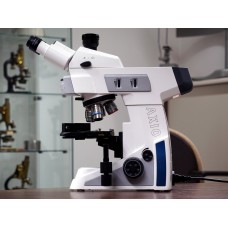
Краткое описание
Axio Lab A1 микроскоп тубус с Фото и камеру для исследования материалов с эпископический-светлого поля и в отраженном свете в темном поле.Значимые результаты исследования, например в ущерб анализа, контроля качества и ис… Читать далее…
Краткие характеристики
темное поле —
да
эпископический —
да
Освещение —
led
Смотреть все характеристики
- Доступность:
На складе
- Описание
- Характеристики
- Отзывы (0)
Axio Lab A1 микроскоп тубус с Фото и камеру для исследования материалов с эпископический-светлого поля и в отраженном свете в темном поле.
Значимые результаты исследования, например в ущерб анализа, контроля качества и испытания материалов.
- TÜV проверенные эргономичный дизайн для максимального комфорта и расслабленной рабочей позы.
- Отличные оптические качества для получения надежных результатов.
- Долгий срок службы благодаря высококачественным материалам.
- Широкая область применения большой выбор тубусов(в том числе первый раз купила мульти учреждение) и аксессуары.
состоящая из:
- Штатив Микроскопа «Axio Lab.А1» МАТ, лампа 12V 50W галоида рефлектора, 5х H’D, Таблица A,
- Отражатель модуль светлого поля ACR P&C для эпископический,
- Отражатель модуль темного поля ACR P&C для эпископический,
- Бинокулярная фото тубус 30°/23 — перевернутое изображение,
- Баланс белого-фильтр d=25×1,5 мм,
- 2x окуляр PL 10x/22Br.foc,
- 2x наглазник,
- Объектив EC «Epiplan» 5х/0,13 M27,
- Объектив EC «Epiplan» 50шт/0,7 HD M27,
- Объектив EC ‘»Epiplan» 20x/0,4 HD M27,
- Объектив EC «Epiplan» 10x/0,2 HD M27,
- Защитный чехол
- Камера-адаптер 60N-2/3 C» 0,5 х
- Микроскоп камеры Axiocam 105 color
| Технические Характеристики | |
| темное поле | да |
| эпископический | да |
| Освещение | led |
| светлого поля | да |
| через свет | нет |
| Светлого поля / темного поля (HD) | да |
Теги: микроскоп камеры,
микроскоп,
материал исследования,
полный комплект,
камера,
яркое поле,
фото тубус,
темное поле,
axiolab,
Axio Lab A1 (),
темное поле ()