
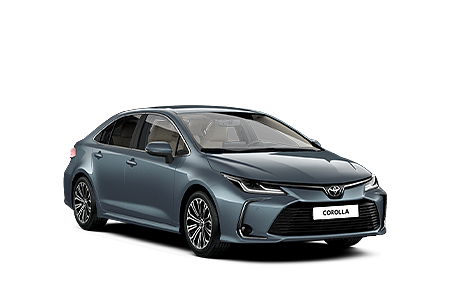
Corolla
Руководство для владельца
Руководство по эксплуатации навигационной и мультимедийной системы
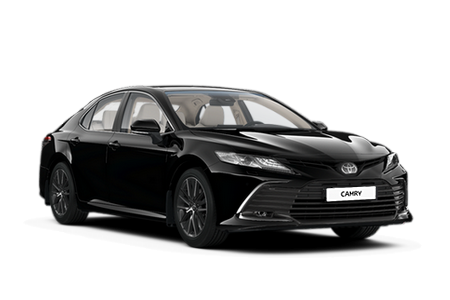
Camry
Руководство для владельца
Руководство по эксплуатации навигационной и мультимедийной системы
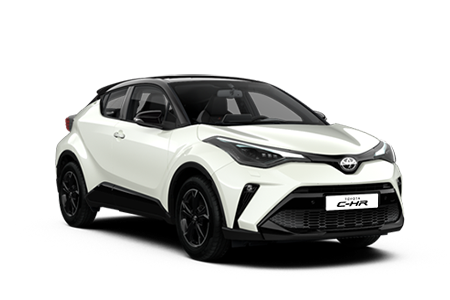
C-HR
Руководство для владельца
Руководство по эксплуатации навигационной и мультимедийной системы
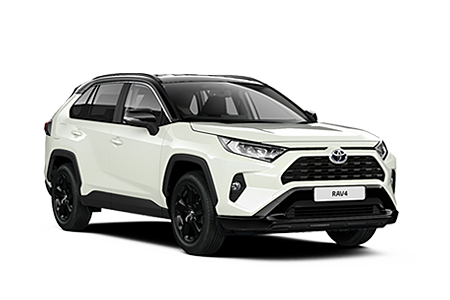
RAV4
Руководство для владельца
Руководство по эксплуатации навигационной и мультимедийной системы

Highlander
Руководство для владельца
Руководство по эксплуатации навигационной и мультимедийной системы
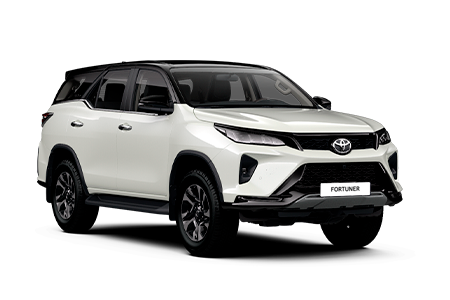
Fortuner
Руководство для владельца
Руководство по эксплуатации навигационной и мультимедийной системы
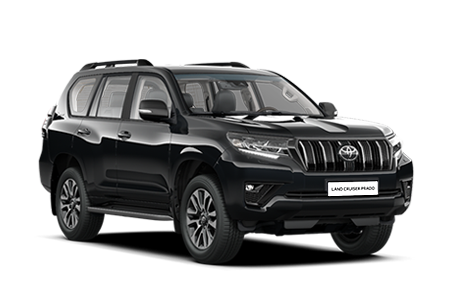
Land Cruiser Prado
Руководство для владельца
Руководство по эксплуатации навигационной и мультимедийной системы
Руководство по вождению в условиях бездорожья
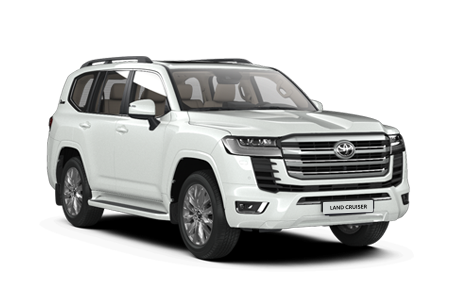
Land Cruiser 300
Руководство для владельца
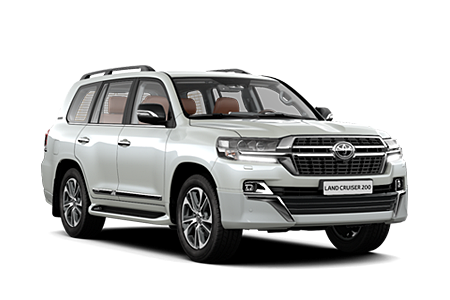
Руководство для владельца
Руководство по эксплуатации навигационной и мультимедийной системы
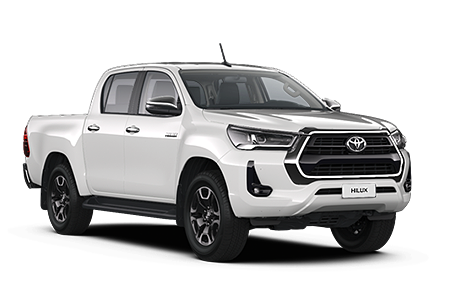
Hilux
Руководство для владельца
Руководство по эксплуатации навигационной и мультимедийной системы
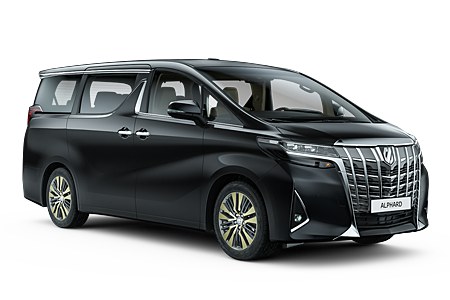
Alphard
Руководство для владельца
Руководство по эксплуатации навигационной и мультимедийной системы
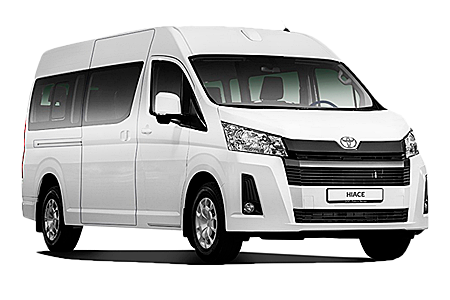
Hiace
Руководство для владельца
Руководство по эксплуатации навигационной и мультимедийной системы
Смотрите также:

 Pictorial index
For safety and security
Vehicle status information and indicators
Before driving
Driving
Audio
Interior features
Maintenance and care
When trouble arises
Vehicle specifications
For owners
Index
Search by illustration
|
Make sure to read through them |
1 |
|
|
(Main topics: Child seat, theft deterrent system) |
||
|
Reading driving-related information |
2 |
|
|
(Main topics: Meters, multi-information display) |
||
|
Opening and closing the doors and windows, |
||
|
adjustment before driving |
3 |
|
|
(Main topics: Keys, doors, seats) |
||
|
Operations and advice which are necessary for |
||
|
driving |
4 |
|
|
(Main topics: Starting hybrid system, refueling) |
||
|
Operating the Audio |
5 |
|
|
(Main topics: Audio/visual, phone, Connected Services) |
||
|
Usage of the interior features |
6 |
|
|
(Main topics: Air conditioner, storage features) |
||
|
Caring for your vehicle and maintenance |
||
|
procedures |
7 |
|
|
(Main topics: Interior and exterior, light bulbs) |
||
|
What to do in case of malfunction and emergency |
8 |
|
|
(Main topics: 12-volt battery discharge, flat tire) |
||
|
Vehicle specifications, customizable features |
9 |
|
|
(Main topics: Fuel, oil, tire inflation pressure) |
||
|
Reporting safety defects for U.S. owners, and seat |
||
|
belt and SRS airbag instructions for Canadian |
10 |
|
|
owners |
||
|
Search by symptom |
||
|
Search alphabetically |
||
RAV4-HV_OM_OM0R025U_(U)

2 TABLE OF CONTENTS
|
For your information………………. |
8 |
|
Reading this manual……………. |
13 |
|
How to search…………………….. |
14 |
|
Pictorial index …………………….. |
16 |
|
1 For safety and security |
|
|
1-1. For safe use |
|
|
Before driving………………. |
28 |
|
For safe driving ……………. |
29 |
|
Seat belts……………………. |
31 |
|
SRS airbags………………… |
35 |
|
Front passenger occupant |
|
|
classification system …… |
45 |
|
Exhaust gas precautions..50 |
|
|
1-2. Child safety |
|
|
Riding with children………. |
51 |
|
Child restraint systems….. |
52 |
|
1-3. Emergency assistance |
|
|
Safety Connect ……………. |
67 |
|
1-4. Hybrid system |
|
|
Hybrid system features …. |
72 |
|
Hybrid system precautions |
|
|
………………………………… |
77 |
|
1-5. Theft deterrent system |
|
|
Immobilizer system ………. |
82 |
|
Alarm………………………….. |
85 |
|
Vehicle status |
|
|
2 information and |
|
|
indicators |
|
|
2-1. Instrument cluster |
|
|
Warning lights and indicators |
|
|
………………………………… |
88 |
|
Gauges and meters (with 4.2- |
|
|
inch display)………………. |
94 |
|
Gauges and meters (with 7- |
|
|
inch display) |
……………….98 |
|
Multi-information display 103 |
|
|
Energy monitor/consumption |
|
|
screen…………………….. |
113 |
3 Before driving
|
3-1. |
Key information |
|
|
Keys ………………………… |
122 |
|
|
3-2. |
Opening, closing and lock- |
|
|
ing the doors |
||
|
Side doors………………… |
128 |
|
|
Back door…………………. |
134 |
|
|
Smart key system………. |
148 |
|
|
3-3. |
Adjusting the seats |
|
|
Front seats ……………….. |
154 |
|
|
Rear seats………………… |
155 |
|
|
Driving position memory 157 |
||
|
Head restraints………….. |
160 |
3-4. Adjusting the steering wheel and mirrors
|
Steering wheel…………… |
162 |
|
Inside rear view mirror… |
163 |
|
Digital Rear-view Mirror.165 |
|
|
Outside rear view mirrors |
|
|
……………………………… |
174 |
3-5. Opening, closing the windows and moon roof
|
Power windows …………. |
176 |
|
Moon roof…………………. |
179 |
|
Panoramic moon roof…. |
182 |
|
4 Driving |
|
|
4-1. Before driving |
|
|
Driving the vehicle……… |
189 |
|
Cargo and luggage ……. |
196 |
|
Vehicle load limits ……… |
199 |
|
Trailer towing…………….. |
200 |
|
Dinghy towing …………… |
209 |
|
4-2. Driving procedures |
|
|
Power (ignition) switch (vehi- |
|
|
cles without smart key sys- |
|
|
tem)……………………….. |
210 |
|
Power (ignition) switch (vehi- |
|
|
cles with smart key system) |
|
|
……………………………… |
212 |
|
EV drive mode ………….. |
217 |
|
Hybrid transmission …… |
219 |
|
Turn signal lever………… |
223 |
|
Parking brake……………. |
224 |
|
Brake Hold ……………….. |
227 |
4-3. Operating the lights and wipers
|
Headlight switch………… |
229 |
|
AHB (Automatic High Beam) |
|
|
……………………………… |
232 |
|
Fog light switch …………. |
235 |
|
Windshield wipers and |
|
|
washer……………………. |
235 |
|
Rear window wiper and |
|
|
washer……………………. |
238 |
|
4-4. Refueling |
|
|
Opening the fuel tank cap |
|
|
……………………………… |
240 |
4-5. Using the driving support systems
Toyota Safety Sense 2.0243
|
PCS (Pre-Collision System) |
|
|
……………………………… |
249 |
|
LTA (Lane Tracing Assist) |
|
|
……………………………… |
257 |
|
RSA (Road Sign Assist).267 |
|
|
Dynamic radar cruise control |
|
|
with full-speed range … |
270 |
|
BSM (Blind Spot Monitor) |
|
|
……………………………… |
280 |
|
Intuitive parking assist… |
290 |
|
PKSB (Parking Support |
|
|
Brake)…………………….. |
297 |
|
Parking Support Brake func- |
|
|
tion (static objects) …… |
302 |
|
Parking Support Brake func- |
|
|
tion (rear-crossing vehicles) |
|
|
……………………………… |
308 |
|
Rear view monitor system |
|
|
……………………………… |
312 |
|
Toyota parking assist monitor |
|
|
……………………………… |
320 |
|
Panoramic view monitor 333 |
|
|
Driving mode select switch |
|
|
……………………………… |
365 |
|
Trail Mode ………………… |
366 |
|
Driving assist systems… |
368 |
|
4-6. Driving tips |
|
|
Hybrid vehicle driving tips |
|
|
……………………………… |
375 |
|
Winter driving tips………. |
377 |
|
Utility vehicle precautions |
|
|
……………………………… |
380 |
|
5 Audio |
|
|
5-1. Basic function |
|
|
Buttons overview……….. |
385 |
|
Menu screen……………… |
387 |

4 TABLE OF CONTENTS
|
Status icon ……………….. |
388 |
|
“Setup” screen ………….. |
390 |
|
5-2. Basic information before |
|
|
operation |
|
|
Initial screen……………… |
391 |
|
Touch screen…………….. |
392 |
|
Home screen…………….. |
394 |
|
Entering letters and num- |
|
|
bers/list screen operation |
|
|
……………………………… |
395 |
|
Screen adjustment…….. |
398 |
|
Linking multi-information dis- |
|
|
play and the system…. |
399 |
|
5-3. Connectivity settings |
|
|
Registering/Connecting a |
|
|
Bluetooth® device ……. |
400 |
|
Setting Bluetooth® details |
|
|
……………………………… |
404 |
|
Wi-Fi® Hotspot………….. |
412 |
|
5-4. Apple CarPlay/Android |
|
|
Auto |
|
|
Apple CarPlay®/Android Auto |
|
|
……………………………… |
417 |
|
5-5. Other settings |
|
|
General settings………… |
424 |
|
Voice settings……………. |
428 |
|
Vehicle settings…………. |
429 |
|
5-6. Using the audio/visual sys- |
|
|
tem |
|
|
Quick reference…………. |
430 |
|
Some basics …………….. |
431 |
|
5-7. Radio operation |
|
|
AM/FM/SiriusXM (SXM) radio |
|
|
……………………………… |
435 |
|
5-8. Media operation |
|
|
USB memory…………….. |
442 |
|
iPod/iPhone (Apple CarPlay) |
|
|
……………………………… |
444 |
|
Android Auto……………… |
447 |
|
Bluetooth® audio ……….. |
448 |
5-9. Audio/visual remote controls
|
Steering switches………. |
452 |
|
5-10.Audio settings |
|
|
Setup……………………….. |
454 |
5-11.Tips for operating the audio/visual system
Operating information….456
5-12.Voice command system operation
|
Voice command system 468 |
|
|
Command list ……………. |
471 |
5-13.Phone operation (Handsfree system for cellular phones)
|
Quick reference…………. |
475 |
|
Some basics……………… |
476 |
|
Placing a call using the Blue- |
|
|
tooth® hands-free system |
|
|
……………………………… |
480 |
|
Receiving a call using the |
|
|
Bluetooth® hands-free sys- |
|
|
tem ………………………… |
483 |
|
Talking on the Bluetooth® |
|
|
hands-free system……. |
484 |
|
Bluetooth® phone message |
|
|
function…………………… |
486 |
|
5-14.Phone settings |
|
|
Setup……………………….. |
491 |
|
5-15.What to do if… (Blue- |
|
|
tooth®) |
|
|
Troubleshooting…………. |
501 |
5-16.Connected Services overview
|
Connected Services…… |
505 |
|
Type A: Function achieved by |
|
|
using a smartphone or DCM |
|
|
……………………………… |
506 |
|
Type B: Function achieved by |
|
|
using DCM and the system |
|
|
……………………………… |
508 |
|
Type C: Function achieved by |
|
|
using DCM ……………… |
509 |
|
Type D: Function achieved by |
|
|
using DCM and a smart- |
|
|
phone…………………….. |
512 |
5-17.Connected Services operation
|
Toyota Apps ……………… |
514 |
5-18.Setup
Toyota Apps settings….. 518
6 Interior features
6-1. Using the air conditioning system and defogger
|
Automatic air conditioning |
|
|
system……………………. |
520 |
|
Heated steering wheel/seat |
|
|
heaters/seat ventilators527 |
|
|
6-2. Using the interior lights |
|
|
Interior lights list………… |
530 |
|
6-3. Using the storage features |
|
|
List of storage features . 533 |
|
|
Luggage compartment fea- |
|
|
tures………………………. |
537 |
6-4. Using the other interior features
|
Other interior features… |
542 |
|
Garage door opener…… |
552 |
|
7 Maintenance and care |
|
|
7-1. Maintenance and care |
|
|
Cleaning and protecting the |
|
|
vehicle exterior ………… |
562 |
|
Cleaning and protecting the |
|
|
vehicle interior …………. |
565 |
|
7-2. Maintenance |
|
|
Maintenance requirements |
|
|
……………………………… |
568 |
|
General maintenance…. |
569 |
|
Emission inspection and |
|
|
maintenance (I/M) programs |
|
|
……………………………… |
572 |
|
7-3. Do-it-yourself maintenance |
|
|
Do-it-yourself service precau- |
|
|
tions……………………….. |
573 |
|
Hood………………………… |
575 |
|
Positioning a floor jack .. |
577 |
|
Engine compartment….. |
578 |
|
12-volt battery……………. |
584 |
|
Tires ………………………… |
586 |
|
Tire inflation pressure…. |
600 |
|
Wheels …………………….. |
602 |
|
Air conditioning filter…… |
604 |
|
Cleaning the hybrid battery |
|
|
(traction battery) air intake |
|
|
vent and filter ………….. |
606 |
|
Wiper insert replacement |
|
|
……………………………… |
610 |
|
Wireless remote control/elec- |
|
|
tronic key battery……… |
613 |
|
Checking and replacing fuses |
|
|
……………………………… |
616 |
|
Light bulbs………………… |
618 |

6 TABLE OF CONTENTS
|
8 |
When trouble arises |
9 Vehicle specifications |
|
|
8-1. Essential information |
|
|
Emergency flashers …… |
628 |
|
If your vehicle has to be |
|
|
stopped in an emergency |
|
|
……………………………… |
629 |
|
If the vehicle is trapped in ris- |
|
|
ing water…………………. |
630 |
8-2. Steps to take in an emergency
|
If your vehicle needs to be |
|
|
towed……………………… |
631 |
|
If you think something is |
|
|
wrong …………………….. |
635 |
If a warning light turns on or a warning buzzer sounds636
|
If a warning message is dis- |
|
|
played…………………….. |
647 |
|
If you have a flat tire…… |
651 |
|
If the hybrid system will not |
|
|
start……………………….. |
660 |
|
If you lose your keys ….. |
661 |
|
If the fuel filler door cannot be |
|
|
opened…………………… |
662 |
If the electronic key does not operate properly (vehicles with smart key system) 663
|
If the 12-volt battery is dis- |
|
|
charged………………….. |
665 |
|
If your vehicle overheats670 |
|
|
If the vehicle becomes stuck |
|
|
……………………………… |
674 |
|
9-1. Specifications |
|
|
Maintenance data (fuel, oil |
|
|
level, etc.)……………….. |
676 |
|
Fuel information…………. |
685 |
|
Tire information …………. |
687 |
|
9-2. Customization |
|
|
Customizable features… |
697 |
|
9-3. Initialization |
|
|
Items to initialize………… |
708 |
|
10 For owners |
|
|
10-1.For owners |
|
|
Reporting safety defects for |
|
|
U.S. owners…………….. |
710 |
|
Seat belt instructions for |
|
|
Canadian owners (in |
|
|
French)…………………… |
711 |
|
SRS airbag instructions for |
|
|
Canadian owners (in |
|
|
French)…………………… |
712 |
|
Index |
|
|
What to do if… (Troubleshoot- |
|
|
ing) ……………………….. |
722 |
|
Alphabetical Index …….. |
725 |

|
TABLE OF CONTENTS |
7 |
||
1
2
3
4
5
6
7
8
9
10

8
|
For your information |
||||
|
Accessories, spare parts |
||||
|
and modification of your |
||||
|
Main Owner’s Manual |
Toyota |
|||
Please note that this manual applies to all models and explains all equipment, including options. Therefore, you may find some explanations for equipment not installed on your vehicle.
All specifications provided in this manual are current at the time of printing. However, because of the Toyota policy of continual product improvement, we reserve the right to make changes at any time without notice.
Depending on specifications, the vehicle shown in the illustrations may differ from your vehicle in terms of equipment.
Noise from under vehicle after turning off the hybrid system
Approximately five hours after the hybrid system is turned off, you may hear sound coming from under the vehicle for several minutes. This is the sound of a fuel evaporation leakage check and, it does not indicate a malfunction.
A wide variety of non-genuine spare parts and accessories for Toyota vehicles are currently available in the market. You should know that Toyota does not warrant these products and is not responsible for their performance, repair, or replacement, or for any damage they may cause to, or adverse effect they may have on, your Toyota vehicle.
This vehicle should not be modified with non-genuine Toyota products. Modification with nongenuine Toyota products could affect its performance, safety or durability, and may even violate governmental regulations. In addition, damage or performance problems resulting from the modification may not be covered under warranty.
Installation of a mobile two-way radio system
The installation of a mobile twoway radio system in your vehicle could affect electronic systems such as:
Hybrid system
Multiport fuel injection system/sequential multiport fuel injection system

9
Toyota Safety Sense 2.0
Anti-lock brake system
SRS airbag system
Seat belt pretensioner system
Be sure to check with your Toyota dealer for precautionary measures or special instructions regarding installation of a mobile two-way radio system.
High voltage parts and cables on the hybrid vehicles emit approximately the same amount of electromagnetic waves as the conventional gasoline powered vehicles or home electronic appliances despite of their electromagnetic shielding.
Unwanted noise may occur in the reception of the mobile twoway radio.
 Vehicle data recording
The vehicle is equipped with sophisticated computers that will record certain data, such as:
•Engine speed/ Electric motor speed (traction motor speed)
•Accelerator status
•Brake status
•Vehicle speed
•Operation status of the driving assist systems
•Images from the front camera (available only when certain safety systems are activated, which varies depending on the vehicle specifications).
•Hybrid battery (traction battery) status
The recorded data varies according to the vehicle grade level and options with which it is equipped.
These computers do not record conversations or sounds, and only record images outside of the vehicle in certain situations.
Data Transmission
Your vehicle may transmit the data recorded in these computers to Toyota without notification to you.
Data usage
Toyota may use the data recorded in this computer to diagnose malfunctions, conduct research and development, and improve quality.
Toyota will not disclose the recorded data to a third party except:
•With the consent of the vehicle owner or with the consent of the lessee if the vehicle is leased
•In response to an official request by the police, a court of law or a government agency
•For use by Toyota in a lawsuit
•For research purposes where the data is not tied to a specific vehicle or vehicle owner
Recorded image information can be erased by your Toyota dealer.
The image recording function can be disabled. However, if the function is disabled, data from when the system operates will not be avail-

10
able.
To learn more about the vehicle data collected, used and shared by Toyota, please visit www.toyota.com/privacyvts/.
Usage of data collected through Safety Connect (U.S.mainland only)
If your Toyota has Safety Connect and if you have subscribed to those services, please refer to the Safety Connect Telematics Subscription ServiceAgreement for information on data collected and its usage.
To learn more about the vehicle data collected, used and shared by Toyota, please visit www.toyota.com/privacyvts/
 Event data recorder
This vehicle is equipped with an event data recorder (EDR). The main purpose of an EDR is to record, in certain crash or near crash-like situations, such as an air bag deployment or hitting a road obstacle, data that will assist in understanding how a vehicle’s systems performed. The EDR is designed to record data related to vehicle dynamics and safety systems for a short period of time, typically 30 seconds or less.
The EDR in this vehicle is
designed to record such data as:
How various systems in your vehicle were operating;
Whether or not the driver and passenger safety belts were buckled/fastened;
How far (if at all) the driver was depressing the accelerator and/or brake pedal; and,
How fast the vehicle was traveling.
These data can help provide a better understanding of the circumstances in which crashes and injuries occur.
NOTE: EDR data are recorded by your vehicle only if a non-triv- ial crash situation occurs; no data are recorded by the EDR under normal driving conditions and no personal data (e.g., name, gender, age, and crash location) are recorded. However, other parties, such as law enforcement, could combine the EDR data with the type of personally identifying data routinely acquired during a crash investigation.
To read data recorded by an EDR, special equipment is required, and access to the vehicle or the EDR is needed. In addition to the vehicle manufacturer, other parties, such as law enforcement, that have the special equipment, can read the

11
information if they have access to the vehicle or the EDR.
Disclosure of the EDR data
Toyota will not disclose the data recorded in an EDR to a third party except when:
•An agreement from the vehicle’s owner (or the lessee for a leased vehicle) is obtained
•In response to an official request by the police, a court of law or a government agency
•For use by Toyota in a lawsuit However, if necessary, Toyota may:
•Use the data for research on vehicle safety performance
•Disclose the data to a third party for research purposes without disclosing information about the specific vehicle or vehicle owner
 Scrapping of your Toyota
The SRS airbag and seat belt pretensioner devices in your Toyota contain explosive chemicals. If the vehicle is scrapped with the airbags and seat belt pretensioners left as they are, this may cause an accident such as fire. Be sure to have the systems of the SRS airbag and seat belt pretensioner removed and disposed of by a qualified service shop or by your Toyota dealer before you scrap your vehicle.
 Perchlorate Material
Special handling may apply, See www.dtsc.ca.gov/ hazardouswaste/perchlorate.
Your vehicle has components that may contain perchlorate. These components may include the airbags, seat belt pretensioners, wireless remote control batteries, and the batteries in the tire pressure warning valve and transmitters.
 WARNING
■General precautions while driving
Driving under the influence: Never drive your vehicle when under the influence of alcohol or drugs that have impaired your ability to operate your vehicle. Alcohol and certain drugs delay reaction time, impair judgment and reduce coordination, which could lead to an accident that could result in death or serious injury.
Defensive driving: Always drive defensively. Anticipate mistakes that other drivers or pedestrians might make and be ready to avoid accidents.
Driver distraction: Always give your full attention to driving. Anything that distracts the driver, such as adjusting controls, talking on a cellular phone or reading can result in a collision with resulting death or serious injury to you, your occupants or others.

12
 WARNING
■General precaution regarding children’s safety
Never leave children unattended in the vehicle, and never allow children to have or use the key.
Children may be able to start the vehicle or shift the vehicle into neutral. There is also a danger that children may injure themselves by playing with the side windows, the moon roof or the panoramic moon roof, or other features of the vehicle. In addition, heat build-up or extremely cold temperatures inside the vehicle can be fatal to children.
13
Reading this manual
Explains symbols used in this manual
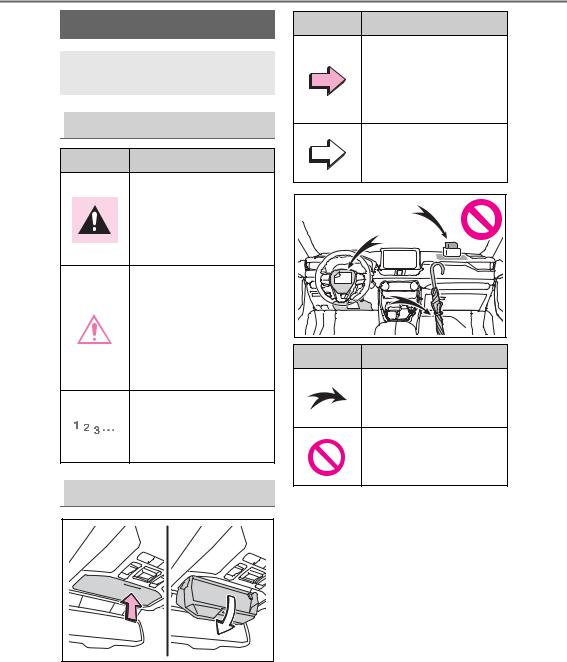
 Symbols in this manual
Symbols Meanings
WARNING:
Explains something that, if not obeyed, could cause death or serious injury to people.
NOTICE:
Explains something that, if not obeyed, could cause damage to or a malfunction in the vehicle or its equipment.
Indicates operating or working procedures. Follow the steps in numerical order.
 Symbols in illustrations
Symbols Meanings
Indicates the action (pushing, turning, etc.) used to operate switches and other devices.
Indicates the outcome of an operation (e.g. a lid opens).
Indicates the component or position being explained.
Means Do not, Do not do this, or Do not let this happen.
14
|
How to search |
■ Searching by title |
Table of contents: P.2
■ Searching by name
Alphabetical index: P.725
■Searching by installation position
Pictorial index: P.16
■Searching by symptom or sound
What to do if… (Troubleshooting): P.722

15
16 Pictorial index
Pictorial index
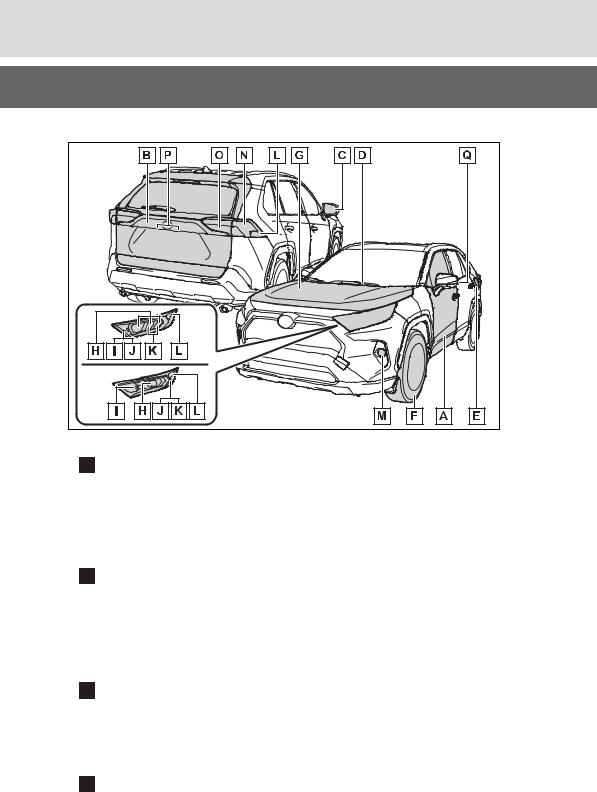
■Exterior
The shape of the headlights may differ depending on the grade, etc.
|
A Side doors ……………………………………………………………….. |
P.128 |
|
Locking/unlocking ………………………………………………………. |
P.128 |
|
Opening/closing the side windows………………………………… |
P.176 |
|
Locking/unlocking by using the mechanical key ………. |
P.129, 663 |
|
Warning messages …………………………………………………….. |
P.647 |
|
B Back door ………………………………………………………………… |
P.134 |
|
Locking/unlocking ………………………………………………………. |
P.135 |
|
Opening from inside the cabin* …………………………………….. |
P.138 |
|
Opening from outside…………………………………………… |
P.136, 138 |
|
Warning messages …………………………………………………….. |
P.647 |
|
C |
Outside rear view mirrors …………………………………………. |
P.174 |
|
Adjusting the mirror angle……………………………………………. |
P.174 |
|
|
Folding the mirrors……………………………………………………… |
P.174 |
|
|
Defogging the mirrors* ………………………………………………… |
P.522 |
|
|
D |
Windshield wipers…………………………………………………….. |
P.235 |

|
Precautions against winter season ……………………………….. |
P.377 |
|
|
To prevent freezing (windshield wiper de-icer)*……………….. |
P.525 |
|
|
Precautions against car wash |
||
|
(Rain-sensing windshield wipers)* ………………………………… |
P.563 |
|
|
Replacing the wiper insert …………………………………………… |
P.610 |
|
|
E |
Fuel filler door………………………………………………………….. |
P.240 |
|
Refueling method……………………………………………………….. |
P.240 |
|
|
Fuel type/fuel tank capacity …………………………………………. |
P.677 |
|
|
F |
Tires…………………………………………………………………………. |
P.586 |
|
Tire size/inflation pressure …………………………………………… |
P.681 |
|
|
Winter tires/tire chain ………………………………………………….. |
P.377 |
|
|
Checking/rotation/tire pressure warning system*…………….. |
P.586 |
|
|
Coping with flat tires……………………………………………………. |
P.651 |
|
|
G |
Hood………………………………………………………………………… |
P.575 |
|
Opening ……………………………………………………………………. |
P.575 |
|
|
Engine oil ………………………………………………………………….. |
P.678 |
|
|
Coping with overheat ………………………………………………….. |
P.670 |
|
|
Warning messages …………………………………………………….. |
P.647 |
|
|
Light bulbs of the exterior lights for driving |
||
|
(Replacing method: P.618, Watts: P.684) |
||
|
H |
Headlights………………………………………………………………… |
P.229 |
|
I |
Turn signal lights ……………………………………………………… |
P.223 |
|
J |
Parking lights …………………………………………………………… |
P.229 |
|
K |
Daytime running lights……………………………………………… |
P.229 |
|
L |
Side marker lights…………………………………………………….. |
P.229 |
|
M |
Fog lights*………………………………………………………………… |
P.235 |
|
N |
Stop lights/tail lights/turn signal lights……………….. |
P.223, 229 |
|
O |
Tail lights………………………………………………………………….. |
P.229 |
|
Back-up lights |

18 Pictorial index
|
……………………………………………Shifting the shift lever to R |
P.219 |
|
P License plate lights…………………………………………………… |
P.229 |
|
Q Side turn signal lights* ……………………………………………… |
P.223 |
*: If equipped

■Instrument panel
A Power switch……………………………………………………..P.210, 212
|
Starting the hybrid system/changing the modes |
..P.210, 212, 216 |
|
|
Emergency stop of the hybrid system……………………………. |
P.629 |
|
|
When the hybrid system will not start ……………………………. |
P.660 |
|
|
Warning messages …………………………………………………….. |
P.647 |
|
|
B |
Shift lever…………………………………………………………………. |
P.219 |
|
Changing the shift position…………………………………………… |
P.220 |
|
|
Precautions against towing………………………………………….. |
P.631 |
|
|
When the shift lever does not move………………………………. |
P.221 |
|
|
C |
Meters ………………………………………………………………….. |
P.94, 98 |
|
Reading the meters/adjusting the instrument panel light |
||
|
………………………………………………………………… |
P.94, 96, 98, 102 |
|
|
Warning lights/indicator lights ………………………………………… |
P.88 |
|
|
When the warning lights come on…………………………………. |
P.636 |
|
|
D |
Multi-information display ………………………………………….. |
P.103 |
|
Display ……………………………………………………………………… |
P.103 |

20 Pictorial index
|
……………………………………………………………Energy monitor |
P.113 |
|
|
When the warning messages are displayed …………………… |
P.647 |
|
|
E |
Turn signal lever……………………………………………………….. |
P.223 |
|
Headlight switch ………………………………………………………. |
P.229 |
|
|
Headlights/parking lights/tail lights/ |
||
|
license plate lights/daytime running lights………………………. |
P.229 |
|
|
Fog lights*1………………………………………………………………… |
P.235 |
|
|
F |
Windshield wiper and washer switch…………………………. |
P.235 |
|
Rear window wiper and washer switch ……………………… |
P.238 |
|
|
Usage………………………………………………………………… |
P.235, 238 |
|
|
Adding washer fluid…………………………………………………….. |
P.583 |
|
|
Warning messages …………………………………………………….. |
P.647 |
|
|
G |
Emergency flasher switch…………………………………………. |
P.628 |
|
H |
Hood lock release lever…………………………………………….. |
P.575 |
|
I |
Tilt and telescopic steering lock release lever……………. |
P.162 |
|
Adjustment………………………………………………………………… |
P.162 |
|
|
J |
Air conditioning system……………………………………………. |
P.520 |
|
Usage……………………………………………………………………….. |
P.520 |
|
|
Rear window defogger………………………………………………… |
P.522 |
|
|
K |
Audio*1 …………………………………………………………………….. |
P.385 |
|
Audio Plus*1, 2 |
||
|
Premium Audio*1, 2 |
||
|
L |
Fuel filler door opener switch……………………………………. |
P.241 |
*1:If equipped
*2:Refer to “NAVIGATION AND MULTIMEDIA SYSTEM OWNER’S MANUAL”.

■Switches
|
A |
Driving position memory switches* |
……………………………P.157 |
|
B |
Window lock switch………………………………………………….. |
P.178 |
|
C |
Power window switches……………………………………………. |
P.176 |
|
D |
Door lock switches …………………………………………………… |
P.132 |
|
E |
Outside rear view mirror switches …………………………….. |
P.174 |
|
F |
“ODO TRIP” switch……………………………………………… |
P.96, 101 |
|
G |
Instrument panel light control dial……………………….. |
P.96, 102 |
|
H |
Automatic High Beam switch ……………………………………. |
P.232 |
|
I |
Windshield wiper de-icer switch* ………………………………. |
P.525 |
|
J |
Camera switch*…………………………………………………………. |
P.335 |
|
K |
Heated steering wheel switch*…………………………………… |
P.527 |
|
L |
Power back door switch*…………………………………………… |
P.138 |
*: If equipped
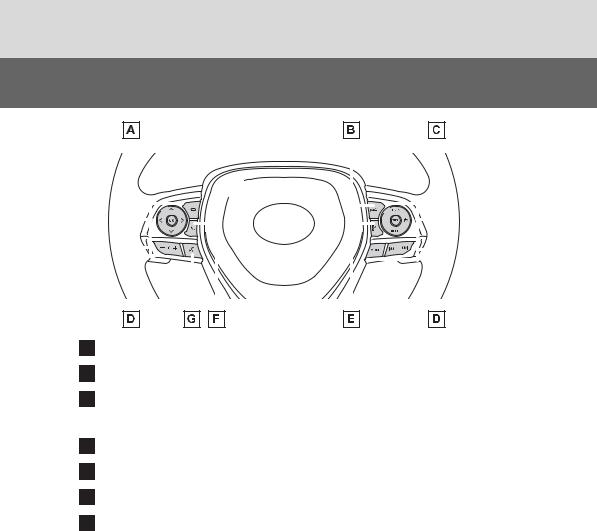
22 Pictorial index
|
A |
………………………………………………Meter control switches |
P.104 |
||||||||||||||||||||||||||||
|
B |
Vehicle-to-vehicle distance switch…………………………….. |
P.275 |
||||||||||||||||||||||||||||
|
C |
Cruise control switches |
|||||||||||||||||||||||||||||
|
Dynamic radar cruise control with full-speed range…………. |
P.270 |
|||||||||||||||||||||||||||||
|
D Audio remote control switches* ………………………………… |
P.452 |
|||||||||||||||||||||||||||||
|
E LTA (Lane Tracing Assist) switch ………………………………. |
P.257 |
|||||||||||||||||||||||||||||
|
F |
Phone switch*…………………………………………………………… |
P.478 |
||||||||||||||||||||||||||||
|
G |
Talk switch*………………………………………………………………. |
P.468 |
*: Vehicles with Audio Plus or Premium Audio, refer to “NAVIGATION AND MULTIMEDIA SYSTEM OWNER’S MANUAL”.
|
Pictorial index |
23 |
|
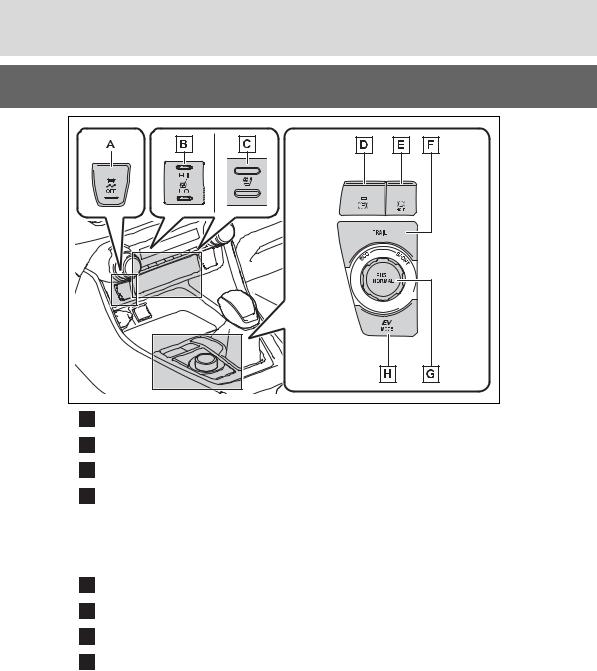
A VSC OFF switch ………………………………………………………..P.369 |
|
|
B Front seat heater switches*………………………………………..P.527 |
|
|
C Front seat heater/seat ventilator switches* …………………P.528 |
|
|
D Parking brake switch…………………………………………………P.224 |
|
|
Applying/releasing……………………………………………………….P.224 |
|
Precautions against winter season |
………………………………..P.378 |
|
|
Warning buzzer/message …………………………………….. |
P.642, 647 |
|
|
E |
Brake hold switch …………………………………………………….. |
P.227 |
|
F |
Trail Mode switch……………………………………………………… |
P.366 |
|
G |
Driving mode select switch……………………………………….. |
P.365 |
|
H EV drive mode switch……………………………………………….. |
P.217 |
*: If equipped
24 Pictorial index
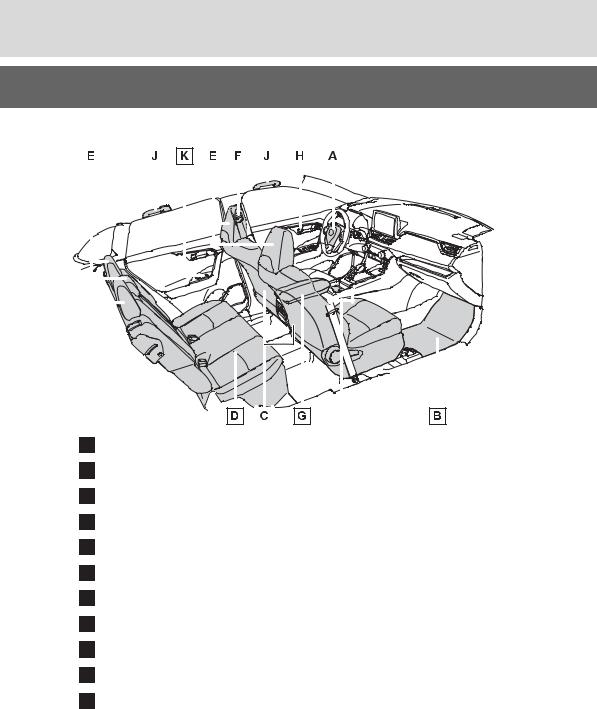
■Interior
|
A |
………………………………………………………………..SRS airbags |
P.35 |
||||||||||||||||||||||||||||||||||
|
B |
Floor mats………………………………………………………………….. |
P.28 |
||||||||||||||||||||||||||||||||||
|
C |
Front seats……………………………………………………………….. |
P.154 |
||||||||||||||||||||||||||||||||||
|
D |
Rear seats………………………………………………………………… |
P.155 |
||||||||||||||||||||||||||||||||||
|
E |
Head restraints…………………………………………………………. |
P.160 |
||||||||||||||||||||||||||||||||||
|
F |
Seat belts…………………………………………………………………… |
P.31 |
||||||||||||||||||||||||||||||||||
|
G |
Console box …………………………………………………………….. |
P.534 |
||||||||||||||||||||||||||||||||||
|
H |
Inside lock buttons …………………………………………………… |
P.132 |
||||||||||||||||||||||||||||||||||
|
I |
Cup holders……………………………………………………………… |
P.534 |
||||||||||||||||||||||||||||||||||
|
J |
Assist grips ……………………………………………………………… |
P.551 |
||||||||||||||||||||||||||||||||||
|
K |
Rear seat heater switches*………………………………………… |
P.527 |
*: If equipped

■Ceiling
|
A |
……………………………………………………………“SOS” button*1 |
P.67 |
||||||||||||||||||||||||
|
B |
Auxiliary box ……………………………………………………………. |
P.535 |
||||||||||||||||||||||||
|
C |
Moon roof switches*1………………………………………………… |
P.179 |
||||||||||||||||||||||||
|
D |
Interior lights*2 …………………………………………………………. |
P.530 |
||||||||||||||||||||||||
|
Personal lights …………………………………………………………. |
P.531 |
|||||||||||||||||||||||||
|
E |
Electronic sunshade switch*1……………………………………. |
P.182 |
||||||||||||||||||||||||
|
F |
Vanity mirrors…………………………………………………………… |
P.542 |
||||||||||||||||||||||||
|
G |
Sun visors………………………………………………………………… |
P.542 |
||||||||||||||||||||||||
|
H |
Inside rear view mirror*1……………………………………………. |
P.163 |
||||||||||||||||||||||||
|
Digital Rear-view Mirror*1………………………………………….. |
P.165 |
|||||||||||||||||||||||||
|
I |
Garage door opener switches*1…………………………………. |
P.552 |
*1:If equipped
*2:The illustration shows the front, but they are also equipped in the rear.

26 Pictorial index

|
For safety and security |
||
|
1 |
||
|
1-1. For safe use |
||
|
Before driving…………….. |
28 |
|
|
For safe driving ………….. |
29 |
|
|
Seat belts………………….. |
31 |
|
|
SRS airbags………………. |
35 |
|
|
Front passenger occupant |
||
|
classification system …. |
45 |
|
|
Exhaust gas precautions50 |
||
|
1-2. Child safety |
||
|
Riding with children…….. |
51 |
|
|
Child restraint systems… |
52 |
|
|
1-3. Emergency assistance |
||
|
Safety Connect ………….. |
67 |
|
|
1-4. Hybrid system |
||
|
Hybrid system features .. |
72 |
|
|
Hybrid system precautions |
||
|
………………………………. |
77 |
|
|
1-5. Theft deterrent system |
||
|
Immobilizer system …….. |
82 |
|
|
Alarm………………………… |
85 |
27
1
safety For security and
28 1-1. For safe use
Before driving
Observe the following before starting off in the vehicle to ensure safety of driving.
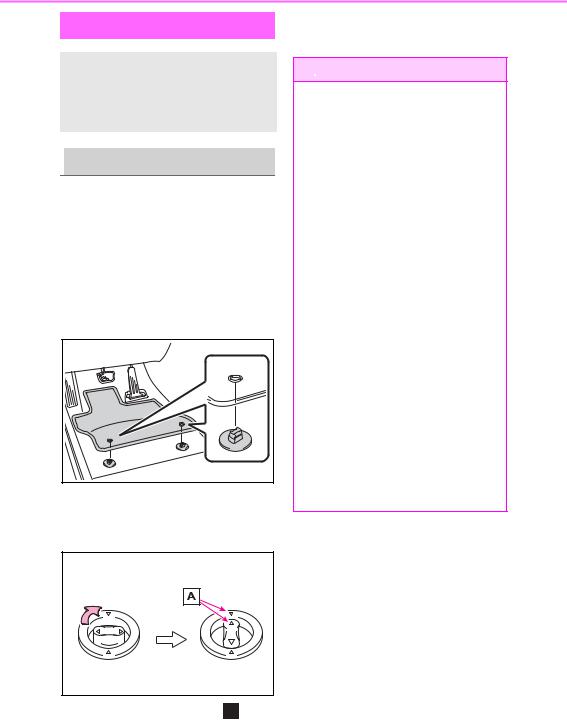
 Installing floor mats
Use only floor mats designed specifically for vehicles of the same model and model year as your vehicle. Fix them securely in place onto the carpet.
1Insert the retaining hooks (clips) into the floor mat eyelets.
2Turn the upper knob of each retaining hook (clip) to secure the floor mats in place.
The shape of the retaining hooks (clips) may differ from that shown in the illustration.
 WARNING
Observe the following precautions.
Failure to do so may cause the driver’s floor mat to slip, possibly interfering with the pedals while driving. An unexpectedly high speed may result or it may become difficult to stop the vehicle. This could lead to an accident, resulting in death or serious injury.
■When installing the driver’s floor mat
●Do not use floor mats designed for other models or different model year vehicles, even if they are Toyota Genuine floor mats.
●Only use floor mats designed for the driver’s seat.
●Always install the floor mat securely using the retaining hooks (clips) provided.
●Do not use two or more floor mats on top of each other.
●Do not place the floor mat bot- tom-side up or upside-down.
Always align the  marks A .

|
1-1. For safe use |
29 |
||||
|
WARNING |
For safe driving |
||||
|
■Before driving |
|||||
|
●Check that the floor mat is |
For safe driving, adjust the |
||||
|
securely fixed in the correct |
seat and mirror to an appro- |
||||
|
place with all the provided |
priate position before driv- |
||||
|
retaining hooks (clips). Be espe- |
|||||
|
cially careful to perform this |
ing. |
||||
|
check after cleaning the floor. |
|||||
 Correct driving posture
●With the hybrid system stopped and the shift lever in P, fully depress each pedal to the floor
to make sure it does not interfere with the floor mat.
A Adjust the angle of the seatback so that you are sitting straight up and so that you do not have to lean forward to steer. ( P.154)
B Adjust the seat so that you can depress the pedals fully and so that your arms bend slightly at the elbow when gripping the steering wheel. ( P.154)
C Lock the head restraint in place with the center of the head restraint closest to the top of your ears. ( P.160)
D Wear the seat belt correctly. ( P.32)
1
safety For security and

30 1-1. For safe use
 WARNING
Observe the following precautions.
Failure to do so may result in death or serious injury.
●Do not adjust the position of the driver’s seat while driving. Doing so could cause the driver to lose control of the vehicle.
●Do not place a cushion between the driver or passenger and the seatback. A cushion may prevent correct posture from being achieved, and reduce the effectiveness of the seat belt and head restraint.
●Do not place anything under the front seats.
Objects placed under the front seats may become jammed in the seat tracks and stop the seat from locking in place. This may lead to an accident and the adjustment mechanism may also be damaged.
●Always observe the legal speed limit when driving on public roads.
●When driving over long distances, take regular breaks before you start to feel tired.
Also, if you feel tired or sleepy while driving, do not force yourself to continue driving and take a break immediately.
Correct use of the seat belts
Make sure that all occupants are wearing their seat belts before driving the vehicle. ( P.32)
Use a child restraint system appropriate for the child until the child becomes large enough to
properly wear the vehicle’s seat belt. ( P.52)
 Adjusting the mirrors
Make sure that you can see backward clearly by adjusting the inside rear view mirror (if equipped), Digital Rear-view Mirror (if equipped) and outside rear view mirrors properly. ( P.163, 165, 174)

|
1-1. For safe use |
31 |
|
|
Seat belts |
■Pregnant women |
|
|
Obtain medical advice and wear |
||
|
Make sure that all occu- |
the seat belt in the proper way. |
|
|
( P.32) |
||
|
pants are wearing their seat |
Women who are pregnant should |
|
|
belts before driving the |
position the lap belt as low as |
|
|
vehicle. |
possible over the hips in the same |
|
|
manner as other occupants, |
||
|
WARNING |
extending the shoulder belt com- |
|
|
pletely over the shoulder and |
||
|
Observe the following precautions |
avoiding belt contact with the |
|
|
rounding of the abdominal area. |
||
|
to reduce the risk of injury in the |
||
|
event of sudden braking, sudden |
If the seat belt is not worn prop- |
|
|
swerving or an accident. |
erly, not only the pregnant |
|
|
Failure to do so may cause death |
woman, but also the fetus could |
|
|
or serious injury. |
suffer death or serious injury as a |
|
|
■Wearing a seat belt |
result of sudden braking or a colli- |
|
|
sion. |
||
|
●Ensure that all passengers wear |
||
|
a seat belt. |
||
|
●Always wear a seat belt prop- |
||
|
erly. |
||
|
●Each seat belt should be used |
||
|
by one person only. Do not use |
||
|
a seat belt for more than one |
||
|
person at once, including chil- |
||
|
dren. |
||
|
●Toyota recommends that chil- |
||
|
dren be seated in the rear seat |
||
|
and always use a seat belt |
||
|
and/or an appropriate child |
||
|
restraint system. |
||
|
●To achieve a proper seating |
■People suffering illness |
|
|
position, do not recline the seat |
Obtain medical advice and wear |
|
|
more than necessary. The seat |
||
|
the seat belt in the proper way. |
||
|
belt is most effective when the |
||
|
( P.32) |
||
|
occupants are sitting up straight |
||
|
and well back in the seats. |
■When children are in the vehi- |
|
|
●Do not wear the shoulder belt |
cle |
|
|
P.60 |
||
|
under your arm. |
||
|
●Always wear your seat belt low |
■Seat belt damage and wear |
|
|
and snug across your hips. |
●Do not damage the seat belts |
|
|
by allowing the belt, plate, or |
||
|
buckle to be jammed in the |
||
|
door. |
1
safety For security and

32 1-1. For safe use
 WARNING
●Inspect the seat belt system periodically. Check for cuts, fraying, and loose parts. Do not use a damaged seat belt until it is replaced. Damaged seat belts cannot protect an occupant from death or serious injury.
●Ensure that the belt and plate are locked and the belt is not twisted.
If the seat belt does not function correctly, immediately contact your Toyota dealer.
●Replace the seat assembly, including the belts, if your vehicle has been involved in a serious accident, even if there is no obvious damage.
●Do not attempt to install, remove, modify, disassemble or dispose of the seat belts. Have any necessary repairs carried out by your Toyota dealer. Inappropriate handling may lead to incorrect operation.
Correct use of the seat belts
Extend the shoulder belt so that it comes fully over the shoulder, but does not come into contact with the neck or slide off the shoulder.
Position the lap belt as low as possible over the hips.
Adjust the position of the seatback.
Sit up straight and well back in the seat.
Do not twist the seat belt.
■Child seat belt usage
The seat belts of your vehicle were principally designed for persons of adult size.
●Use a child restraint system appropriate for the child, until the child becomes large enough to properly wear the vehicle’s seat belt. ( P.52)
●When the child becomes large enough to properly wear the vehicle’s seat belt, follow the instructions regarding seat belt usage. ( P.31)
■Seat belt extender
If your seat belts cannot be fastened securely because they are not long enough, a personalized seat belt extender is available from your Toyota dealer free of charge.
 WARNING
■Using a seat belt extender
Observe the following precautions to reduce the risk of injury in the event of sudden braking, sudden swerving or an accident.
Failure to do so may cause death or serious injury.

|
1-1. For safe use |
33 |
||||||
|
a click sound is heard. |
|||||||
|
WARNING |
|||||||
|
2 To release the seat belt, |
|||||||
|
●Do not wear the seat belt |
|||||||
|
press the release button A . |
|||||||
|
extender if you can fasten the |
|||||||
|
seat belt without the extender. |
|||||||
|
●Do not use the seat belt |
■Emergency locking retractor |
||||||
|
extender when installing a child |
(ELR) |
||||||
|
restraint system because the |
The retractor will lock the belt during |
||||||
|
belt will not securely hold the |
a sudden stop or on impact. It may |
||||||
|
child restraint system, increas- |
also lock if you lean forward too |
||||||
|
ing the risk of death or serious |
quickly. A slow, easy motion will |
||||||
|
injury in the event of an acci- |
allow the belt to extend so that you |
||||||
|
dent. |
can move around fully. |
||||||
|
●The personalized extender may |
■Automatic locking retractor |
||||||
|
not be safe on another vehicle, |
(ALR) |
||||||
|
when used by another person, |
When a passenger’s shoulder belt is |
||||||
|
or at a different seating position |
|||||||
|
completely extended and then |
|||||||
|
other than the one originally |
|||||||
|
retracted even slightly, the belt is |
|||||||
|
intended. |
|||||||
|
locked in that position and cannot |
|||||||
|
be extended. This feature is used to |
|||||||
|
hold a child restraint system (CRS) |
|||||||
|
NOTICE |
|||||||
|
firmly. To free the belt again, fully |
|||||||
|
retract the belt and then pull the belt |
|||||||
|
■When using a seat belt |
|||||||
|
out once more. |
|||||||
|
extender |
|||||||
|
When releasing the seat belt, |
Adjusting the seat belt |
||||||
|
press on the buckle release but- |
|||||||
|
ton on the extender, not on the |
shoulder anchor height |
||||||
|
seat belt. |
(front seats) |
||||||
|
This helps prevent damage to the |
|||||||
|
vehicle interior and the extender |
|||||||
|
itself. |
|||||||
|
Fastening and releasing |
|||||||
|
the seat belt |
|||||||
1To fasten the seat belt, push the plate into the buckle until
1Push the seat belt shoulder anchor down while pressing the release button A .
2Push the seat belt shoulder anchor up.
Move the height adjuster up and down as needed until you hear a
1
safety For security and

34 1-1. For safe use
click.
 WARNING
■Adjustable shoulder anchor
Always make sure the shoulder belt is positioned across the center of your shoulder. The belt should be kept away from your neck, but not falling off your shoulder. Failure to do so could reduce the amount of protection in an accident and cause death or serious injuries in the event of a sudden stop, sudden swerve or accident.
Seat belt pretensioners (front seats)
The pretensioners help the seat belts to quickly restrain the occupants by retracting the seat belts when the vehicle is subjected to certain types of severe frontal or side collision or a vehicle rollover.
The pretensioners do not activate in the event of a minor frontal impact, a minor side impact or a rear impact.
vate for the first collision, but will not activate for the second or subsequent collisions.
 WARNING
■Seat belt pretensioners
Observe the following precautions to reduce the risk of injury in the event of sudden braking, sudden swerving or an accident.
Failure to do so may cause death or serious injury.
●Do not place anything, such as a cushion, on the front passenger’s seat.
Doing so will disperse the passenger’s weight, which prevents the sensor from detecting the passenger’s weight properly. As a result, the seat belt pretensioner for the front passenger’s seat may not activate in the event of a collision.
●If the pretensioner has activated, the SRS warning light will come on. In that case, the seat belt cannot be used again and must be replaced at your Toyota dealer.
■Replacing the belt after the pretensioner has been activated
If the vehicle is involved in multiple collisions, the pretensioner will acti-

SRS airbags
The SRS airbags inflate when the vehicle is subjected to certain types of severe impacts that may cause significant injury to the occupants. They work together with the seat belts to help reduce the risk of death or serious injury.
 SRS airbag system
■ Location of the SRS airbags
SRS front airbags
A SRS driver airbag/front passenger airbag
Can help protect the head and chest of the driver and front passenger from impact with interior components
B SRS knee airbag
Can help provide driver protection
C SRS seat cushion airbag
Can help restrain the front passenger
SRS side and curtain shield airbags D SRS side airbags
1
safety For security and
Can help protect the torso of the front seat occupants

36 1-1. For safe use
ESRS curtain shield airbags
•Can help protect primarily the head of occupants in the outer seats
•Can help prevent the occupants from being thrown from the vehicle in the event of vehicle rollover
■ SRS airbag system components
AFront impact sensors
B“AIR BAG ON” and “AIR BAG OFF” indicator lights
CFront passenger airbag
DSide impact sensors (front door)
ECurtain shield airbags
FSeat belt pretensioners and force limiters
GSide impact sensors (front)
HSide airbags
I Seat cushion airbag
J Front passenger’s seat belt buckle switch
KSide impact sensors (rear)
LDriver’s seat belt buckle switch
MDriver’s seat position sensor

NDriver airbag
OFront passenger occupant classification system (ECU and sensors)
PKnee airbag
QSRS warning light
R Airbag sensor assembly
Your vehicle is equipped with ADVANCED AIRBAGS designed based on the US motor vehicle safety standards (FMVSS208). The airbag sensor assembly (ECU) controls airbag deployment based on information obtained from the sensors etc. shown in the system components diagram above. This information includes crash severity and occupant information. As the airbags deploy, a chemical reaction in the inflators quickly fills the airbags with non-toxic gas to help restrain the motion of the occupants.
■If the SRS airbags deploy (inflate)
●Slight abrasions, burns, bruising etc., may be sustained from SRS airbags, due to the extremely high speed deployment (inflation) by hot gases.
●A loud noise and white powder will be emitted.
●Parts of the airbag module (steering wheel hub, airbag cover and inflator) as well as the front seats, parts of the front and rear pillars, and roof side rails, may be hot for several minutes. The airbag itself may also be hot.
●The windshield may crack.
●The hybrid system will be stopped and fuel supply to the engine will be stopped. ( P.80)
●The brakes and stop lights will be controlled automatically. ( P.369)
●The interior lights will turn on automatically. ( P.531)
●The emergency flashers will turn on automatically. ( P.628)
●For Safety Connect subscribers, if
any of the following situations occur, the system is designed to send an emergency call to the response center, notifying them of the vehicle’s location (without needing to push the “SOS” button) and an agent will attempt to speak with the occupants to ascertain the level of emergency and assistance required. If the occupants are unable to communicate, the agent automatically treats the call as an emergency and helps to dispatch the necessary emergency services. ( P.67)
•An SRS airbag is deployed.
•A seat belt pretensioner is activated.
•The vehicle is involved in a severe rear-end collision.
■SRS airbag deployment conditions (SRS front airbags)
●The SRS front airbags will deploy in the event of an impact that exceeds the set threshold level (the level of force corresponding to an approximately 12-18 mph [20-30 km/h] frontal collision with a fixed wall that does not move or deform).
1
safety For security and

38 1-1. For safe use
However, this threshold velocity will be considerably higher in the following situations:
•If the vehicle strikes an object, such as a parked vehicle or sign pole, which can move or deform on impact
•If the vehicle is involved in an underride collision, such as a collision in which the front of the vehicle underrides, or goes under, the bed of a truck
●Depending on the type of collision, it is possible that only the seat belt pretensioners will activate.
●The SRS front airbags for the front passenger will not activate if there is no passenger sitting in the front passenger seat. However, the SRS front airbags for the front passenger may deploy if luggage is put in the seat, even if the seat is unoccupied.
●The SRS seat cushion airbag on the front passenger seat will not operate if the occupant is not wearing a seat belt.
■SRS airbag deployment conditions (SRS side and curtain shield airbags)
●The SRS side and curtain shield airbags will deploy in the event of an impact that exceeds the set threshold level (the level of force corresponding to the impact force produced by an approximately 3300 lb. [1500 kg] vehicle colliding with the vehicle cabin from a direction perpendicular to the vehicle orientation at an approximate speed of 12 -18 mph [20 -30 km/h]).
●Both SRS curtain shield airbags may deploy in the event of a severe side collision.
●Both SRS curtain shield airbags will deploy in the event of vehicle rollover.
●Both SRS curtain shield airbags may also deploy in the event of a
severe frontal collision.
■Conditions under which the SRS airbags may deploy (inflate), other than a collision
The SRS front airbags and SRS curtain shield airbags may also deploy if a serious impact occurs to the underside of your vehicle. Some examples are shown in the illustration.
●Hitting a curb, edge of pavement or hard surface
●Falling into or jumping over a deep hole
●Landing hard or falling
The SRS curtain shield airbags may also deploy under the situations shown in the illustration.
●The angle of vehicle tip-up is marginal.
●The vehicle skids and hits a curb stone.
■Types of collisions that may not deploy the SRS airbags (SRS front airbags)
The SRS front airbags do not generally inflate if the vehicle is involved in a side or rear collision, if it rolls over, or if it is involved in a lowspeed frontal collision. But, whenever a collision of any type causes

sufficient forward deceleration of the vehicle, deployment of the SRS front airbags may occur.
●Collision from the side
●Collision from the rear
●Vehicle rollover
■Types of collisions that may not deploy the SRS airbags (SRS side and curtain shield airbags)
The SRS side and curtain shield airbags may not activate if the vehicle is subjected to a collision from the side at certain angles, or a collision to the side of the vehicle body other than the passenger compartment.
●Collision from the side to the vehicle body other than the passenger compartment
●Collision from the side at an angle
The SRS side airbags do not generally inflate if the vehicle is involved in a frontal or rear collision, if it rolls over, or if it is involved in a lowspeed side collision.
●Collision from the front
●Collision from the rear
●Vehicle rollover
The SRS curtain shield airbags do not generally inflate if the vehicle is involved in a rear collision, if it pitches end over end, or if it is involved in a low-speed side or lowspeed frontal collision.
●Collision from the rear
●Pitching end over end
■When to contact your Toyota dealer
In the following cases, the vehicle will require inspection and/or repair. Contact your Toyota dealer as soon as possible.
●Any of the SRS airbags have been inflated.
●The front of the vehicle is damaged or deformed, or was involved in an accident that was not severe enough to cause the SRS front airbags to inflate.
●A portion of a door or its surrounding area is damaged, deformed or has had a hole made in it, or the
1
safety For security and

40 1-1. For safe use
vehicle was involved in an accident that was not severe enough to cause the SRS side and curtain shield airbags to inflate.
●The pad section of the steering wheel, dashboard near the front passenger airbag or lower portion of the instrument panel is scratched, cracked, or otherwise damaged.
●The front passenger’s seat cushion surface is scratched, cracked, or otherwise damaged.
●The surface of the seats with the SRS side airbag is scratched, cracked, or otherwise damaged.
●The portion of the front pillars, rear pillars or roof side rail garnishes (padding) containing the SRS curtain shield airbags inside is scratched, cracked, or otherwise damaged.
 WARNING
■SRS airbag precautions
Observe the following precautions regarding the SRS airbags. Failure to do so may cause death or serious injury.
●The driver and all passengers in the vehicle must wear their seat belts properly.
The SRS airbags are supplemental devices to be used with the seat belts.
●The SRS driver airbag deploys with considerable force, and can cause death or serious injury especially if the driver is very close to the airbag. The National Highway Traffic Safety Administration (NHTSA) advises:
Since the risk zone for the driver’s airbag is the first 2 — 3 in. (50 — 75 mm) of inflation, placing yourself 10 in. (250 mm) from your driver airbag provides you with a clear margin of safety. This distance is measured from the center of the steering wheel to your breastbone. If you sit less than 10 in. (250 mm) away now, you can change your driving position in several ways:

 WARNING
•Move your seat to the rear as far as you can while still reaching the pedals comfortably.
•Slightly recline the back of the seat.
Although vehicle designs vary, many drivers can achieve the 10 in. (250 mm) distance, even with the driver seat all the way forward, simply by reclining the back of the seat somewhat. If reclining the back of your seat makes it hard to see the road, raise yourself by using a firm, non-slippery cushion, or raise the seat if your vehicle has that feature.
•If your steering wheel is adjustable, tilt it downward. This points the airbag toward your chest instead of your head and neck.
The seat should be adjusted as recommended by NHTSA above, while still maintaining control of the foot pedals, steering wheel, and your view of the instrument panel controls.
●If the seat belt extender has been connected to the front seat belt buckles but the seat belt extender has not also been fastened to the latch plate of the seat belt, the SRS front airbags will judge that the driver and front passenger are wearing the seat belt even though the seat belt has not been connected. In this case, the SRS front airbags may not activate correctly in a collision, resulting in death or serious injury in the event of a collision. Be sure to wear the seat belt with the seat belt extender.
●The SRS front passenger airbag also deploys with considerable force, and can cause death or serious injury especially if the front passenger is very close to the airbag. The front passenger seat should be as far from the airbag as possible with the seatback adjusted, so the front passenger sits upright.
●Improperly seated and/or restrained infants and children can be killed or seriously injured by a deploying airbag. An infant or child who is too small to use a seat belt should be properly secured using a child restraint system. Toyota strongly recommends that all infants and children be placed in the rear seats of the vehicle and properly restrained. The rear seats are safer for infants and children than the front passenger seat. ( P.52)
1
safety For security and

42 1-1. For safe use
 WARNING
●Do not sit on the edge of the seat or lean against the dashboard.
●Do not allow a child to stand in front of the SRS front passenger airbag unit or sit on the knees of a front passenger.
●Do not allow the front seat occupants to hold items on their knees.
●Do not lean against the door, the roof side rail or the front, side and rear pillars.
●Do not allow anyone to kneel on the passenger seat toward the door or put their head or hands outside the vehicle.
●Do not attach anything to or lean anything against areas such as the dashboard, steering wheel pad and lower portion of the instrument panel.
These items can become projectiles when the SRS driver, front passenger and knee airbags deploy.
●Do not attach anything to areas such as a door, windshield, side windows, front or rear pillar, roof side rail and assist grip.

 WARNING
●Vehicles without smart key system: Do not attach any heavy, sharp or hard objects such as keys and accessories to the key. The objects may restrict the SRS knee airbag inflation or be thrust into the driver’s seat area by the force of the deploying airbag, thus causing a danger.
●Do not hang coat hangers or other hard objects on the coat hooks. All of these items could become projectiles and may cause death or serious injury, should the SRS curtain shield airbags deploy.
●If a vinyl cover is put on the area where the SRS knee airbag will deploy, be sure to remove it.
●Do not use seat accessories which cover the parts where the SRS side airbags and SRS seat cushion airbag inflate as they may interfere with inflation of the SRS airbags. Such accessories may prevent the side airbags and seat cushion airbag from activating correctly, disable the system or cause the side airbags and seat cushion airbag to inflate accidentally, resulting in death or serious injury.
●Do not strike or apply significant levels of force to the area of the SRS airbag components or the front doors.
Doing so can cause the SRS airbags to malfunction.
●Do not touch any of the component parts immediately after the SRS airbags have deployed (inflated) as they may be hot.
●If breathing becomes difficult after the SRS airbags have deployed, open a door or side window to allow fresh air in, or leave the vehicle if it is safe to do so. Wash off any residue as soon as possible to prevent skin irritation.
●If the areas where the SRS airbags are stored, such as the steering wheel pad and front and rear pillar garnishes, are damaged or cracked, have them replaced by your Toyota dealer.
●Do not place anything, such as a cushion, on the front passenger’s seat. Doing so will disperse the passenger’s weight, which prevents the sensor from detecting the passenger’s weight properly. As a result, the SRS front airbags for the front passenger may not deploy in the event of a collision.
■Modification and disposal of SRS airbag system components
Do not dispose of your vehicle or perform any of the following modifications without consulting your Toyota dealer. The SRS airbags may malfunction or deploy (inflate) accidentally, causing death or serious injury.
●Installation, removal, disassembly and repair of the SRS airbags
1
safety For security and

44 1-1. For safe use
 WARNING
●Repairs, modifications, removal or replacement of the steering wheel, instrument panel, dashboard, seats or seat upholstery, front, side and rear pillars, roof side rails, front door panels, front door trims or front door speakers
●Modifications to the front door panel (such as making a hole in it)
●Repairs or modifications of the front fender, front bumper, or side of the occupant compartment
●Installation of a grille guard (bull bars, kangaroo bar, etc.), snow plows, winches or roof luggage carrier
●Modifications to the vehicle’s suspension system
●Installation of electronic devices such as mobile two-way radios and CD players
●Modifications to your vehicle for a person with a physical disability

Front passenger occupant classification system
Your vehicle is equipped with a front passenger occupant classification system. This system detects the conditions of the front passenger seat and activates or deactivates the front passenger airbag and seat cushion airbag in the front passenger side.
 System components
ASRS warning light
BDriver’s and front passenger’s seat belt reminder light
C“AIR BAG OFF” indicator light
D“AIR BAG ON” indicator light
 WARNING
■Front passenger occupant classification system precautions
Observe the following precautions regarding the front passenger occupant classification system. Failure to do so may cause death or serious injury.
●Wear the seat belt properly.
●Make sure the front passenger’s seat belt plate has not been left inserted into the buckle before someone sits in the front passenger seat.
1
safety For security and

46 1-1. For safe use
 WARNING
●Make sure the “AIR BAG OFF” indicator light is not illuminated when using the seat belt extender for the front passenger seat. If the “AIR BAG OFF” indicator light is illuminated, disconnect the extender tongue from the seat belt buckle, and reconnect the seat belt. Reconnect the seat belt extender after making sure the “AIR BAG ON” indicator light is illuminated. If you use the seat belt extender while the “AIR BAG OFF” indicator light is illuminated, the SRS airbags for the front passenger will not activate, which could cause death or serious injury in the event of a collision.
●Do not apply a heavy load to the front passenger seat or equipment (e.g. seatback pocket).
●Do not put weight on the front passenger seat by putting your hands or feet on the front passenger seat seatback from the rear passenger seat.
●Do not let a rear passenger lift the front passenger seat with their feet or press on the seatback with their legs.
●Do not put objects under the front passenger seat.
●Do not recline the front passenger seatback so far that it touches a rear seat. This may cause the “AIR BAG OFF” indicator light to be illuminated, which indicates that the SRS airbags for the front passenger will not activate in the event of a severe accident. If the seatback touches the rear seat, return the seatback to a position where it does not touch the rear seat. Keep the front passenger seatback as upright as possible when the vehicle is moving. Reclining the seatback excessively may lessen the effectiveness of the seat belt system.
●If an adult sits in the front passenger seat, the “AIR BAG ON” indicator light is illuminated. If the “AIR BAG OFF” indicator is illuminated, ask the passenger to sit up straight, well back in the seat, feet on the floor, and with the seat belt worn correctly. If the “AIR BAG OFF” indicator still remains illuminated, either ask the passenger to move to the rear seat, or if that is not possible, move the front passenger seat fully rearward.
●When it is unavoidable to install a forward-facing child restraint system on the front passenger seat, install the child restraint system on the front passenger seat in the proper order. ( P.55)
●Do not modify or remove the front seats.
●Do not kick the front passenger seat or subject it to severe impact. Otherwise, the SRS warning light may come on to indicate a malfunction of the front passenger occupant classification system. In this case, contact your Toyota dealer immediately.

 WARNING
●Child restraint systems installed on the rear seat should not contact the front seatbacks.
●Do not use a seat accessory, such as a cushion and seat cover, that covers the seat cushion surface.
●Do not modify or replace the upholstery of the front seat.
●Adjust the front passenger seat so that the head restraint does not touch the ceiling. If the head restraint is left in contact with the ceiling, the system may not detect the front passenger properly, leading to improper operation of the airbags.
Condition and operation in the front passenger occupant classification system
■ Adult*1
|
“AIR BAG ON” and “AIR BAG OFF” |
“AIR BAG ON” |
|||
|
Indicator/warn- |
indicator lights |
|||
|
SRS warning light |
Off |
|||
|
ing light |
||||
|
Driver’s and front passenger’s seat |
Off*2 or flashing*3 |
|||
|
belt reminder light |
||||
|
Front passenger airbag |
Activated |
|||
|
Devices |
||||
|
Front passenger seat cushion airbag |
Activated |
*2 |
or |
|
|
deactivated*3 |
1
safety For security and
|
48 |
1-1. For safe use |
||||
|
■ Child*4 |
|||||
|
“AIR BAG ON” and “AIR BAG OFF” |
“AIR BAG OFF” |
||||
|
indicator lights |
or “AIR BAG |
||||
|
Indicator/warn- |
ON”*4 |
||||
|
ing light |
SRS warning light |
Off |
|||
|
Driver’s and front passenger’s seat |
Off*2 or flashing*3 |
||||
|
belt reminder light |
|||||
|
Front passenger airbag |
Deactivated or |
||||
|
activated*4 |
|||||
|
Devices |
|||||
|
Front passenger seat cushion airbag |
Deactivated or |
||||
|
activated*2, 4 |
|||||
|
■ Child restraint system with infant*5 |
|||||
|
“AIR BAG ON” and “AIR BAG OFF” |
“AIR BAG |
||||
|
Indicator/warn- |
indicator lights |
OFF” *6 |
|||
|
SRS warning light |
Off |
||||
|
ing light |
|||||
|
Driver’s and front passenger’s seat |
Off*2 or flashing*3 |
||||
|
belt reminder light |
|||||
|
Devices |
Front passenger airbag |
Deactivated |
|||
|
Front passenger seat cushion airbag |
|||||
|
■ Unoccupied |
|||||
|
“AIR BAG ON” and “AIR BAG OFF” |
“AIR BAG OFF” |
||||
|
Indicator/warn- |
indicator lights |
||||
|
SRS warning light |
|||||
|
ing light |
|||||
|
Off |
|||||
|
Driver’s and front passenger’s seat |
|||||
|
belt reminder light |
|||||
|
Devices |
Front passenger airbag |
Deactivated |
|||
|
Front passenger seat cushion airbag |
|||||

|
1-1. For safe use |
49 |
||||
|
■ There is a malfunction in the system |
|||||
|
“AIR BAG ON” and “AIR BAG OFF” |
“AIR BAG OFF” |
||||
|
Indicator/warn- |
indicator lights |
||||
|
SRS warning light |
|||||
|
ing light |
|||||
|
On |
|||||
|
Driver’s and front passenger’s seat |
|||||
|
belt reminder light |
|||||
|
Devices |
Front passenger airbag |
Deactivated |
|||
|
Front passenger seat cushion airbag |
|||||
*1:The system judges a person of adult size as an adult. When a smaller adult sits in the front passenger seat, the system may not recognize him/her as an adult depending on his/her physique and posture.
*2:In the event the front passenger is wearing a seat belt. *3:In the event the front passenger does not wear a seat belt.
*4:For some children, child in seat, child in booster seat or child in convertible seat, the system may not recognize him/her as a child. Factors which may affect this can be the physique or posture.
*5:Never install a rear-facing child restraint system on the front passenger seat. A forward-facing child restraint system should only be installed on the front passenger seat when it is unavoidable. ( P.55)
*6:In case the indicator light is not illuminated, consult this manual on how to install the child restraint system properly. ( P.52)
1
safety For security and

50 1-1. For safe use
Exhaust gas precautions
Harmful substance to the human body is included in exhaust gases if inhaled.
 WARNING
Exhaust gases contain harmful carbon monoxide (CO), which is colorless and odorless. Observe the following precautions.
Failure to do so may cause exhaust gases to enter the vehicle and may lead to an accident caused by light-headedness, or may lead to death or a serious health hazard.
■Important points while driving
●Keep the back door closed.
●If you smell exhaust gases in the vehicle even when the back door is closed, open the side windows and have the vehicle inspected at your Toyota dealer as soon as possible.
■When parking
●If the vehicle is in a poorly ventilated area or a closed area, such as a garage, stop the hybrid system.
●Do not leave the vehicle with the hybrid system operating for a long time.
If such a situation cannot be avoided, park the vehicle in an open space and ensure that exhaust fumes do not enter the vehicle interior.
●Do not leave the hybrid system operating in an area with snow build-up, or where it is snowing. If snowbanks build up around the vehicle while the hybrid system operating, exhaust gases may collect and enter the vehicle.
■Exhaust pipe
The exhaust system needs to be checked periodically. If there is a hole or crack caused by corrosion, damage to a joint or abnormal exhaust noise, be sure to have the vehicle inspected and repaired by your Toyota dealer.
 Loading…
Toyota RAV4 «2.5 АТМО»
руководство по эксплуатации автомобиля, а также мультимедийной системы

Romych888
Был 2 дня назад
Ромыч Ромыч, 35 лет
Я езжу на Toyota RAV4 «2.5 АТМО» (до этого — Toyota Corolla)
Тюмень, Россия
Выкладываю руководство по эксплуатации автомобиля, а также мультимедийной системы. Может кому пригодиться.руководство по эксплуатации мультимедийной системы и руководство по эксплуатации автомобиля
5 ноября 2019
Метки: другое
194
6
Ранее Новые рамки RCS
Далее Пост про бесячие вещи в новом рав
Разместить рекламу
Реклама
Машины в продаже

Москва
Toyota RAV4, 2020
3 250 000 ₽

Москва
Toyota RAV4, 2022
4 297 000 ₽

Москва
Toyota RAV4, 2020
4 169 000 ₽

Москва
Toyota RAV4, 2023
4 990 000 ₽
Посмотреть больше машин на Дроме
Комментарии
6
Войдите или зарегистрируйтесь, чтобы писать комментарии, задавать вопросы и участвовать в обсуждении.
Войти
Зарегистрироваться

amstrad73
Я езжу на BMW X5 (F15)
Все ничего, но мультимедиа и выхлоп совсем не вяжется с ценой автомобиля
4 года

Igor-TIV
Я езжу на Hyundai Accent (4G)
drive.google.com/drive/fo…GmMPsPqlunQNf4ZlaX1uYuNrg
там для обычных, гибрида и мультимедия
1
4 года

erglis
Я езжу на GAC Aion LX
Спасибо!)))
3 года

GP-BlackAngel
Я езжу на Renault Logan (2G)
Так на оф сайте Тойоты же это есть. www.toyota.ru/owners/manuals/
4 года

2222Adekvatnyy
Я езжу на Toyota RAV4 (5G)
Только я не могу перейти по ссылкам?
4 года

Kuban91
Я езжу на Toyota RAV4 (5G)
Они лежат на Яндекс диске по етому врубай VPN)
4 года
Corolla
Руководство для владельца
Руководство по эксплуатации навигационной и мультимедийной системы
Camry
Руководство для владельца
Руководство по эксплуатации навигационной и мультимедийной системы
C-HR
Руководство для владельца
Руководство по эксплуатации навигационной и мультимедийной системы
RAV4
Руководство для владельца
Руководство по эксплуатации навигационной и мультимедийной системы
Highlander
Руководство для владельца
Руководство по эксплуатации навигационной и мультимедийной системы
Fortuner
Руководство для владельца
Руководство по эксплуатации навигационной и мультимедийной системы
Land Cruiser Prado
Руководство для владельца
Руководство по эксплуатации навигационной и мультимедийной системы
Руководство по вождению в условиях бездорожья
Land Cruiser 300
Руководство для владельца
Руководство для владельца
Руководство по эксплуатации навигационной и мультимедийной системы
Hilux
Руководство для владельца
Руководство по эксплуатации навигационной и мультимедийной системы
Alphard
Руководство для владельца
Руководство по эксплуатации навигационной и мультимедийной системы
Hiace
Руководство для владельца
Руководство по эксплуатации навигационной и мультимедийной системы
Смотрите также:
RAV4_OM_OM0R024U_(U)
1
2
3
4
5
6
7
8
9
10
Pictorial index
Search by illustration
For safety
and security
Make sure to read through them
(Main topics: Child seat, theft deterrent system)
Vehicle status
information and
indicators
Reading driving-related information
(Main topics: Meters, multi-information display)
Before driving
Opening and closing the doors and windows,
adjustment before driving
(Main topics: Keys, doors, seats)
Driving
Operations and advice which are necessary for
driving
(Main topics: Starting engine, refueling)
Audio
Operating the Audio
(Main topics: Audio/visual, phone, Connected Services)
Interior features
Usage of the interior features
(Main topics: Air conditioner, storage features)
Maintenance
and care
Caring for your vehicle and maintenance
procedures
(Main topics: Interior and exterior, light bulbs)
When trouble
arises
What to do in case of malfunction and emergency
(Main topics: Battery discharge, flat tire)
Vehicle
specifications
Vehicle specifications, customizable features
(Main topics: Fuel, oil, tire inflation pressure)
For owners
Reporting safety defects for U.S. owners, and seat
belt and SRS airbag instructions for Canadian
owners
Index
Search by symptom
Search alphabetically
Corolla
Руководство для владельца
Руководство по эксплуатации навигационной и мультимедийной системы
Camry
Руководство для владельца
Руководство по эксплуатации навигационной и мультимедийной системы
C-HR
Руководство для владельца
Руководство по эксплуатации навигационной и мультимедийной системы
RAV4
Руководство для владельца
Руководство по эксплуатации навигационной и мультимедийной системы
Highlander
Руководство для владельца
Руководство по эксплуатации навигационной и мультимедийной системы
Fortuner
Руководство для владельца
Руководство по эксплуатации навигационной и мультимедийной системы
Land Cruiser Prado
Руководство для владельца
Руководство по эксплуатации навигационной и мультимедийной системы
Руководство по вождению в условиях бездорожья
Land Cruiser 300
Руководство для владельца
Руководство для владельца
Руководство по эксплуатации навигационной и мультимедийной системы
Hilux
Руководство для владельца
Руководство по эксплуатации навигационной и мультимедийной системы
Alphard
Руководство для владельца
Руководство по эксплуатации навигационной и мультимедийной системы
Hiace
Руководство для владельца
Руководство по эксплуатации навигационной и мультимедийной системы
Смотрите также:
Keys to Quality Maintenance
Toyota Owner manuals and warranty information are the keys to quality maintenance for your vehicle. No need to hunt down a separate Toyota repair manual or Toyota service manual. From warranties on Toyota replacement parts to details on features, Toyota Owners manuals help you find everything you need to know about your vehicle, all in one place.
Detailed Toyota manuals and Toyota warranty information help with questions about your vehicle specifications and maintenance schedules. Plus, learn more about what your Toyota warranty coverage includes. What’s more, Toyota warranty information helps you identify your unique vehicle needs as well as plan future service visits. Select your Toyota model to learn more about the Toyota Warranty for your car, truck or SUV. Or, get the Toyota Manual for your Toyota ride free of charge using our Toyota Owners manual free download option.
Read More
Read Less
Перейти к контенту
Corolla
Руководство для владельца
Руководство по эксплуатации навигационной и мультимедийной системы
Camry
Руководство для владельца
Руководство по эксплуатации навигационной и мультимедийной системы
C-HR
Руководство для владельца
Руководство по эксплуатации навигационной и мультимедийной системы
RAV4
Руководство для владельца
Руководство по эксплуатации навигационной и мультимедийной системы
Highlander
Руководство для владельца
Руководство по эксплуатации навигационной и мультимедийной системы
Fortuner
Руководство для владельца
Руководство по эксплуатации навигационной и мультимедийной системы
Land Cruiser Prado
Руководство для владельца
Руководство по эксплуатации навигационной и мультимедийной системы
Руководство по вождению в условиях бездорожья
Land Cruiser 300
Руководство для владельца
Руководство для владельца
Руководство по эксплуатации навигационной и мультимедийной системы
Hilux
Руководство для владельца
Руководство по эксплуатации навигационной и мультимедийной системы
Alphard
Руководство для владельца
Руководство по эксплуатации навигационной и мультимедийной системы
Hiace
Руководство для владельца
Руководство по эксплуатации навигационной и мультимедийной системы
Смотрите также:
- Manuals
- Brands
- Toyota Manuals
- Automobile
- RAV4 2020
Manuals and User Guides for Toyota RAV4 2020. We have 2 Toyota RAV4 2020 manuals available for free PDF download: Owner’s Manual, Quick Reference Manual
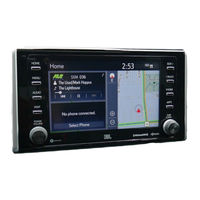
Toyota RAV4 2020 Owner’s Manual (275 pages)
Navigation and Multimedia System
Brand: Toyota
|
Category: Car Video System
|
Size: 56.06 MB
Table of Contents
-
-
Operating the Map Screen
22
-
-
Basic Information before Oper- Ation Initial Screen
26
-
Basic Information before
26
-
Entering Letters and Numbers/List Screen Operation
30
-
Linking Multi-Information Dis- Play and the System
35
-
Linking Multi-Information Display and the System
35
-
-
-
Registering/Connecting a
36
-
Setting Bluetooth ® Details
40
-
Connecting to Miracast Via Wi-Fi
48
-
-
Apple Carplay/Android Auto48
50
-
Apple Carplay/Android Auto
50
-
-
Basic Operation Navigation
65
-
Map Screen Information
71
-
-
Destination Search Operation
77
-
Starting Route Guidance
84
-
-
-
Typical Voice Guidance Prompts
92
-
-
Detailed Navigation Settings
102
-
Tips for the Navigation System
113
-
Tips for the Navigation Sys- Tem
113
-
GPS (Global Positioning System)
113
-
Map Database Version and Covered Area
115
-
4 Audio/Visual System
117
-
-
-
Ipod/Iphone (Apple Carplay)
130
-
Audio/Visual Remote Controls
139
-
Tips for Operating the Audio/Visual System
142
-
Operating Information
142
-
5 Speech Command System
151
-
-
Speech Command System Operation Speech Command System
151
-
6 Peripheral Monitoring System
159
-
Rear View Monitor System
160
-
Rear View Monitor System Pre- Cautions
162
-
Things You Should Know
167
-
-
Toyota Parking Assist Monitor
169
-
Toyota Parking Assist Moni
169
-
Estimated Course Line Display Mode
172
-
Parking Assist Guide Line Display Mode
173
-
Parking Assist Guide Line Dis- Play Mode
173
-
Distance Guide Line Display Mode
174
-
Toyota Parking Assist Monitor Precautions
175
-
Things You Should Know
180
-
-
Panoramic View Monitor
182
-
7 Checking Around the Vehicle
184
-
Checking Around the Vehicle
188
-
Checking the Front and Around the Vehicle
189
-
Checking the Sides of the Vehi- Cle
192
-
Checking the Sides of the Vehicle
192
-
Checking the Rear and Around the Vehicle
195
-
When Folding the Outside Rear View Mirrors
202
-
Customizing the Panoramic View Monitor
204
-
Panoramic View Monitor Precautions
205
-
Rear View Monitor System Cautions
205
-
Rear View Monitor System Pre-Things You Should Know
215
-
Things You Should Know
215
-
-
Phone Operation (Hands-Free System for Cellular Phones)
220
-
Placing a Call Using the Bluetooth Hands-Free System
225
-
Receiving a Call Using the Bluetooth Hands-Free System
228
-
Talking on the Bluetooth ® Hands-Free System
229
-
Bluetooth ® Phone Message Function
231
-
Bluetooth Phone Message Function
231
-
Toyota App Suite Overview
247
-
Toyota App Suite Service
248
-
-
Toyota App Suite Operation
250
-
-
Toyota App Suite Settings
254
-
Advertisement

Toyota RAV4 2020 Quick Reference Manual (26 pages)
CONNECTED SERVICES
Brand: Toyota
|
Category: Automobile
|
Size: 2.79 MB
Table of Contents
Advertisement
Related Products
-
Toyota RAV4 2005
-
Toyota RAV4 2009
-
Toyota RAV4 2004
-
Toyota RAV4 2003
-
Toyota RAV4 2002
-
Toyota RAV4 2001
-
Toyota RAV4 2000
-
Toyota RAV4 2008
-
Toyota RAV4 2010
-
Toyota Rav42005
Toyota Categories
Automobile
Automobile Accessories
Car Navigation system
Sewing Machine
Car Receiver
More Toyota Manuals
Комментарии
7
Войдите или зарегистрируйтесь, чтобы писать комментарии, задавать вопросы и участвовать в обсуждении.

Большой список руководств по ремонту Toyota — t.me/Car_Guide/437
А так же большой выбор:
📚 Руководство по ремонту и эксплуатации авто
📕 Руководства по ремонту грузовых авто
📘 Руководство по ремонту двигателей
📗 Руководства по ремонту грузовых двигателей
⚠️ Электрические схемы
⚠️ Электрические схемы грузовых авто
⚡️ Схемы предохранителей и реле
t.me/Car_Guide/1174
Все ничего, но мультимедиа и выхлоп совсем не вяжется с ценой автомобиля
Только я не могу перейти по ссылкам?
Я езжу на Toyota RAV4 (5G)
Они лежат на Яндекс диске по етому врубай VPN)
RAV4_OM_OM0R024U_(U)
1
2
3
4
5
6
7
8
9
10
Pictorial index
Search by illustration
For safety
and security
Make sure to read through them
(Main topics: Child seat, theft deterrent system)
Vehicle status
information and
indicators
Reading driving-related information
(Main topics: Meters, multi-information display)
Before driving
Opening and closing the doors and windows,
adjustment before driving
(Main topics: Keys, doors, seats)
Driving
Operations and advice which are necessary for
driving
(Main topics: Starting engine, refueling)
Audio
Operating the Audio
(Main topics: Audio/visual, phone, Connected Services)
Interior features
Usage of the interior features
(Main topics: Air conditioner, storage features)
Maintenance
and care
Caring for your vehicle and maintenance
procedures
(Main topics: Interior and exterior, light bulbs)
When trouble
arises
What to do in case of malfunction and emergency
(Main topics: Battery discharge, flat tire)
Vehicle
specifications
Vehicle specifications, customizable features
(Main topics: Fuel, oil, tire inflation pressure)
For owners
Reporting safety defects for U.S. owners, and seat
belt and SRS airbag instructions for Canadian
owners
Index
Search by symptom
Search alphabetically
Смотреть руководство для Toyota RAV4 (2020) ниже. Все руководства на ManualsCat.com могут просматриваться абсолютно бесплатно. Нажав кнопку «Выбор языка» вы можете изменить язык руководства, которое хотите просмотреть.

MANUALSCAT | RU
Вопросы и ответы
У вас есть вопрос о Toyota RAV4 (2020), но вы не можете найти ответ в пользовательском руководстве? Возможно, пользователи ManualsCat.com смогут помочь вам и ответят на ваш вопрос. Заполните форму ниже — и ваш вопрос будет отображаться под руководством для Toyota RAV4 (2020). Пожалуйста, убедитесь, что вы опишите свои трудности с Toyota RAV4 (2020) как можно более детально. Чем более детальным является ваш вопрос, тем более высоки шансы, что другой пользователь быстро ответит на него. Вам будет автоматически отправлено электронное письмо, чтобы проинформировать вас, когда кто-то из пользователей ответит на ваш вопрос.
Задать вопрос о Toyota RAV4 (2020)
- Бренд:
- Toyota
- Продукт:
- Автомобили
- Модель/название:
- RAV4 (2020)
- Тип файла:
- Доступные языки:
- английский
Сопутствующие товары Toyota RAV4 (2020)
Смотреть руководство для Toyota RAV4 (2020) ниже. Все руководства на ManualsCat.com могут просматриваться абсолютно бесплатно. Нажав кнопку «Выбор языка» вы можете изменить язык руководства, которое хотите просмотреть.
MANUALSCAT | RU
Вопросы и ответы
У вас есть вопрос о Toyota RAV4 (2020), но вы не можете найти ответ в пользовательском руководстве? Возможно, пользователи ManualsCat.com смогут помочь вам и ответят на ваш вопрос. Заполните форму ниже — и ваш вопрос будет отображаться под руководством для Toyota RAV4 (2020). Пожалуйста, убедитесь, что вы опишите свои трудности с Toyota RAV4 (2020) как можно более детально. Чем более детальным является ваш вопрос, тем более высоки шансы, что другой пользователь быстро ответит на него. Вам будет автоматически отправлено электронное письмо, чтобы проинформировать вас, когда кто-то из пользователей ответит на ваш вопрос.
Задать вопрос о Toyota RAV4 (2020)
- Бренд:
- Toyota
- Продукт:
- автомобили
- Модель/название:
- RAV4 (2020)
- Тип файла:
- Доступные языки:
- английский
Сопутствующие товары Toyota RAV4 (2020)
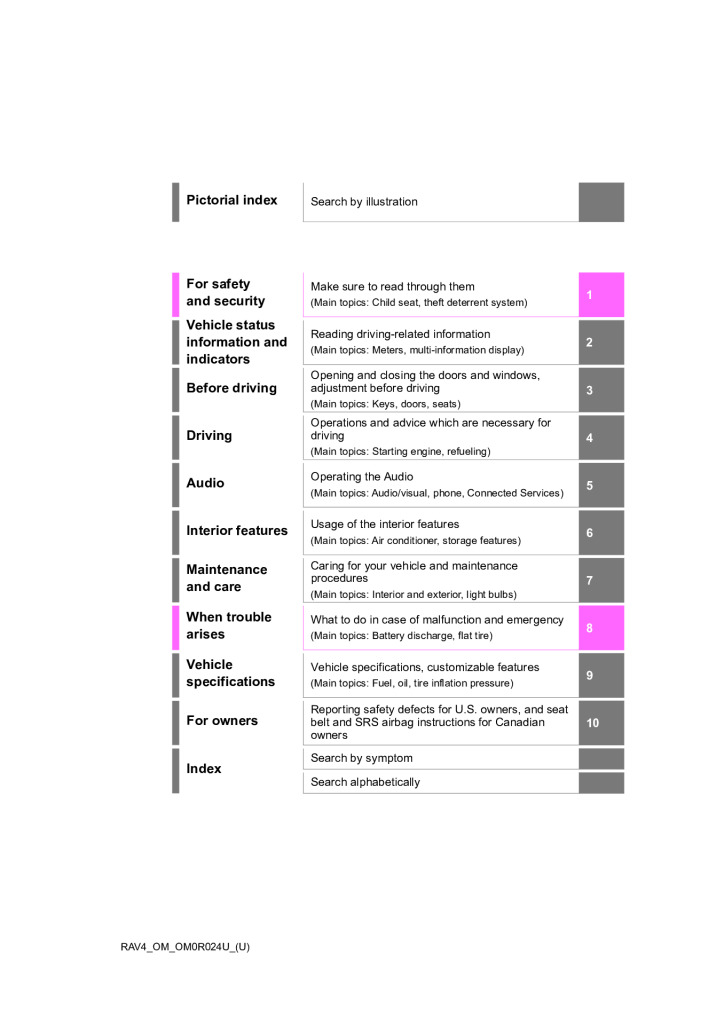
View Fullscreen
The 2020 Toyota RAV4 ranks in the top half of the compact SUV class. It gets great fuel economy estimates, feels stable around corners, and offers a quality cabin with ample space. However, it has a noisy engine that lacks the punchy turbocharger of many rivals.
Pros & Cons
- Comfortable, high-class cabin
- Long list of standard features
- Great fuel economy
- Engine grows loud under heavy throttle
- High base price for the class
New for 2020
- TRD Off-Road model
- Android Auto, satellite radio, and a Wi-Fi hot spot now standard
